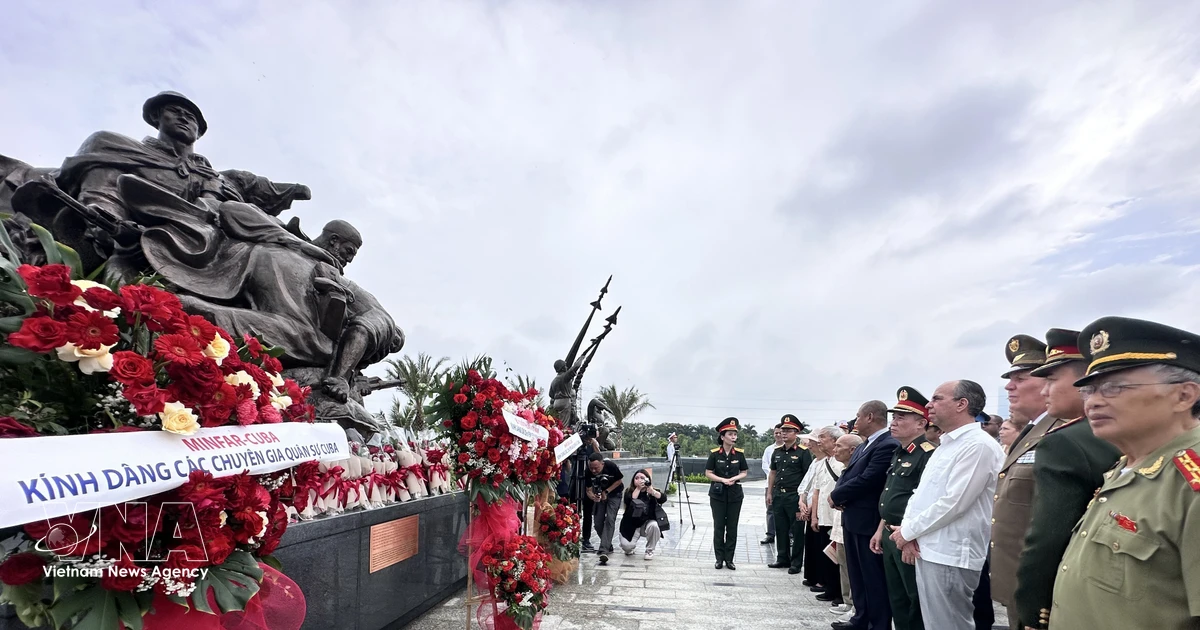
Vietnam, Cuba Honor Fallen Military Experts, Affirm Deepening Ties
Vietnamese leaders paid tribute to fallen Cuban military experts, reaffirming the strong relationship and solidarity between the two nations. Vietnam also urged the international community to oppose unilateral sanctions against Cuba and support dialogue efforts.
HANOI, July 10 (VNA) – Vietnamese leaders have paid tribute to fallen Cuban military experts, reaffirming the strong relationship and solidarity between the two nations. The gesture underscored the deep political and cultural ties shared by Vietnam and Cuba. During a visit from June 20 to 22, Vietnamese officials, including First Secretary of the Communist Party of Cuba (PCC) Central Committee and President of Cuba Miguel Diaz-Canel, met with Vietnamese counterparts. The translation, editing, and publication of selected works in Spanish, English, and Vietnamese were highlighted for their profound political and cultural value, according to Assoc. Prof. Dr. Vu Trong Lam, Director of the Su That National Political Publishing House. Ambassador Do Hung Viet, Vietnam’s Permanent Representative to the United Nations, urged member states to uphold the Non-Aligned Movement's spirit of solidarity, continue supporting Cuba, oppose unilateral embargoes and sanctions, and back dialogue efforts between Cuba and the US based on mutual respect, peace, stability, and the interests of their people. Venezuelan officials expressed profound gratitude for Vietnam's timely assistance and selfless solidarity, affirming that the support will always be remembered by the Venezuelan people. This reflects Vietnam's consistent solidarity with nations facing external pressures. In parallel, Vietnam has been actively engaging in international commitments. Since the start of the 13th National Party Congress’s term, Vietnam has signed over 1,400 international commitments and agreements, with more than 350 new pacts inked since early 2026, driven by high-level diplomatic activities. The Politburo's recent decision to invest in primary and secondary boarding schools in 248 land border communes nationwide was also highlighted, signifying a focus on domestic development and stability. Further demonstrating its commitment to regional stability and cooperation, Vietnam participated in joint ceremonies and exchanges. The repainting of Border Marker No. 460 with Laos's defense minister symbolized the determination to safeguard national sovereignty and foster peace and development along the shared border. Additionally, the ninth friendship exchange between Vietnamese and Philippine navies on Song Tu Tay island in the Truong Sa (Spratly) archipelago aimed to strengthen friendship, cooperation, and mutual trust between the naval forces. Vietnam continues to pursue a multi-faceted foreign policy, engaging with various international partners. Foreign Minister Le Hoai Trung held discussions with Martin Briens, Secretary-General of the French Ministry for Europe and Foreign Affairs, noting positive developments in bilateral ties. High-level parliamentary delegations from Russia also expressed their importance in strengthening ties with Vietnam, hoping for broader cooperation with Vietnamese localities. General Secretary of the Communist Party of Vietnam (CPV) Central Committee and State President To Lam cabled condolences to Chinese President Xi Jinping following severe weather events in China, indicating a nuanced approach to relations with its large neighbor. Vietnam is also working closely with the European Free Trade Association (EFTA) member states to sign their free trade agreement (FTA) at an early date and effectively implement its commitments.
多角的分析
ベトナムの国際的なコミットメントの増加は、輸出主導型の経済成長戦略と密接に関連しています。特に、EFTAとのFTA締結に向けた動きは、欧州市場へのアクセスをさらに拡大し、サプライチェーンの多様化を図る狙いがあります。これは、米中貿易摩擦などの地政学的なリスクを軽減し、経済の安定性を高めるための重要なステップです。また、国内の land border communes への教育投資は、長期的な人的資本の育成に繋がり、将来的な経済発展の基盤を強化するものと考えられます。
ベトナムの積極的な国際協定締結は、海外からの投資家にとって、より安定した、予測可能なビジネス環境を提供することを示唆しています。FTAの締結は、関税の削減や貿易手続きの簡素化を通じて、ベトナムへの投資コストを低減させる可能性があります。しかし、一党体制下における政策決定の不確実性や、法制度の透明性については、引き続き注意が必要です。特に、投資家は、ベトナムの外交政策の多角化が、特定の国への過度な依存を避け、経済的ショックに対するレジリエンスを高める効果を注視するでしょう。
ベトナムの指導者層によるキューバの戦没者追悼は、社会主義国としての連帯感を内外に示す行為です。これは、国内の国民に対して、ベトナムが国際社会において孤立していないこと、そして共通の価値観を持つ国々との絆を大切にしていることをアピールする効果があります。また、 land border communes への教育投資は、地方の格差是正と社会統合を促進する重要な施策です。これにより、地方住民の生活水準向上と、都市部への人口流出抑制が期待されます。しかし、これらの政策が、地方の具体的なニーズにどこまで応えられるかは、今後の実施状況にかかっています。
ベトナム国民にとって、国際社会におけるベトナムの存在感の高まりは、国家の威信向上に繋がる一方で、経済成長の恩恵が国民生活にどこまで波及するかが問われます。特に、 land border communes の子供たちが質の高い教育を受けられるようになることは、将来への希望となります。しかし、国際的なコミットメントの増加が、国民生活に直接的な変化をもたらすには時間がかかる可能性もあります。また、ベトナムの外交政策の多角化は、国際情勢の変動に対する国民の不安を和らげる効果も期待されます。
背景・歴史的文脈
ベトナムとキューバは、歴史的に社会主義陣営として強い絆で結ばれてきました。冷戦時代には、両国は互いに政治的・経済的な支援を行い、イデオロギー的な連帯を深めました。ベトナム戦争中にはキューバからの支援も受け、独立後のベトナムもキューバを支持してきました。近年、両国は社会主義体制の維持と経済発展の両立という共通の課題に直面しており、互いの経験を共有し、協力関係を継続しています。今回の追悼は、こうした歴史的背景に基づき、両国間の揺るぎない友好関係を再確認するものです。
原文ソース
VietnamPlus English