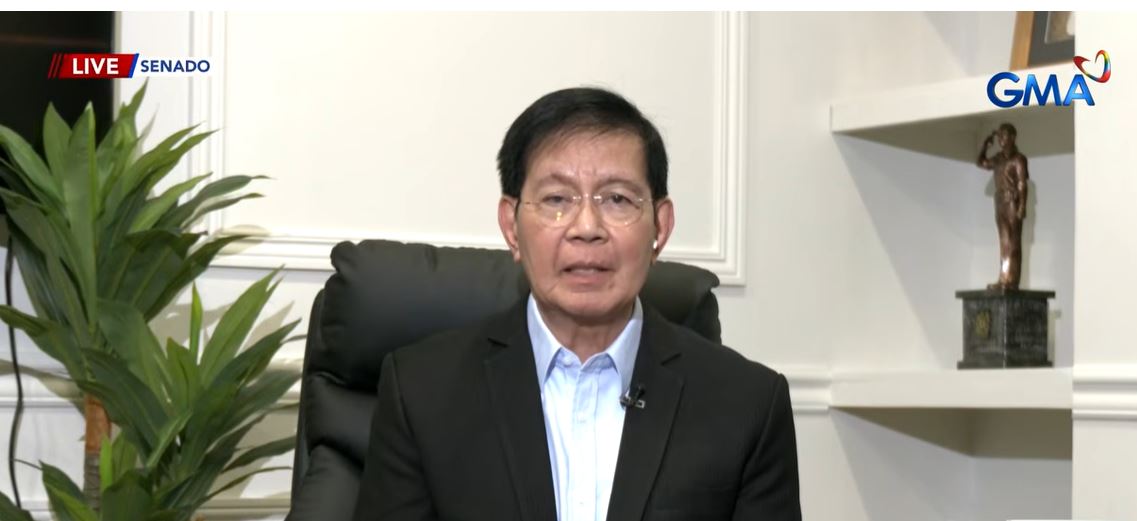
Lacson Slams 'Recurring Pattern' of Hospitalization in High-Profile Arrests
Senator Panfilo “Ping” Lacson has criticized the "recurring pattern" of prominent personalities being hospitalized when facing arrest or contempt charges, questioning cost burdens at taxpayer-funded facilities and potential denial of access to regular police personnel.
Senator Panfilo “Ping” Lacson on Saturday slammed what he describes as a "recurring pattern" of hospitalizations of prominent personalities who are cited in contempt or face arrest due to criminal cases. “Since time immemorial, when a prominent personality is cited in contempt or faces arrest, he/she suddenly gets sick and needs to be hospitalized,” Lacson said in a radio interview. “When the arrest warrant comes out, so does the medical condition – you name it – pneumonia, high blood pressure, high cholesterol levels. Some require neck braces, others have back pains. The diseases come out when the arrest warrant comes out,” he added. “This is the pattern that many ordinary Filipinos have brought to my attention, hence my recent post on X last July 8,” he added. Confinement Lacson said this was again the case with former Public Works Secretary Manuel Bonoan and Senator Rodante Marcoleta, who are both facing plunder and graft charges. “Bonoan was arrested and was confined in the hospital. Before that, we have seen big personalities who are confined in the hospital instead of being brought to jail. This is the pattern I have noticed,” he added. Bonoan surrendered to authorities on June 1 and was brought to the hospital after suffering hypertension. He is facing P573-million graft and plunder charges before the Sandiganbayan. The Sandiganbayan’s Fifth Division has allowed him to be confined at the Philippine National Police General Hospital in Camp Crame. According to Bonoan's personal physicians, Bonoan has multiple ailments, including chronic kidney disease and severe coronary artery disease. Marcoleta, meanwhile, was arrested over his P75-M plunder case on July 6 after his motion to quash was denied by the graft court. He was brought to the Philippine National Police General Hospital (PNP-GH) after experiencing chest pains and high blood pressure. GMA News Online has reached Marcoleta and Bonoan for comments, but they have yet to reply as of posting time. Expenses Lacson also raised concerns about the expenses for the stay of Bonoan and Marcoleta at the PNP-GH. “One issue is that the PNP-GH has its own budget, funded by taxpayers. Those authorized to be confined there are PNP members or their dependents. But who shoulders the costs for the stay and medication of Bonoan and Marcoleta? As far as I know, neither of them is a PNP dependent,” Lacson said. Lacson alleged that there were PNP members and eligible dependents who were denied admission at the PNP-GH. “There are PNP members who are denied admission at the PNP-GH. There are also times when its facilities admit those who are not PNP members or dependents. Who pays for their stay?” the senator said. Lacson said he plans to raise this issue during the budget deliberations for the proposed 2027 budget of the PNP and the Department of the Interior and Local Government (DILG). In the anticipated deliberation, Lacson said that he intends to clarify who is authorized to be confined in the hospital as well as who should bear the expenses for non-dependent patients. —VAL, GMA News
多角的分析
著名人の逮捕時の入院は、公的資金の不透明な使用という経済的側面を持つ。PNP中央病院のような公的医療機関が、本来の対象者以外に開放される場合、その費用負担は税金で行われる。これは、本来医療を必要とするPNP職員やその家族が、これらの著名人のために機会を奪われる可能性を示唆する。さらに、こうした事例が繰り返されることは、公的資金の管理体制への信頼を損ない、将来的な予算配分や医療資源の効率的な利用に関する議論を呼ぶ可能性がある。
著名人の逮捕とそれに伴う入院は、直接的な投資リスクとはなりにくいが、間接的にはフィリピンの法制度と統治の安定性に対する投資家の信頼感に影響を与えうる。法的手続きにおける「抜け穴」や恩赦の可能性が示唆されるような事例は、投資家がフィリピンにおけるビジネス環境の予測可能性を評価する上で懸念材料となり得る。特に、汚職や収賄といった罪状で訴追されている人物が、入院という形で身柄拘束を回避しているように見える状況は、法の執行における公平性への疑問を投げかけ、長期的な投資環境の健全性に影響を与える可能性がある。
著名人が逮捕された際に「持病」を理由に病院に搬送されるというパターンは、フィリピン社会における「コネ」や「特権」の存在を浮き彫りにする。一般市民は、逮捕された場合、迅速に法的手続きを受け、公正な扱いを期待するが、著名人には特別な配慮がなされるかのように見える状況は、社会的な不平等感を生む。PNP中央病院への入院を巡る問題は、限られた公的リソースが、誰に、どのように配分されるべきかという公共の課題を提起している。これは、社会全体の公平性と正義に対する市民の期待と、現実との乖離を示す事例と言える。
一般市民、特にラソン議員が言及した「多くの一般フィリピン人」にとって、この問題は法の下の平等を実感できないことへの不満に繋がる。逮捕されれば、病気であっても通常は拘置所や刑務所での身柄拘束が想定されるが、著名人には病院での入院という「選択肢」があるように見える。これは、自分たちが払った税金が、自分たちのためではなく、特権階級のために使われているのではないかという疑念を抱かせ、社会への不信感を増幅させる可能性がある。特に、的地方都市やコミュニティに住む人々は、中央政府や首都圏の著名人の動向を遠くから見守りながら、自分たちの生活への影響を案じている。
背景・歴史的文脈
フィリピンでは、過去にも著名人が逮捕や訴追の際に病気を理由に入院し、身柄拘束を回避するケースが度々報じられてきた。これは、法的手続きにおける「抜け穴」として一般市民の間で認識されており、しばしば「特権階級」への不満の根源となっている。特に、汚職や収賄といった罪状で訴追された政治家や公務員が、公的医療機関であるPNP中央病院に搬送される事例は、税金による医療資源の不透明な使用と、一般市民が直面する医療アクセスの問題との対比で、社会的な議論を呼んできた。ラソン議員が指摘する「繰り返されるパターン」は、こうした長年の社会的な不満の蓄積を背景にしている。
原文ソース
GMA News Philippines