General articles are free for 24 hours after publish.
Excessive Gold Mining Damages Farmland, Roads, and Bridges in Kachin State’s Putao Township
Burma News International (BNI) is a network of 15 independent media and news organizations based in and around Burma Extensive gold mining utilizing heavy machinery in Putao Township, Kachin State, has polluted vital dri
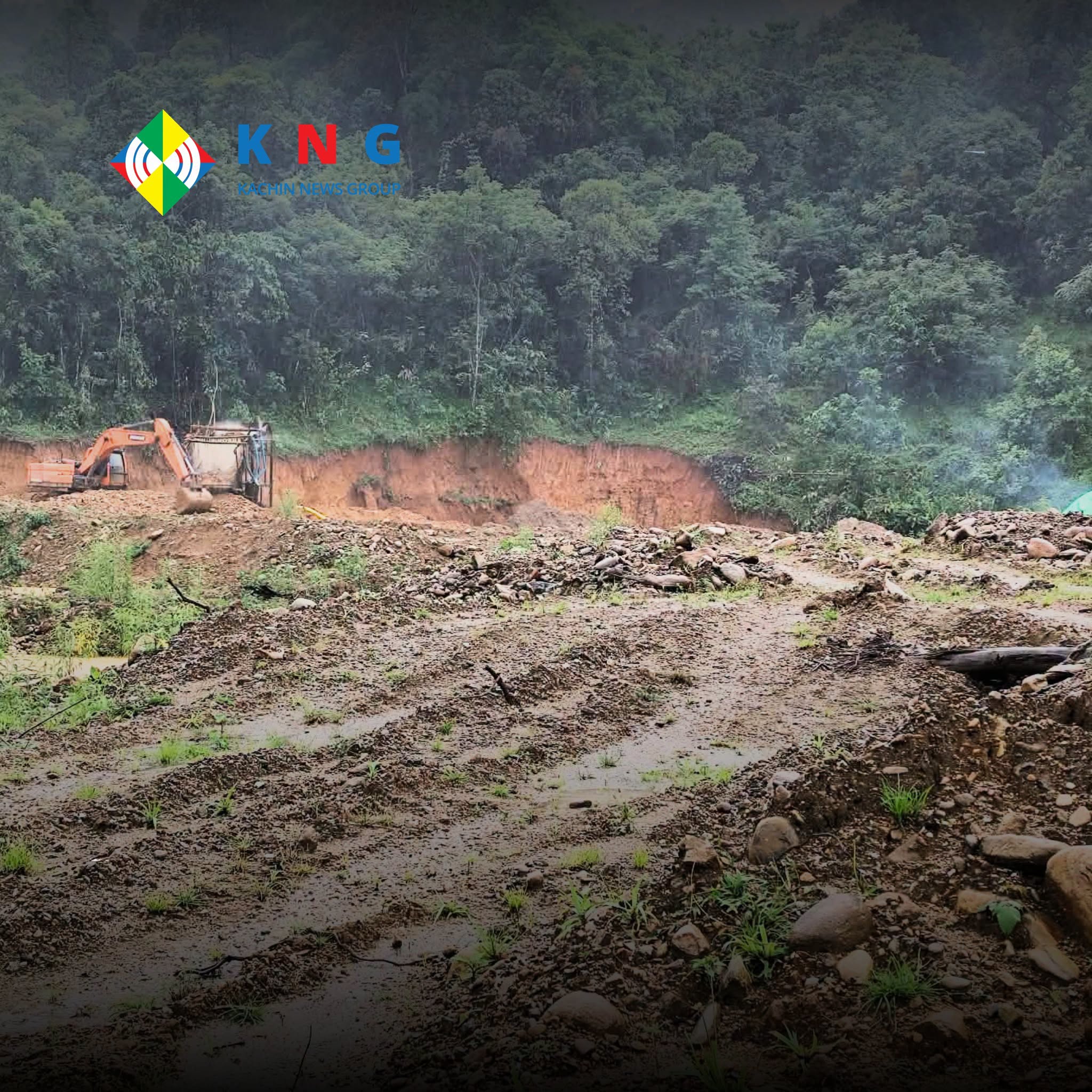
Burma News International (BNI) is a network of 15 independent media and news organizations based in and around Burma Extensive gold mining utilizing heavy machinery in Putao Township, Kachin State, has polluted vital drinking water sources, destroyed farmland, and severely damaged local transport infrastructure, sparking widespread alarm among residents. According to local sources, business operators from Putao are paying taxes to the military junta to conduct large-scale extraction along the Nam Htum Stream and around Ma Kyawt Wa Village. The Nam Htum Stream flows directly through the center of Putao, serving as a primary water source for the township seat and several surrounding communities. Residents report that current mining activities are concentrated along the upper reaches of the stream, extending from an area near the junta’s Infantry Battalion 46 (IB-46) base to Auk Pa In Village. Local eyewitnesses stated that operators from downtown Putao have been extracting gold since June using heavy machinery, including at least five hydraulic excavators. The lower reaches of the Nam Htum Stream pass through Putao’s five urban wards and irrigate thousands of acres of farmland owned by residents from five adjacent villages. Local farmers fear that expanding mining operations will soon devastate their agricultural livelihoods. "The excessive mining along the upper Nam Htum Stream has already reached the perimeter of our farmland. Beyond it lie thousands of acres of rice paddies," a Putao resident said. "If this digging continues, those fields will be completely destroyed. The authorities must intervene and stop this immediately." Similarly, large-scale mining operations persist in Ma Kyawt Wa Village, located approximately one mile from Putao Town. Residents noted that at least five mining sites are currently operating around the village—including two positioned directly adjacent to residential areas—with heavy machinery running continuously. The heavy traffic of mining machinery and transport trucks previously caused the collapse of Ma Kyawt Wa’s main village bridge in June 2025. Over a year later, neither the junta authorities nor the mining operators have repaired the structure. Villagers have constructed a temporary bamboo bridge to cross the river, but school children and residents requiring emergency medical transport continue to face severe travel hazards. In addition to structural damage, residents reported that relentless mining has turned both the Ma Kyawt Wa and Nam Htum streams heavily turbid, rendering the water unsafe for drinking, domestic use, or crop irrigation. Local sources confirmed that the mining ventures are led by several Putao-based business operators who secured operational permits by paying taxes directly to IB-46. Some operators reportedly purchased orchards and agricultural plots from local landowners before converting them into open-cast mining sites, complicating efforts by community members attempting to mount formal objections.
Original source
BNI (Burma News International)