Papal Envoy, Cardinal Visit Marawi Prelature, Offering Hope for Reconstruction
The Papal Nuncio and a Cardinal visited the Prelature of Marawi, offering hope to the Catholic community striving to rebuild its cathedral since the 2017 siege. Nine years on, with clergy still displaced, the message emphasized healing over mere reconstruction.
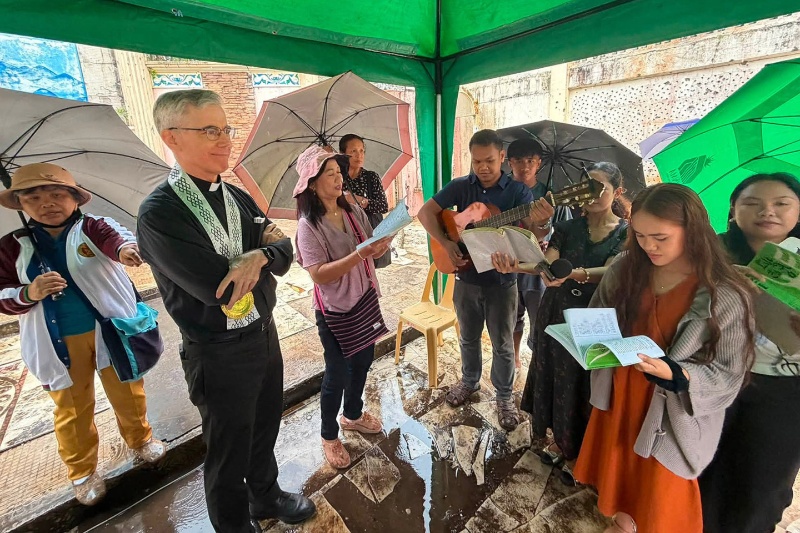
Papal Nuncio Archbishop Charles Brown and Cardinal Pablo Virgilio David made a low-key visit to the Prelature of Marawi on Friday, bringing a message of hope to a Catholic community still striving to rebuild its cathedral, which was destroyed during the 2017 siege of the city. Brown and David visited the ruins of the Cathedral of Mary Help of Christians, where they were welcomed by Catholic students from Mindanao State University singing the hymn “Be Not Afraid.” Cardinal David remarked, “Surrounded by the remains of what had been destroyed, we heard words that proclaimed hope rather than despair. It was as if the Gospel itself was being sung to us.” The visit coincided with the final day of the bishops’ 132nd plenary assembly in nearby Misamis Occidental, underscoring continued solidarity with the prelature. Despite losing its cathedral, chancery, and bishop’s residence during the 2017 siege, the Marawi Prelature remains canonically based in Marawi. Cardinal David lauded the vision of the late Bishop Bienvenido Tudtud, who shaped the prelature’s identity around dialogue with the Muslim community. This mission continues under Bishop Edwin de la Peña, who has led the prelature from its pro-cathedral in Balo-i since the displacement caused by the siege. “Their steadfast presence is a quiet but eloquent witness that the Church has not abandoned the people she was sent to serve,” David said of de la Peña and his priests. During Mass at the pro-cathedral, Cardinal David noted that the day’s Scripture readings reflected Marawi’s journey from destruction toward healing, emphasizing that reconciliation must precede the rebuilding of communities and structures. “There are wounds that concrete cannot repair, and memories that no reconstruction project can erase. Yet the Lord tells us today that his first work is not reconstruction but healing,” he stated. Marking the 20th anniversary of his episcopal ordination, David reflected on what de la Peña calls the “Bakwit Church” (displaced church), suggesting that years of displacement revealed the church’s deepest strength and resilience. “The cathedral may have been destroyed, the chancery displaced, and the bishop’s residence lost, but the Church herself was not defeated. She simply became, in a very real sense, a pilgrim Church,” he said. Cardinal David thanked Bishop de la Peña for remaining with his flock through years of uncertainty, hardship, and displacement, despite the continuing challenges facing the prelature. “Mission is not measured by success, but by steadfast presence. Thank you for teaching us what it means to remain with a people, even in exile,” he told de la Peña. The five-month Marawi siege began in May 2017 when militants linked to the Islamic State group seized the city, triggering a massive military offensive. The fighting devastated the city center, including the Catholic cathedral, and resulted in the deaths of over 100 soldiers and police officers, more than 900 militants, and scores of civilians. Source: Interaksyon Politics
多角的分析
マラウィ市制圧による経済的打撃は甚大であり、インフラの破壊と住民の避難は地域経済に長期的な停滞をもたらした。カトリック教会が中心となって進める復興は、単なる物理的な再建だけでなく、失われた生計手段の回復や地域経済の活性化も視野に入れる必要がある。そのためには、政府や国際機関からの継続的な経済支援と、地域住民の主体的な経済活動への参加が不可欠である。過去の紛争地域における復興事例では、小規模ビジネスの育成や農業支援が地域経済の自立に貢献した例がある。
マラウィ地域の投資環境は、治安情勢とインフラの未整備が大きなリスク要因となっている。今回の訪問は、宗教的・人道的な側面が強いが、将来的な復興と安定化が進めば、インフラ開発や地域経済振興に関連する投資機会が生まれる可能性も考えられる。しかし、投資家が参入するには、政府による安全保障の確保、法制度の整備、そして透明性の高い事業機会の提供が不可欠となる。特に、紛争終結後の地域開発においては、信頼できるパートナーシップの構築が重要となる。
マリウィ市制圧は、住民に深い精神的傷跡を残した。9年経っても大聖堂が再建されず、聖職者たちが避難生活を続けている現状は、コミュニティの分断と喪失感を象徴している。今回の訪問は、カトリックコミュニティへの連帯を示すと同時に、癒やしと和解の重要性を強調した。特に、デ・ラ・ペーニャ司教が率いる「バクウィット教会」の存在は、困難な状況下でも信仰を貫き、住民と共に歩む教会の姿を示しており、これは地域社会の精神的支柱となりうる。しかし、物理的なインフラの復旧と、住民の生活再建が遅れる限り、社会的な統合は進まない。
マリウィの住民、特にカトリック教徒にとって、大聖堂の破壊と避難生活は、生活基盤の喪失だけでなく、コミュニティの核となる場所を失ったことを意味する。9年経っても元の生活に戻れない状況は、多くの住民に不安と不満を与えている。今回の教皇大使と枢機卿の訪問は、彼らの苦境が忘れられていないというメッセージとなり、精神的な支えになるだろう。しかし、住民が本当に求めているのは、物理的な住居の再建、雇用の創出、そして子供たちの教育機会の確保といった、具体的な生活の改善である。教会関係者の「癒やしが再建に先行する」という言葉は、精神的なケアの重要性を示唆しているが、生活再建への道筋が明確にならない限り、住民の希望は限定的となる。
背景・歴史的文脈
2017年5月、イスラム過激派組織「イスラム国」(IS)系のマウテ・グループなどがフィリピン南部ミンダナオ島のマラウィ市を占拠し、5ヶ月に及ぶ激しい戦闘が発生した。この紛争により、市中心部は壊滅的な被害を受け、カトリック大聖堂を含む多くの宗教施設やインフラが破壊された。約40万人もの住民が避難を余儀なくされ、9年が経過した現在も多くの住民が故郷に戻れていない。この紛争は、フィリピン南部におけるイスラム過激派の脅威と、紛争後の復興の困難さ、そして平和構築の課題を浮き彫りにした。カトリック教会は、紛争後もマリウィ教区の司聖職者や信徒と共に、避難生活を送りながらも、地域社会との対話と和解を重視した活動を続けてきた。
原文ソース
Interaksyon Politics