Hun Sen Orders Stronger Protection for Prey Lang Sanctuary Amidst Illegal Logging Concerns
Environment
2026年7月6日
5
Phnom Penh Post

Hun Sen Orders Stronger Protection for Prey Lang Sanctuary Amidst Illegal Logging Concerns

AI サマリー

Senate President Hun Sen has directed authorities in four provinces surrounding the Prey Lang Wildlife Sanctuary to strengthen measures against illegal logging and forest encroachment. The sanctuary, one of Southeast Asia's largest evergreen forests and a biodiversity hotspot, has faced significant deforestation in recent years.

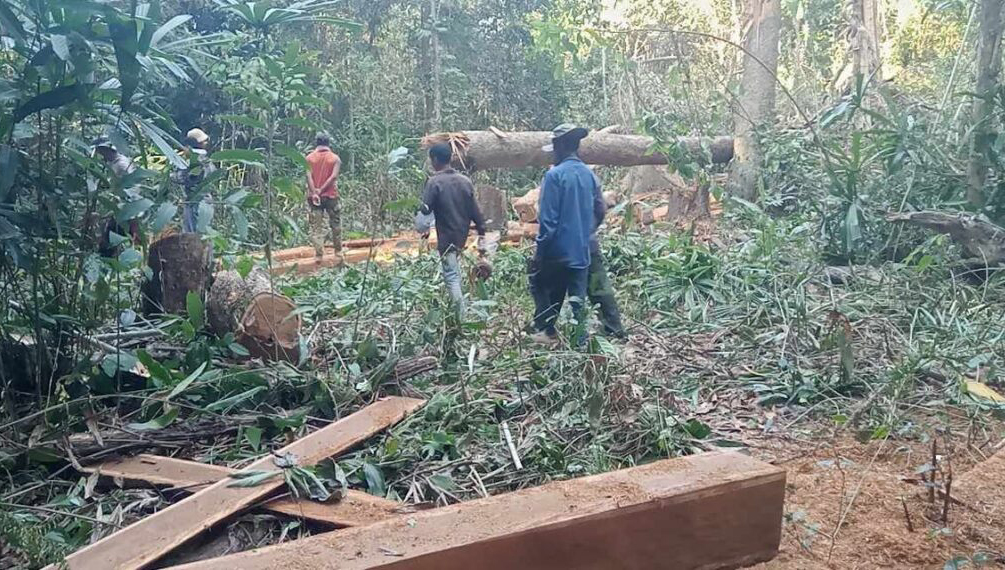
Senate President Hun Sen has instructed the authorities of the four provinces surrounding the Prey Lang Wildlife Sanctuary to strengthen their efforts to prevent illegal logging and forest encroachment, issuing a strict warning against allowing one of Cambodia’s most important forests to deteriorate into degraded land. He met with provincial, district and commune authorities, along with the heads of provincial departments in Kratie province today, July 6. Hun Sen called on local authorities to give greater attention to the protection and management of Cambodia’s natural resources, with a particular emphasis on safeguarding the country’s largest remaining lowland evergreen forest. “Authorities in Kratie, Stung Treng, Kampong Thom and Preah Vihear provinces, which share the Prey Lang forest, must work together to prevent illegal logging and ensure the forest does not become degraded,” he said. The Prey Lang Wildlife Sanctuary is one of Cambodia’s most significant protected areas, covering more than 489,000 hectares across the four provinces. It is widely recognised as the largest remaining lowland tropical evergreen forest in mainland Southeast Asia and is home to rich biodiversity, important watersheds and numerous Indigenous communities. The government designated Prey Lang as a wildlife sanctuary in May 2016, later expanding its protected area from approximately 431,683 to 489,663 hectares. Despite its protected status, the forest continues to face pressure from illegal logging and land encroachment. According to a 2022 report by the Prey Lang Community Network, 2021 recorded the highest annual loss of forest cover ever documented in Cambodia, with more than 11,100 hectares disappearing from Prey Lang Wildlife Sanctuary in that year alone. The report found that since 2000, the sanctuary has lost approximately 67,400 hectares of forest cover — equivalent to around 16 per cent of its original area. Authorities acknowledge that illegal activities remain a serious concern despite ongoing enforcement efforts. Official figures show that during the first four months of 2026, joint patrol teams comprising park rangers, provincial authorities and local communities conducted 853 patrols within the sanctuary. These operations resulted in 178 natural resource crime cases, most involving forest clearance and unlawful logging. Law enforcement officials referred 83 cases to the courts and arrested 13 suspects. During the operations, they seized chainsaws, vehicles and other equipment, while dismantling numerous wildlife snares. The government announced that it will continue strengthening cooperation between provincial authorities, environmental officials and local communities in an effort to preserve Prey Lang’s ecological importance for future generations. Source: Phnom Penh Post

多角的分析

経済的影響

プレインラング保護区の森林減少は、木材資源の違法採集だけでなく、長期的な経済発展の基盤となる生態系サービス(水源涵養、土壌保全、生物多様性)の喪失に繋がる。これは、農業生産性や水資源へのアクセス、さらには将来的なエコツーリズムなどの潜在的収益源にも悪影響を及ぼす可能性がある。違法伐採の取り締まり強化は、短期的なコストを伴うが、持続可能な経済基盤の維持には不可欠である。

投資家心理

森林破壊は、カンボジアの天然資源への依存度が高い産業(林業、農業、観光業)への投資リスクを高める。プレインラングのような広大な自然保護区の劣化は、これらの産業の持続可能性を損なうため、投資家は環境リスク評価をより慎重に行う必要がある。政府による保護強化の指示は、リスク低減の兆候と捉えられる可能性があるが、実効性が問われる。

社会的影響

プレインラング保護区の森林減少は、そこに依存して生活する先住民族コミュニティの伝統的な生活様式や生計手段を直接的に脅かす。森林資源へのアクセスが制限されたり、居住環境が悪化したりすることは、社会的不安や紛争の原因となりうる。当局による保護強化の指示は、これらのコミュニティの権利と生活を守るための第一歩となるが、地域住民の参加と支援が不可欠である。

市民の声

プレインラング保護区の森林減少は、カンボジア国民全体の環境への意識と、将来世代への責任という観点から重要な課題である。森林は、気候変動緩和、水資源の維持、生物多様性の保全といった公共財としての機能を持つ。違法伐採の放置は、これらの恩恵を損ない、長期的に国民生活の質に影響を及ぼす。フン・セン氏の指示は、これらの問題への認識を高める機会となる。

背景・歴史的文脈

カンボジアの森林減少は、1990年代後半以降、経済開発と土地利用の変化に伴い深刻化してきた。特に、違法伐採、農地への転用、プランテーション開発などが主な要因である。プレインラング地域は、その広大さと生物多様性から、長らく違法伐採の標的となってきた。2016年に野生生物保護区に指定されたものの、監視体制の不備や、地域当局の関与が疑われるケースも指摘されており、実効性のある保護策が長年の課題となっている。今回のフン・セン氏の指示は、こうした長年の問題への政府としての対応強化の意思表示と見られる。

原文ソース

Phnom Penh Post

原文を読む