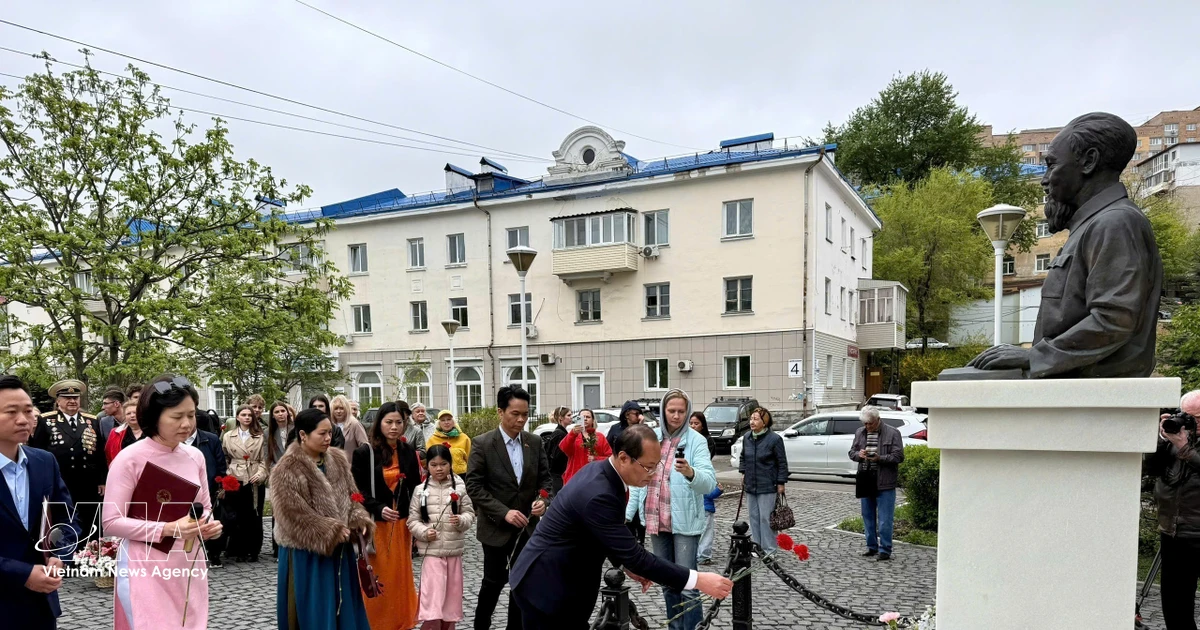
Vietnam Inaugurates Landmark Honoring President Ho Chi Minh in Russia's Far East
A new landmark honoring President Ho Chi Minh has been inaugurated in Russia's Far East, symbolizing the historical ties between the two nations and the President's global influence on liberation movements. The event included a thematic exhibition and the launch of a commemorative photo book.
This article requires PRO
This article is outside the free access window or is a special report. PRO unlocks it and the full archive.
Related articles
- Panama President Visits Vietnam for Official State Visit
Panama's President José Raúl Mulino arrived in Vietnam on October 6th for an official state visit, hosted by Vietnamese President Tô Lâm. The leaders met to discuss strengthening bilateral ties and expanding cooperation across various sectors.
- Vietnamese President Holds Talks with Panamanian President Ahead of 50th Anniversary of Diplomatic Ties
Vietnamese President To Lam held talks with Panamanian President Jose Raul Mulino, reaffirming efforts to strengthen bilateral relations. This marks the first head-of-state visit in 14 years, signaling potential for enhanced cooperation ahead of the 50th anniversary of diplomatic ties in 2025.
- Vietnamese PM to Visit Laos, Cambodia to Strengthen Bilateral Ties
Vietnamese Prime Minister Le Minh Hung will embark on official visits to Laos and Cambodia from October 8-10. The trips aim to further deepen traditional friendships and comprehensive cooperation, focusing on enhancing practical collaboration in economy, infrastructure, and digital transformation.
- Vietnam–Laos–Cambodia Strategic Cohesion Deepens with High-Level Visits
Vietnamese Prime Minister Le Minh Hung will visit Laos and Cambodia from October 8-10 to strengthen strategic cohesion with both nations. The focus will be on promoting substantive and practical cooperation, particularly in trade, investment, and infrastructure development.