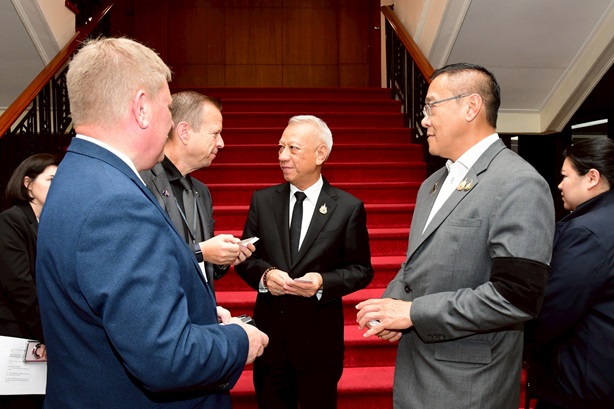
Thailand Discusses "Safe & Green Transport" with European and ASEAN Businesses
Thai Deputy Prime Minister and Minister of Transport, Pipat, met with European and ASEAN business leaders to discuss the promotion of "Safe & Green Transport," aiming to elevate Thailand's transportation system to international standards and build a sustainable network.
This article requires PRO
This article is outside the free access window or is a special report. PRO unlocks it and the full archive.
Related articles
- Thai Sponsor Boosts Sports Marketing Through Running Event
Thai beverage brand "Sponsor" aims to expand its sports marketing initiatives through the upcoming "Sponsor Run Bangkok 2026." The company views the running event as an opportunity to reach new customer segments and enhance brand recognition.
- Thai Cycling Eyes New Generation to Secure Olympic Qualification
The Thailand Cycling Federation has announced a strategy to develop new generation athletes and achieve international success. The primary goal is to secure qualification for the 2028 Los Angeles Olympics, focusing on strengthening young athletes and nurturing coaches based on experiences from the 2026 Asian Games.
- Thai National Football Team Finishes ASEAN Cup as Runner-Up Amidst 'Naturalized Player' Debate
The Thai national football team lost to Indonesia in a penalty shootout in the FIFA ASEAN CUP 2026 final, finishing as runner-up. The match reignited debate in Thailand over the national team's development strategy, with Indonesia's heavy reliance on foreign-born players sparking discussion about domestic talent versus naturalized players.
- Thai Airways Signs MOU for MRO Hub at U-Tapao Airport
Thai Airways and the Eastern Economic Corridor (EEC) Office have signed an MOU to establish an aircraft Maintenance, Repair, and Overhaul (MRO) hub at U-Tapao International Airport. The project, with an estimated investment exceeding 10 billion baht, aims to bolster Thailand's aviation industry.