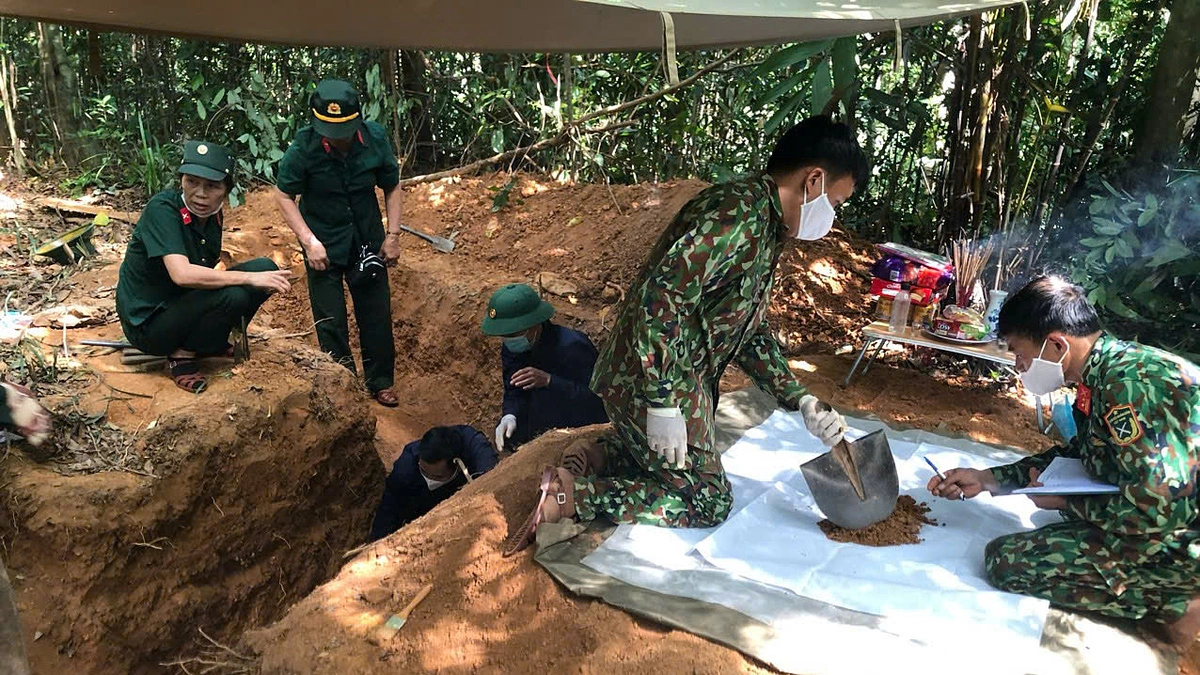
Soldier Who Died 51 Years Ago Returns Home: Family's Persistence Connects DNA Identification
Security
2026年7月10日
4
VnExpress

Soldier Who Died 51 Years Ago Returns Home: Family's Persistence Connects DNA Identification

AI サマリー

The remains of Đào Xuân Huân, a young Vietnamese soldier who died in battle 51 years ago, have finally returned home thanks to the 11-year persistent search and DNA identification efforts by his nephew, Đào Công Sức. This is a moving story connecting lost battlefield memories with family bonds.

The remains of Mr. Đào Xuân Huân (24 years old), who died in battle in Quảng Trị Province in central Vietnam 51 years ago, have finally been returned to his hometown of Hải Phòng City, thanks to the persistent 11-year search and DNA identification efforts by his nephew, Đào Công Sức (45 years old). In 1971, while en route from North Vietnam to the Quảng Trị battlefield, Mr. Huân's vehicle was bombed in Kim Thủy Commune, Lệ Thủy District (now in Quảng Trị Province), and he was buried in a deep forest along with five other soldiers. Although his family received notification of his death, his exact burial site remained unknown. For many years, there were no clues. However, in 2014, Mr. Sức discovered from military unit records that his uncle was buried at a relative coordinate along the old Route 14, along with his comrades. However, the road from that era had disappeared from maps, and local residents were unaware of its existence. Mr. Sức entrusted his fish farming business to relatives and spent over half a month living in the forest, relying solely on military records and his intuition, driving his motorbike along dangerous mountain paths and unpaved roads. After years of diligent searching and contacting relevant agencies, in 2022, he surveyed the site with military personnel. In 2023, a bone collection team from Quảng Trị Province began searching the area identified by Mr. Sức and his companions, and six sets of remains were found. One of these was highly likely to be Mr. Huân's. The remains were sent to the Vietnam National Forensic Institute for DNA identification. In November 2024, the identification confirmed it was Đào Xuân Huân. Of the six sets of remains, four have been identified and returned to their families, while the remaining two could not be identified due to severe degradation of the DNA samples. Thanks to Mr. Sức's 11 years of effort and the cooperation of the Vietnam Association for Support of Vietnamese Families and the National Forensic Institute, Mr. Huân's remains have finally returned to his family. Mr. Sức stated, "My uncle has come home. The family is very content." In early 2025, Mr. Huân's remains are scheduled to be buried in his hometown of Hải Phòng from Quảng Bình. Source: VnExpress

多角的分析

経済的影響

このニュースは直接的な経済活動とは無関係ですが、ベトナムにおける戦没者遺骨収集・身元特定事業への継続的な投資や、関連する法医学・DNA鑑定技術の発展といった側面から経済的影響を分析できます。こうした事業は、国家の歴史的責任を果たすという側面と同時に、関連技術分野への投資や専門人材の育成を促す可能性があります。また、遺骨の帰還は、家族の精神的な支えとなり、地域社会の安定にも寄与する間接的な経済効果をもたらすと考えられます。

投資家心理

このニュースは直接的な投資対象とはなりませんが、ベトナムにおける社会インフラ、特に過去の戦争遺産や歴史的記憶の管理・修復といった分野への関心を示すものと捉えられます。投資家としては、このような分野への公的資金の投入や、技術開発への支援が、長期的に見て社会基盤の強化や国民の士気向上に繋がる可能性を注視すべきでしょう。また、ベトナム政府が歴史的課題に真摯に取り組む姿勢は、国際社会からの信頼を高め、間接的に投資環境の安定に寄与する可能性もあります。

社会的影響

Đào Công Sức氏の11年間にわたる執念の捜索は、ベトナム社会における家族の絆の強さと、失われた家族への深い愛情を示す象徴的な出来事です。特に、戦争によって引き裂かれた家族の悲劇が、世代を超えて受け継がれ、それを克服しようとする人々の姿は、多くのベトナム国民に感動を与えています。また、DNA鑑定技術の進展が、長年の未解決の悲劇に終止符を打つ可能性を示唆しており、社会全体の記憶の継承と和解のプロセスに貢献すると考えられます。一方で、身元特定に至らなかった遺骨が依然として存在することは、未だに残る戦争の傷跡と、社会全体で取り組むべき課題を示唆しています。

市民の声

このニュースは、多くのベトナム市民、特に戦争で家族を失った人々にとって、深い共感と感動を呼ぶものです。Đào Công Sức氏の長年の献身的な捜索は、失われた家族への愛情と、諦めない心の強さを体現しており、多くの市民に希望を与えています。また、DNA鑑定による身元特定は、長年の不安や悲しみに終止符を打ち、故人への最後の敬意を払う機会を提供します。これにより、家族は心の平安を得ることができ、地域社会においても、戦争の記憶を共有し、未来へ向かう力となるでしょう。しかし、未だ身元不明の遺骨が残ることは、多くの家族にとって、さらなる解決を求める声となり得ます。

背景・歴史的文脈

ベトナム戦争(1955年-1975年)は、ベトナム全土に甚大な被害をもたらし、数百万人の死傷者を出した。この戦争により、多くの兵士が戦場で命を落とし、その遺骨の多くは未だに特定されていない。ベトナム政府は、戦没者の遺骨収集と身元特定を国家的な重要課題として位置づけており、国民の愛国心醸成や社会統合の観点からも、この取り組みを支援している。近年、DNA鑑定技術の進歩により、長年不明だった遺骨の身元特定が進む事例が増加しており、今回のような物語が生まれている。

原文ソース

VnExpress

原文を読む