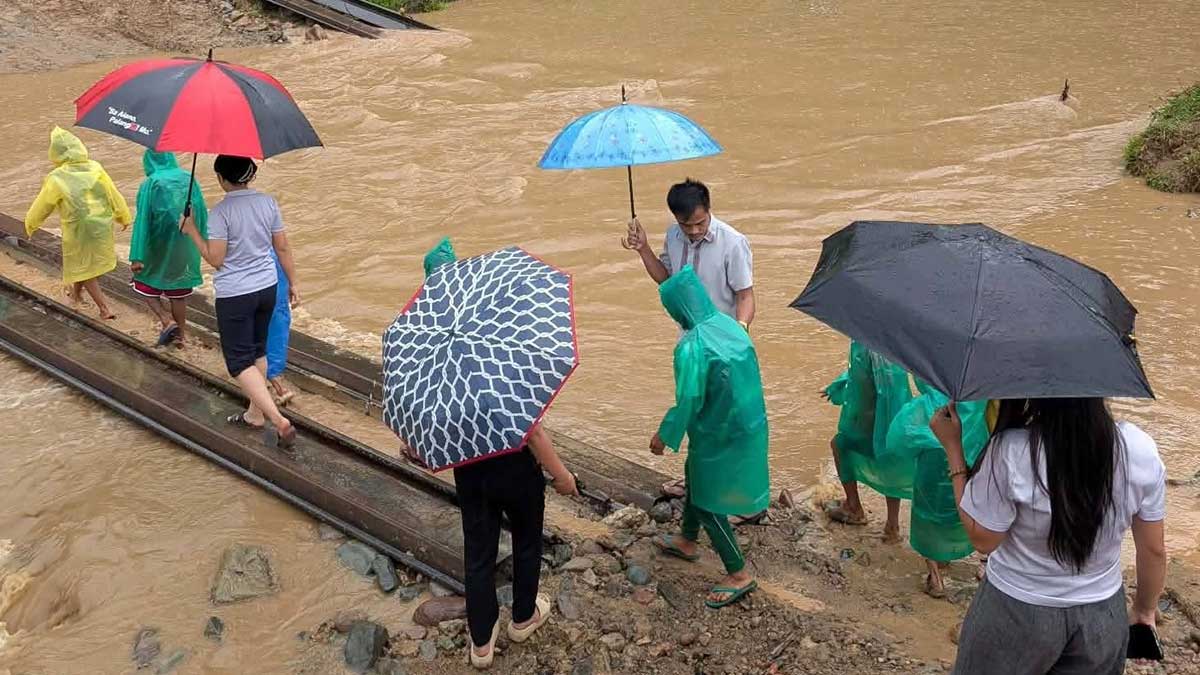
Teachers Double as 'River Rangers' to Ensure Student Safety Amid Bridge Construction in Zamboanga del Sur
Infrastructure
2026年7月7日
5
Inquirer NewsInfo

Teachers Double as 'River Rangers' to Ensure Student Safety Amid Bridge Construction in Zamboanga del Sur

AI サマリー

In Zamboanga del Sur, Philippines, teachers at Pisompongan Integrated School have become 'river rangers,' escorting students across a swollen river due to ongoing bridge construction. The school is seeking donations for essential protective gear for these educators.

PAGADIAN CITY, ZAMBOANGA DEL SUR, Philippines — While waiting for the completion of a government-funded bridge, teachers at Pisompongan Integrated School in Midsalip, Zamboanga del Sur, have taken on an unusual assignment: serving as “river rangers” to ensure the safety of students crossing a swollen river on their way to school. School principal Gideon Goc-ong said seven teachers have been designated as river rangers under the school’s Disaster Risk Reduction and Management contingency plan. Their task is to accompany pupils across a makeshift crossing fashioned from a steel sheet pile that was washed away by recent flooding at the bridge construction site and repurposed as a temporary footbridge. The improvised crossing is used by about 100 students from Purok 4 in Barangay Pisompongan, who continue to traverse the river while a P60-million concrete bridge is under construction. “Children are accustomed to crossing even when currents are strong, so we assigned river rangers to prevent casualties,” Goc-ong told the Inquirer. The bridge is expected to eliminate the dangerous river crossing that students have endured for years. In the meantime, the school’s contingency plan extends beyond escorting children across the river. Goc-ong said eight teachers have been assigned as cooks to prepare meals when heavy rains make the crossing impassable, while another eight serve as night safekeepers, providing stranded students with mats, blankets and temporary shelter. Despite these efforts, the school lacks basic protective equipment for its teachers. “Since equipment was not included in our MOOE (maintenance and other operating expenses) this year, we hope donors can provide vests, boots and raincoats for our teachers,” Goc-ong said. The bridge project is funded by the Office of the Presidential Adviser on Peace, Reconciliation and Unity (Opapru) through the Payapa at Masaganang Pamayanan (Pamana) program. It was approved after Goc-ong’s video showing students wading through the river’s strong current on their way to school went viral in June 2025. In his 2025 State of the Nation Address, President Marcos cited Midsalip as among the areas urgently needing bridges and directed the Department of the Interior and Local Government, the Department of Public Works and Highways and Opapru to inspect reported structures and prioritize their construction and rehabilitation. Zamboanga del Sur Gov. Divina Grace Yu initially pledged provincial funding for the bridge before Opapru confirmed that the project would be financed under the Pamana program. Then Opapru Secretary Carlito Galvez Jr. led the groundbreaking ceremony on Aug. 1, 2025. For residents of Barangay Pisompongan, the bridge represents more than just infrastructure—it promises a safer journey to school for hundreds of children. Until it is completed in the coming months, however, Pisompongan’s teachers will continue serving as river rangers, standing watch each day to guide their students safely across the river. /cb

多角的分析

経済的影響

インフラ整備の遅れが、教育機会へのアクセスという基本的な社会サービス提供に影響を与えている。P6000万(約1億2000万円相当)規模の橋建設プロジェクトは、完了まで生徒たちの安全を脅かす状況を生み出しており、経済的損失(通学遅延による学習機会の損失など)も無視できない。Pamanaプログラムのような政府開発援助(ODA)に依存するインフラプロジェクトは、その執行速度と効率性が問われる。フィリピン経済全体としては、インフラ投資は成長の鍵であるが、地方の未整備地域では、このような遅延が地域経済の活性化を阻む要因となりうる。

投資家心理

このニュースは、フィリピンにおけるインフラ開発の課題と、それが地域社会に与える直接的な影響を示唆している。投資家にとって、インフラプロジェクトの遅延は、プロジェクトの実行能力や政府の計画遂行能力に対する懸念材料となりうる。Pamanaプログラムのような政府主導のプロジェクトは、透明性と効率性が重要視される。海外からの直接投資(FDI)を呼び込むためには、インフラのボトルネック解消が不可欠であり、このような事例は、投資判断においてリスク要因として考慮される可能性がある。特に、公共事業分野への投資を検討する際には、過去のプロジェクトの進捗状況や、地方自治体との連携体制などを詳細に調査する必要がある。

社会的影響

フィリピンの地方部における教育へのアクセスが、インフラの未整備によっていかに困難な状況にあるかを示している。教師たちが本来の職務を超えて「川の守護者」や調理係、避難所担当となることは、教育現場の過酷な実情を浮き彫りにする。生徒たちが危険な川を渡ることを余儀なくされる状況は、教育を受ける権利がインフラの脆弱性によって妨げられていることを示唆している。また、教師たちが基本的な保護装備(ベスト、ブーツ、レインコート)さえ不足しているという事実は、公教育システムにおけるリソース配分の問題や、地方の学校が直面する厳しい財政状況を物語っている。これは、教育の質と公平性という、フィリピン社会全体が取り組むべき課題に直結する。

市民の声

ザンボアンガ・デル・スル州のピソンポン地区に住む子供たちとその家族にとって、この橋の建設は日々の生活に直結する問題である。学校への安全な通学路が確保されないまま、濁流の川を渡らなければならない状況は、子供たちの安全に対する親の不安を増大させる。教師たちがボランティア精神で生徒の安全を守っている現状は、公的な支援が十分でないことを示唆しており、住民はインフラ整備の遅れと、それによる生活への影響に直面している。学校側が寄付を募る必要に迫られている状況は、地方自治体や中央政府のインフラ整備計画の実行能力に対する住民の不満や、行政への期待と現実とのギャップを浮き彫りにしている。

背景・歴史的文脈

フィリピンでは、地理的な要因(多数の島嶼国家であること)や、過去の政権下でのインフラ投資の遅れから、地方部におけるインフラ整備が長年の課題となっている。特に、自然災害の影響を受けやすい地域では、橋や道路の未整備が、住民の生活や教育、経済活動に深刻な影響を与えている。2025年の大統領演説で言及されたように、橋の建設は喫緊の課題であり、Pamanaプログラムは平和地域開発を目的としているが、その実行には地方政府との連携や、計画から完了までの迅速さが求められる。過去の類似事例として、同様の河川横断問題が他の地域でも報告されており、インフラ開発の遅延が地域社会の安全と発展を阻害する構造的な問題となっている。

原文ソース

Inquirer NewsInfo

原文を読む