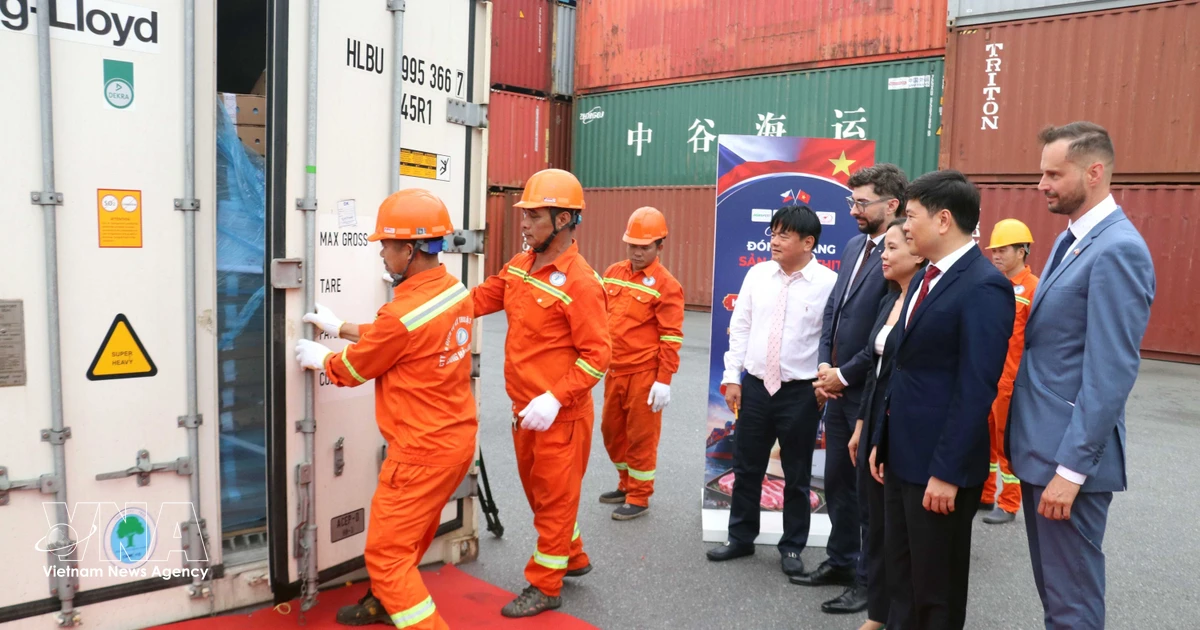
Vietnam Boosts Export Growth Amid Global Uncertainty, Accelerates New Energy Economy Transition
Vietnam's economy recorded robust growth in the first half, with GDP expanding 8.18%. The government is implementing multi-faceted measures, including leveraging FTAs and streamlining administrative procedures, to maintain and enhance export growth. Simultaneously, the country is accelerating its transition towards a new energy economy.
This article requires PRO
This article is outside the free access window or is a special report. PRO unlocks it and the full archive.
Related articles
- Vietnam, Panama Pledge Enhanced Coordination at Multilateral Forums
Vietnamese President To Lam and Panamanian President José Raúl Mulino agreed to continue coordination and mutual support at multilateral forums like the UN. Both nations emphasized adherence to international law, maritime freedom and safety, and peaceful dispute resolution.
- Vietnam Stock Market: Will HNX Stocks See Higher Valuations After Moving to HoSE?
Nearly 300 stocks are set to transfer from the Hanoi Stock Exchange (HNX) to the Ho Chi Minh Stock Exchange (HoSE). Experts indicate that the mere relocation to HoSE may offer limited upside for stock valuations, with corporate performance and financial health remaining the primary determinants of value.
- Northern Vietnam Maintains High Growth Amidst Development Goals
Northern Vietnam, particularly the Red River Delta region, is maintaining robust economic growth towards its 2030 goal of becoming a hub for sustainable development and innovation. Provinces like Quang Ninh and Hai Phong are showing remarkable GRDP growth, with achievements in industry, tourism, and investment attraction.
- Vietnam and Panama Leaders Meet, Agree to Strengthen Economic Cooperation
Vietnamese President To Lam officially welcomed Panamanian President José Raúl Mulino in Hanoi, with both leaders agreeing to strengthen economic cooperation. Two-way trade reached $478.1 million, up 19.2% year-on-year, highlighting Panama's strategic location and Vietnam's role as a gateway to ASEAN markets.