General articles are free for 24 hours after publish.
Can impeachment court decisions be appealed to SC? Philippines' judicial crossroads
The appealability of decisions from the Philippines' impeachment court to the Supreme Court is a key point of contention. Former SC justices suggest potential Supreme Court intervention in constitutional interpretations, particularly concerning the definition of 'two-thirds of all senators' in an impeachment trial.
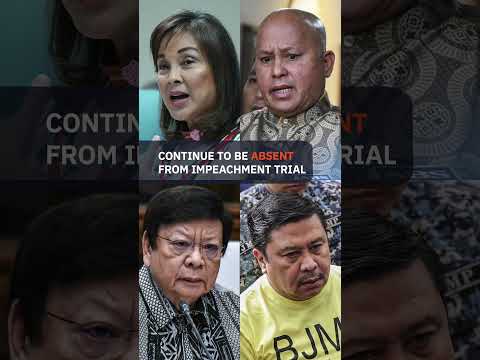
The question of whether decisions made by the Philippines' impeachment court can be appealed to the Supreme Court (SC) is emerging as a point of contention within the judiciary. On Wednesday, September 16, former Supreme Court justices, invited to provide advice on conviction thresholds, also offered insights on this matter. Retired Associate Justice Adolfo Azcuna stated straightforwardly that the SC holds the ultimate authority in interpreting constitutional boundaries. He believes the High Court could step in and reverse a Senate impeachment court ruling if it decides to adjust the minimum number required to convict a Vice President. Azcuna noted that there may be grounds for SC intervention if a senator who remains a senator, despite not participating in the trial for one reason or another, is excluded from the denominator when determining the required vote. This issue pertains to the interpretation of Article 11, Section 3(6) of the Constitution, which states: "No person shall be convicted without the concurrence of two-thirds of all the members of the Senate." The crux of the debate lies in whether "all" in this provision refers to the entire 24-member Senate, especially when at least four senators are absent. Senators Rodante Marcoleta and Jinggoy Estrada are currently detained on plunder charges; Senator Ronald “Bato” dela Rosa is in hiding in connection with his International Criminal Court drug war case; and Senator Loren Legarda is on medical leave. Retired SC Chief Justices Artemio Panganiban and Reynato Puno generally agreed that the Senate exercises judicial power as the sole body to try and decide impeachment cases. They characterized these proceedings as sui generis (a class of its own), dealing largely with political questions. However, they acknowledged exceptions, stating that judicial review by the High Court is possible when the impeachment court commits grave abuse of discretion or violates a party's right to due process. Panganiban explained that the SC would have to take action if the Senate commits grave abuse of discretion, not because the SC is superior, but because it is exercising a power lodged in it by the Constitution. Is there grave abuse of discretion? Some senator-judges appeared to anticipate arguments of grave abuse of discretion that could be raised before the SC. Senator Kiko Pangilinan asked the former justices whether changing the basis for the two-thirds threshold would violate Duterte's right to due process. Panganiban commended the current meeting, suggesting it was prudent to avoid accusations of grave abuse of discretion. Responding to another question by Senator Ping Lacson, Panganiban believed the SC should not interfere on the conviction threshold issue, stating that if the Senate is debating the matter and seeking guidance, the SC should not intervene, as long as the decision was not capricious, whimsical, or arbitrary. What Duterte may do The amici curiae was initiated after Senator Erwin Tulfo pushed to revisit presiding officer Senator Chiz Escudero's initial ruling on the conviction threshold. At the start of the trial in July, Escudero had kept the number at 16 votes, citing a 2000 SC ruling. He issued his July ruling hoping the issue would be brought before the SC for early determination, to prevent the impeachment court's eventual decision from being undermined by an unresolved debate. Wednesday's amici curiae suggests that prosecutors may not necessarily need 16 votes to win the case. Only Azcuna maintained the 16-vote threshold, while Panganiban, Puno, and former Chief Justice Hilario Davide Jr. (through a written position) shied away from a literal interpretation of the 1987 Constitution. If Escudero or the impeachment court lowers the threshold, the Vice President is expected to seek recourse with the SC. Her legal team has consistently pursued judicial relief throughout the impeachment process, even in the early stages in the House of Representatives. In fact, when Escudero announced the amici curiae on September 8, the Duterte camp ensured to manifest that the defense team's participation would be made ad cautelam, or strictly out of abundant caution. The court is slated to make a decision after oral arguments on September 23. "Such decision is without prejudice to any legal remedies that any of the parties may take," defense lawyer Michael Poa manifested on September 8. – Rappler.com Information Source: Rappler Philippines
Original source
Rappler Philippines