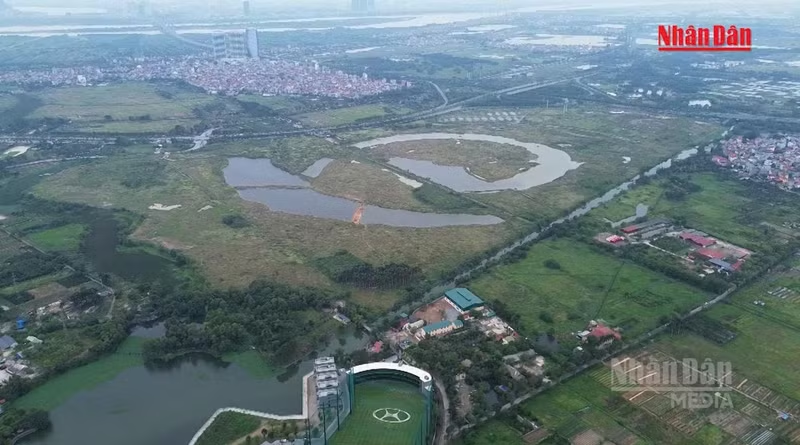
Vietnam Considers High Taxes on Idle Land and Short-Term Transactions to Curb Speculation
Vietnam's Ministry of Agriculture and Environment has proposed high tax rates for idle land and short-term transactions to curb land speculation. This initiative, part of the revised Land Law draft, aims to stabilize the land market and promote efficient resource utilization. Concurrently, flexible electricity price adjustments and vehicle tax reductions for VNeID users are being pursued.
This article requires PRO
This article is outside the free access window or is a special report. PRO unlocks it and the full archive.
Related articles
- Vietnam and Panama Leaders Meet, Agree to Strengthen Economic Cooperation
Vietnamese President To Lam officially welcomed Panamanian President José Raúl Mulino in Hanoi, with both leaders agreeing to strengthen economic cooperation. Two-way trade reached $478.1 million, up 19.2% year-on-year, highlighting Panama's strategic location and Vietnam's role as a gateway to ASEAN markets.
- Vietnam Seeks Diversified Funding to Achieve Lower Interest Rates
Vietnam's economy faces challenges in lowering interest rates solely through bank lending due to increased year-end capital demand. Experts emphasize expanding funding from stock markets and international sources, alongside improving credit ratings, as key to sustained rate reduction.
- Vietnam's Dien May Xanh Nears $4 Billion Revenue Mark on Apple Product Surge
Vietnam's leading electronics retailer, Dien May Xanh, achieved its highest monthly revenue in September. Cumulative revenue from January to September neared $4 billion (VND 99.46 trillion), with Apple products, particularly iPhones, contributing 20% of the total sales.
- Panama Ready to Serve as Gateway Connecting Vietnam to Latin American Economies
Panama's President, during an official visit to Vietnam, expressed readiness for Panama to become a 'gateway' connecting Vietnam to Latin American markets, aiming to strengthen bilateral trade and investment. This signals potential for deepened economic cooperation.