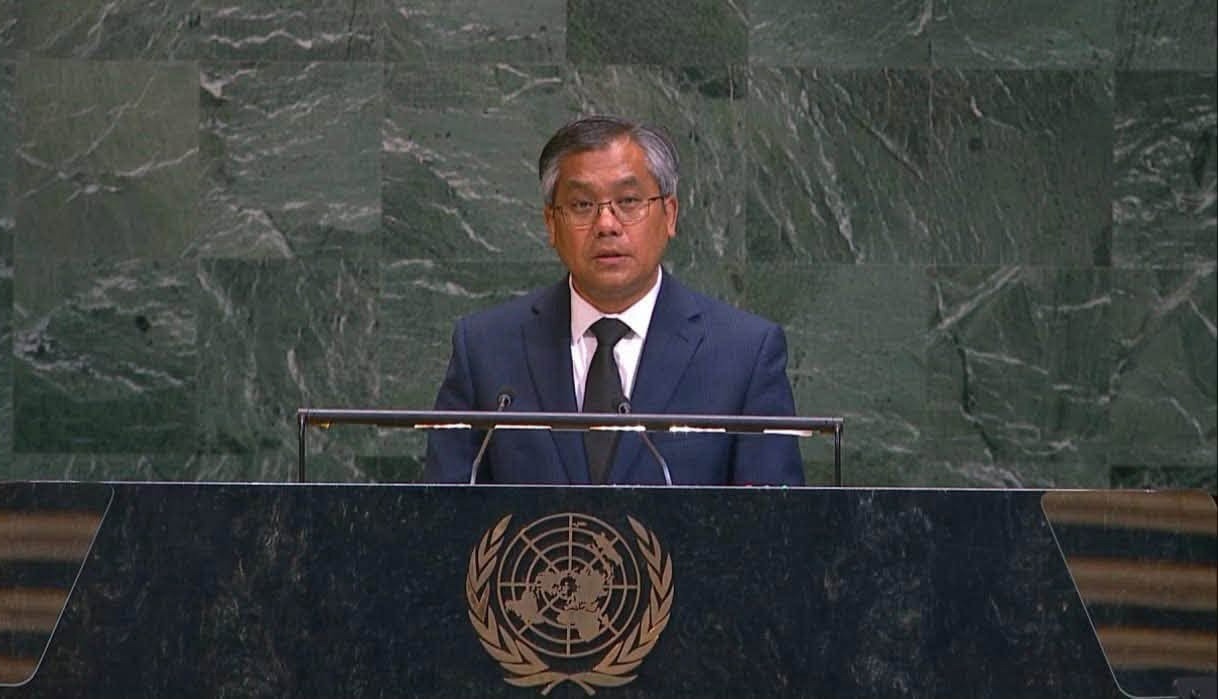
UN MYANMAR AMBASSADOR’S PLEA: The Hard Truth About R2P in Myanmar
Recent appeals by Myanmar’s UN Ambassador to invoke the Responsibility to Protect, or R2P, have stirred hope among many who desperately want the violence to end. However, it is crucial for the public to understand that R
Recent appeals by Myanmar’s UN Ambassador to invoke the Responsibility to Protect, or R2P, have stirred hope among many who desperately want the violence to end. However, it is crucial for the public to understand that R2P is not a magical solution that can instantly stop a war. The doctrine has a critical architectural flaw in its enforcement mechanism: it requires the explicit approval of the UN Security Council toauthorize any military action. Without this approval, the international community is legally powerless to intervene with force, regardless of how horrific the atrocities become. The Veto Wall at the Security Council The core obstacle lies in the structure of the UN Security Council, where five permanent members hold veto power. For any resolution to pass that authorizes military intervention, all five permanent members must agree, or at least abstain. In the case of Myanmar, both China and Russia have clear strategic interests in supporting the military junta. China prioritizes border stability and its massive economic investments, while Russia seeks to protect its arms sales and geopolitical alliances. Consequently, either nation can single-handedly block any resolution that would authorize a no-fly zone or peacekeeping force. This structural reality means that even if the entire rest of the world agrees that intervention is necessary, the veto power of these two nations renders the UN unable to act. Why Past Cases Offer Little Hope Comparisons to other conflicts, such as South Sudan, often create a misleading sense of optimism. In South Sudan, the UN did deploy a large peacekeeping mission under the banner of R2P. However, that mission was a peacekeeping force focused on protecting civilians within safe zones, not an enforcement mission designed to stop a war or topple a government. Even that limited effort failed to prevent the outbreak of civil war within the country. The situation in Myanmar is even more constrained because the geopolitical support for the regime is stronger, and the regional neighbors are less willing to allow foreign troops on their soil. The veto power that blocked South Sudan from a more robust intervention is the same power that completely blocks any UN presence in Myanmar today. The Strategic Alliance and Diplomatic Offensive While the UN Security Council remains paralyzed, a powerful internal movement is strengthening the hand of the resistance on the international stage. The National Unity Government and the National Unity Consultative Council recently announced the “Articles of Federal Transitional Arrangements,” a move formalized with the approval of the Steering Council for the Emergence of a Federal Democratic Union. This alliance brings together the NUG and key ethnic armed organizations, including the Kachin Independence Army, the Karenni National Progressive Party, Karen National Union, Chin National Front and others, creating a unified Bamar-Ethnic front against the military clique. This deepening solidarity is not just a military or political consolidation; it directly complements the UN Ambassador’s push for R2P. By presenting a cohesive,representative alternative government capable of governing a future federal union, the resistance makes a compelling case to the international community that they are the legitimate partners for peace. This unity transforms the diplomatic offensive from a plea for help into a demonstration of a viable political future, making it harder for the world to ignore the junta’s crimes or the resistance’s legitimacy. The Real Value of the Diplomatic Push If military intervention is impossible, the Ambassador’s call for R2P might seem futile, but it serves a vital strategic purpose. It shifts the battle from the battlefield to the courtroom and the diplomatic arena. By meticulously documenting the scale of the violence, the UN speech builds the evidentiary foundation needed for the International Criminal Court to issue arrest warrants against junta leaders. It also provides the political justification for individual nations to impose strict, unilateral sanctions on the regime’s leaders and their financial networks. Furthermore, it reinforces the legitimacy of the National Unity Government as the sole representative of the people, denying the junta the international recognition it craves. The Burden of Defense Remains Local The ultimate conclusion for the people of Myanmar is stark but necessary to accept. R2P cannot function as a rescue mission in the absence of Security Council consensus. The expectation that the United Nations will send troops to stop the airstrikes is misplaced given the current geopolitical deadlock. The primary responsibility for defense and survival falls on the people and their resistance groups. The international community’s role is now limited to providing humanitarian aid, enforcing economic sanctions, and pursuing long-term legal accountability to ensure that the crimes committed today are not forgotten or unpunished tomorrow.
多角的分析
直接の経済ニュースではありませんが、治安と司法の信頼は地域経済の土台です。職場での暴力や未成年者保護への不安が強まると、夜間営業、観光、雇用、地域サービス業のリスク認識が高まります。
投資家目線では、個別事件よりも法執行の予見可能性が焦点です。加害者への対応が曖昧になれば、ローカルビジネスの統治リスクや従業員保護の弱さとして評価されやすくなります。
ミャンマーで問われるのは、加害者個人だけでなく、雇用主、警察、近隣社会が被害のサインをどう扱ったかです。軍が声を上げたことで、事件は噂話ではなく、記録され検証される公共問題に変わります。
市民にとっては、自分や家族が被害に遭った時に公正な手続きへアクセスできるのかが最大の関心です。地域団体が声を上げることで、事件の風化を防ぎ、被害者側の孤立を和らげる意味があります。
背景・歴史的文脈
このニュースは、ミャンマーの地域社会で法の支配と弱者保護がどこまで機能しているかを映す事案です。暴力事件そのものに加え、女性団体や市民社会が司法手続きを求めて声を上げている点が重要です。軍政下では警察・司法への信頼が揺らぎやすく、個別事件が地域の不安や統治への不信に直結します。
原文ソース
SHAN News