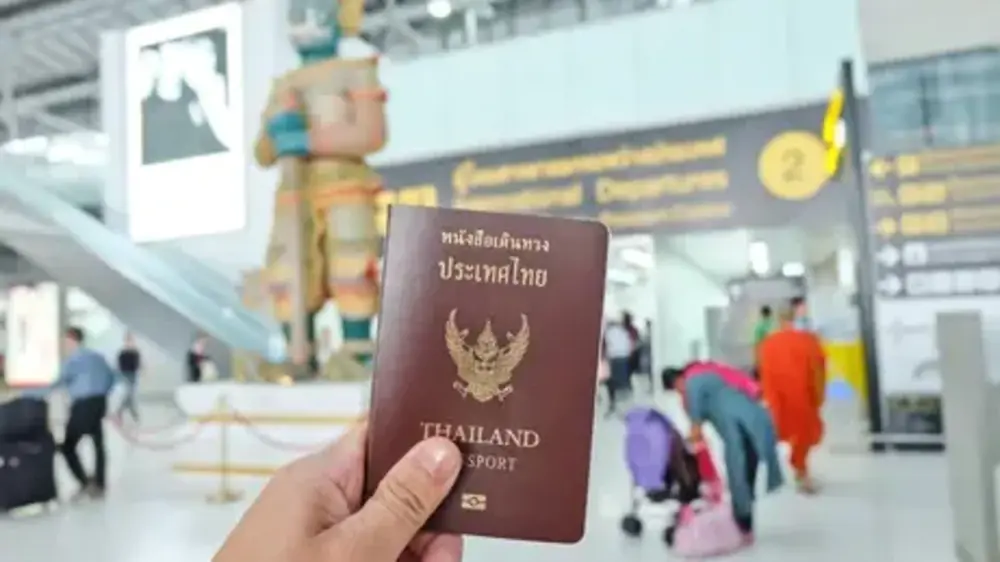
Thailand Passport Ranking Slips to 5th in ASEAN Amidst Global Mobility Shifts
Diplomacy
2026年7月24日
5
Chiang Rai Times
Relations
🇹🇭Thailand🇸🇬Singapore🌐United Nations / ASEAN

General articles are free for 24 hours after publish.

Thailand Passport Ranking Slips to 5th in ASEAN Amidst Global Mobility Shifts

Share
AI Summary

The Thai passport has seen a decline in international mobility, dropping to fifth place within ASEAN in the latest Henley Passport Index. With visa-free access to 77 destinations, the gap with regional leaders like Singapore is widening.

Home - Thailand News - Thailand Passport Ranking Slips: Why It Now Ranks 5th in ASEAN The Thai passport has slightly lost its edge on the global travel stage this year. Recent data reveals a minor slip in international mobility for Thai citizens compared to regional neighbors. According to the latest global index, Thailand’s travel document dropped two spots from last year. It now proudly sits in the 63rd position worldwide for global travel freedom and border access. The Thai passport dropped to the 63rd spot globally in the newly released Henley Passport Index. Thai citizens can currently travel to 77 international destinations without needing a prior visa. Singapore retains its title as the world’s most powerful passport, offering access to 192 destinations. When looking closely at Southeast Asia, the Thai passport holds the fifth spot in the region. Several regional neighbors are clearly moving ahead in securing valuable visa-free travel agreements. Singapore easily takes the very top spot for both the ASEAN region and the entire world. Malaysia comes in a very strong second, offering its citizens vast global mobility and seamless travel. Brunei secures the third regional position with excellent access to various international borders. East Timor surprisingly holds fourth place, leaving Thailand trailing slightly behind its closest regional partners. Thai travelers currently enjoy visa-free or visa-on-arrival access to exactly 77 global destinations. This is a respectable number, but it is less than half the access granted to Singaporeans. Singapore citizens can freely enter a staggering 192 destinations without stressful early visa preparations. This highlights a rather significant gap in travel freedom within the growing ASEAN economic bloc. For Thai citizens, this means more paperwork and longer wait times for many popular international holidays. Business travelers also face hurdles when trying to quickly enter restricted markets for sudden global meetings. Just below Thailand on the global list, Indonesia currently holds the 68th ranking position. Indonesian citizens currently enjoy relatively easy access to exactly 70 distinct international travel destinations. The Philippines follows very closely behind, successfully landing in the 72nd place globally this year. Filipino passport holders can seamlessly travel to 65 countries without securing a visa beforehand. Vietnam sits slightly further down the regional list at the 87th spot globally. The Vietnamese travel document currently offers its holders seamless access to just 48 visa-free spots. Cambodia and Laos are tied very closely in terms of their overall global passport strength. Both of these developing nations offer their citizens visa-free access to exactly 47 international destinations. Meanwhile, Myanmar currently ranks the absolute lowest in the entire Southeast Asian region. Sitting at 91st globally, its passport provides visa-free entry to merely 43 global travel destinations. These lower-tier rankings reflect ongoing diplomatic challenges and slower economic integration for these specific nations. Improving these scores requires years of careful geopolitical negotiation and strengthened international trust. The widely respected Henley Passport Index is the ultimate authority on global travel freedom. It expertly calculates and ranks exactly 199 different passports against 227 potential travel destinations worldwide. The comprehensive index uses exclusive, highly accurate data from the International Air Transport Association (IATA). This ensures the public rankings are completely reliable and consistently updated throughout the calendar year. As per a recent report by the Bangkok Post, these rankings shift annually based on global agreements. Whenever a national visa policy changes, the index rapidly updates its scoring system to reflect reality. A specific passport receives a score of one for every destination requiring no prior visa. This vital score also includes locations where travelers can easily obtain a visa upon arrival. If a pre-departure government-approved electronic visa is required, the destination score simply does not increase. The strict system only rewards frictionless, highly spontaneous international travel across sovereign global borders. This metric is highly important for tracking global mobility trends and assessing international diplomatic strength. A high score proves that a country is deeply trusted by the broader international community. The powerful Singapore passport has impressively topped the world rankings consistently in recent years. It previously shared this highly prestigious title with Japan before finally taking the sole lead. Japan’s once-dominant passport dropped to the second-best position over the last two years. Despite this minor slip, Japanese citizens still enjoy incredible global travel freedom and mobility. Other massive global powers show highly varied results in this year’s comprehensive travel index. For instance, the United States passport currently sits in the 10th position on the global stage. At the very other end of the spectrum, global mobility remains incredibly restricted for many. The Iranian passport currently ranks 96th, offering exceptionally limited international travel options for its citizens. Afghanistan sadly remains stuck at the very bottom of the global passport strength list. Ranked 104th worldwide, its citizens face the absolute toughest barriers to basic international movement today. These low rankings are usually the direct result of prolonged conflicts or strained geopolitical relationships. Citizens of these nations face immense friction when attempting cross-border travel for business or leisure. Passport strength is a highly vital indicator of a growing nation’s diplomatic relationships worldwide. Stronger passports naturally mean much easier international business transactions and smoother holiday travel for everyday citizens. When citizens can travel freely, they bring back valuable global knowledge and fresh business connections. This organic cross-border networking is absolutely essential for driving modern innovation and sustained economic growth. Thailand heavily relies on international tourism and foreign investments to fuel its bustling domestic economy. Having a globally respected travel document helps project an image of a modern, highly cooperative nation. While dropping two spots is minor, it certainly highlights a pressing need for stronger diplomatic pushes. Thailand must actively secure more reciprocal visa agreements to significantly boost its future global standing. For now, Thai citizens still enjoy excellent, frictionless access to many key regional Asian hubs. Travel across neighboring countries remains largely hassle-free, highly accessible, and relatively inexpensive for locals. As global tourism fully rebounds, passport strength will continue to play a massively critical role in a nation's economic recovery and its overall global integration.

0

Original source

Chiang Rai Times

原文を読む