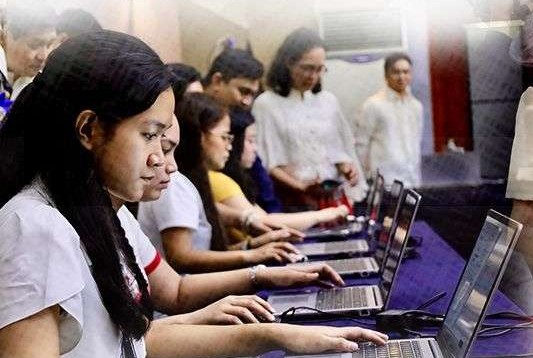
Philippine Higher Education Institutions to Implement English Proficiency Standards by 2026
Health
2026年7月30日
5
GMA News Philippines

General articles are free for 24 hours after publish.

Philippine Higher Education Institutions to Implement English Proficiency Standards by 2026

Share
AI Summary

The Philippine Association of Colleges and Universities Commission on Accreditation (PACUCOA) will integrate English proficiency benchmarks into its accreditation standards for higher education institutions starting in 2026, aiming to boost the global competitiveness of Filipino graduates by improving language skills for both students and faculty.

The Philippine Association of Colleges and Universities Commission on Accreditation (PACUCOA) is set to incorporate English language proficiency benchmarks into its accreditation standards for higher education institutions starting in 2026. This move is part of a broader effort to enhance the global competitiveness of Filipino graduates. Dr. Ferdinand Somido, a PACUCOA Commissioner, stated at a British Council media forum that participating institutions will be required to work towards minimum English proficiency targets for both students and faculty. Beginning in 2026, at least 20% of students are expected to demonstrate B1-level proficiency under the Common European Framework of Reference for Languages (CEFR), while 40% of faculty members should attain C1-level proficiency. These targets will be progressively increased, with the aim for all students to reach at least B1 proficiency and all faculty members to attain C1 proficiency by 2030 or later. However, Dr. Somido clarified that PACUCOA is not mandating a uniform English curriculum for all institutions. Instead, English communication is being adopted as a quality indicator that supports teaching, learning, research, governance, and graduate employability. "It ensures that higher education institutions have effective systems for developing students' English communication competency consistent with their mission, program outcomes, and national and international quality expectations," he added. Citing a decline in the country's English proficiency and the need to produce globally competitive graduates, Dr. Somido explained the rationale behind the new standards. A recent study involving 69 private higher education institutions nationwide revealed that many students entered college with B1-level English proficiency but showed minimal improvement by graduation, a finding he described as "shocking." "I was happy to note that the entry level of students entering tertiary programs is B1," he said. "But I was shocked that during the graduation level... most of them did not improve. The highest is at least B2 only." Ideally, graduates should achieve C1 proficiency, which he characterized as the professional level. Furthermore, a gap in English proficiency between urban and rural educational institutions was noted. Dr. Somido observed that universities and colleges in urban areas generally exhibit better proficiency levels. He emphasized the importance of providing greater support to schools in rural communities to ensure students have access to comparable educational opportunities, regardless of their location. PACUCOA partnered with the British Council in June 2025 to integrate English language proficiency into its accreditation framework using internationally recognized language assessment tools. Information Source: GMA News Philippines

0

Original source

GMA News Philippines

原文を読む