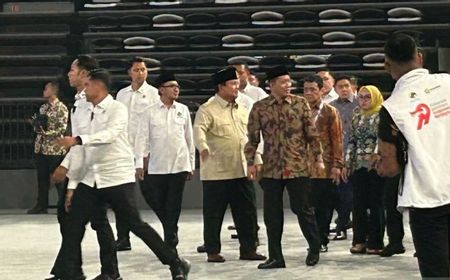
President Prabowo Inaugurates Red and White Village Cooperative at 79th National Cooperative Day
President Prabowo officially launched the "Red and White Village Cooperative" (KDKMP) operations during the 79th National Cooperative Day (Harkopnas) celebration. This initiative aims to revitalize the people's economy and strengthen food and economic resilience at the grassroots level.
JAKARTA - President Prabowo Subianto officially attended the 79th National Cooperative Day (Harkopnas) celebration held at the Indonesia Arena, Gelora Bung Karno (GBK), Jakarta, on Sunday (12/7/2026). This year's commemoration is a great momentum for the revival of the people's economy through the cooperative sector. President Prabowo arrived at the event location at around 14:15 WIB wearing his typical light brown safari shirt, paired with black trousers and a black turban. The presence of the Head of State was greeted with a roar of the song "From Sabang to Merauke" sung together by all participants who filled the stands to the middle area of Indonesia Arena. Momentum of the Launch of the Red and White Village/Neighborhood Cooperative (KDKMP) The peak of the 79th Harkopnas commemoration carries the big theme "Cooperative Power, Indonesia is Successful". This theme is not just a slogan, but a marker of the start of a new chapter of the village economic movement in line with the entry into the operational phase of the Red and White Village Cooperative (KDKMP). The KDKMP program is projected to be a key pillar in strengthening food and economic resilience at the grassroots level, in line with the vision of national industrialization and self-reliance. The commemoration of National Cooperative Day on July 12 is rooted in the First Cooperative Congress which took place in Tasikmalaya in 1947. List of State Officials who Accompanied the President This national-scale event was also attended by members of the Red and White Cabinet ministers as well as the heads of high state institutions. The following is a list of officials who accompanied President Prabowo at the Indonesia Arena: Minister of Cooperatives Ferry Juliantono, Minister of Food and Agriculture Zulkifli Hasan, Minister of Finance Purbaya Yudhi Sadewa, Minister of Investment and Industrialization Rosan Roeslani, Minister of ATR/BPN Nusron Wahid, Minister of Health Budi Gunadi Sadikin, Minister of Trade Budi Santoso, Cabinet Secretary Teddy Indra Wijaya, TNI Commander General Agus Subiyanto, National Police Chief General Listyo Sigit Prabowo, Attorney General ST Burhanuddin. Renovation of the First Cooperative Congress Historic Building in Tasikmalaya As part of the 79th Harkopnas series of activities, the Ministry of Cooperatives has prepared a number of follow-up strategic agendas. One of the most anticipated is the groundbreaking of the renovation of the historic building where the First Cooperative Congress was held in Tasikmalaya, West Java. Minister of Cooperatives Ferry Juliantono explained that the historic building where the National Cooperative Day was born on July 12, 1947 will be completely renovated in cooperation with the Tasikmalaya City Government. Later, this location will be repurposed as a cultural heritage site as well as a center for education and modern activities related to Indonesian cooperatives.
多角的分析
「赤白村協同組合」(KDKMP)の設立は、インドネシア経済の根幹をなす協同組合セクターの活性化を目指す政府の意欲的な試みである。過去、インドネシアの協同組合は、特に農村部において、地域経済の自立と国民生活の向上に貢献してきた歴史がある。しかし、近年は官僚主義や資金調達の困難さ、市場競争力の低下といった課題に直面してきた。KDKMPがこれらの課題を克服し、食料安全保障の強化や農村部の所得向上に具体的に寄与できるかが、その成否を分ける鍵となる。特に、デジタル化やサプライチェーンの効率化といった現代的なアプローチを取り入れられるかが、経済的レジリエンス向上への貢献度を左右すると考えられる。
KDKMPの設立は、直接的な投資機会というよりは、インドネシアの経済構造における協同組合の役割再評価を促すシグナルと捉えられる。過去、協同組合は国民経済の基盤として重視されてきたが、近年は民間企業や外国投資への傾斜が見られた。プラボウォ政権下での協同組合への注力は、国内経済の底上げと、特に農村部における消費拡大への期待感を生む可能性がある。ただし、投資家としては、KDKMPの具体的な運営体制、資金調達メカニズム、そして市場への影響度を注視する必要がある。透明性の高い運営と、市場原理との調和が図られれば、間接的に国内消費市場の安定化に寄与する可能性も考えられる。
「赤白村協同組合」(KDKMP)の設立は、インドネシアの農村部における経済的自立と生活水準向上を目指す動きとして、社会的に大きな期待が寄せられている。かつて、協同組合は地域コミュニティの結束と相互扶助の象徴であり、多くの国民の生活を支えてきた。しかし、時代と共にその役割は変化し、一部では形骸化も指摘されてきた。KDKMPが、単なる政府主導のプロジェクトに終わらず、地域住民の主体的な参加とニーズに基づいた運営を実現できるかが問われている。特に、若年層の農業・農村への関心を高め、都市部への人口流出を抑制する効果も期待される。タシクマラヤの歴史的建造物の改修は、協同組合運動の歴史的意義を再認識させ、国民のアイデンティティ形成にも寄与するだろう。
プラボウォ大統領が「赤白村協同組合」(KDKMP)の運営開始を宣言したことは、ジャカルタ市民としては、物価への影響を注視したいところだ。特に食料品の値動きは、日々の生活に直結する。協同組合が食料供給網を強化し、中間マージンを削減できれば、消費者物価の安定に繋がる可能性がある。また、農村部が活性化すれば、都市部への人口流入が抑制され、ジャカルタの過密化やインフラへの負荷軽減にも間接的に貢献するかもしれない。しかし、KDKMPが具体的にどのような成果を上げ、それが市民生活にどう反映されるのかは、まだ見通せない部分も多い。タシクマラヤの歴史的建造物の改修は、文化遺産保護の観点からは良いニュースだが、直接的な生活への影響は限定的だろう。
背景・歴史的文脈
インドネシアにおける協同組合運動は、1947年のタシクマラヤでの第一回協同組合大会に端を発する。独立後の国家建設期において、協同組合は国民経済の基盤を築き、農村部の貧困削減と自立を支援する重要な役割を担った。スハルト政権下では、政府主導の統制経済の一環として、協同組合の組織化が進められた側面もあるが、その一方で、地域経済の活性化に貢献した事例も少なくない。しかし、近年のグローバリゼーションと市場経済の進展に伴い、多くの協同組合は競争力の維持や組織運営の効率化に課題を抱えていた。プラボウォ政権によるKDKMPの設立は、こうした歴史的経緯を踏まえ、協同組合セクターを再び国民経済の柱として再興させようとする意図の表れと言える。
原文ソース
VOI English