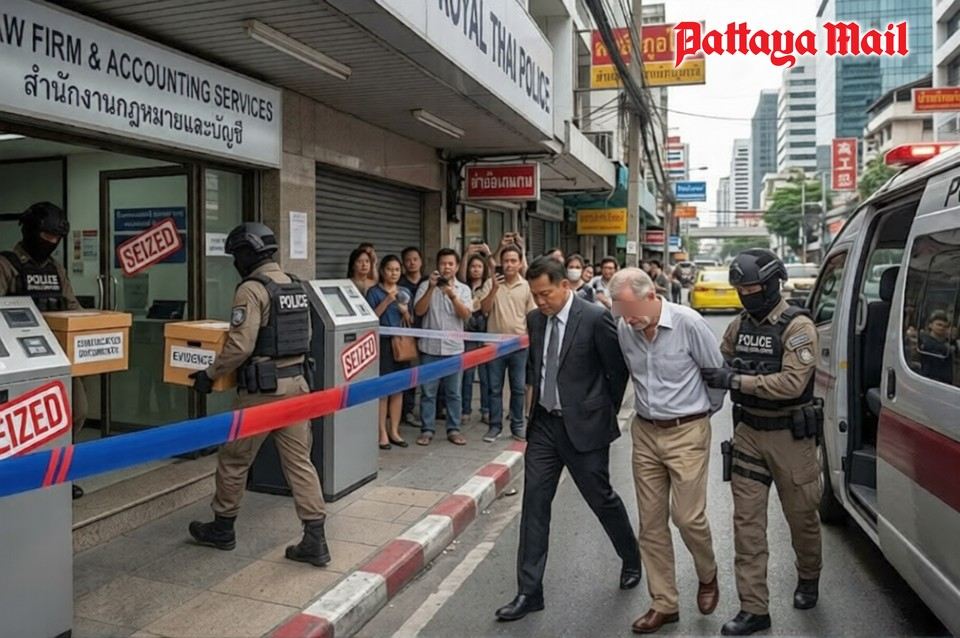
Thailand's 51-49 Nominee Model Crackdown Leaves Foreign Investors as Real Victims
Thailand's crackdown on the '51-49 nominee model,' used by foreigners to circumvent land ownership restrictions, has left many foreign investors facing asset seizures and business closures. Critics question the insufficient accountability of facilitating lawyers.
PATTAYA, Thailand – The Thai government's crackdown on the '51-49 nominee model,' a scheme used by foreigners to circumvent restrictions on land ownership, is causing significant repercussions both domestically and internationally. This nationwide sweep has led to numerous arrests and asset seizures across major economic and tourist hubs. In Phuket and Surat Thani, particularly on the islands of Samui and Koh Phangan, authorities dismantled major networks involving hundreds of shell companies, resulting in the seizure of luxury villas, beachfront land, and resort properties valued at billions of baht. In Pattaya and Chiang Mai, commercial real estate, restaurants, and entertainment venues that had operated under Thai names for years were targeted. In Bangkok's Huai Khwang district, illegal retail and restaurant operations backed by foreign syndicates using Thai nominees were shut down. Arrests included not only foreign owners but also Thai nationals who admitted to lending their names, along with corporate secretaries and local accountants who facilitated the paperwork. The roots of this issue, however, trace back decades. Thailand was once considered a 'paradise' for many foreigners who were captivated by its culture and lifestyle, dreaming of settling down or establishing long-term businesses. Yet, the legal restriction prohibiting foreigners from owning land or purchasing houses remained the biggest barrier to realizing those dreams. This collision between demand and legal constraints became a 'goldmine' for certain law firms. When foreigners sought guidance, some lawyers offered hope, explaining that establishing a Thai company with Thai nationals holding a 51 percent majority stake would enable land and property acquisition, charging hefty service fees. At the time, foreign investors viewed these lawyers as 'heroes who made their dreams come true,' believing this practice to be legitimate. Fast forward to 2026, and that 'secure world' has shattered. With rigorous investigations into financial trails and shareholding structures, what was once presented as a viable solution has now become the basis for serious criminal allegations. Foreign investors are being arrested, their businesses ordered to close, their assets seized, and some face imprisonment or deportation. Lifetime savings intended to build a future in Thailand have disappeared overnight. Critics point out that the most painful aspect is that while foreign investors are publicly portrayed as wrongdoers and lose everything, the lawyers who allegedly designed and promoted these structures have, in many cases, avoided comparable consequences. They collected substantial professional fees for years, but many remained insulated because their names did not appear as directors or majority shareholders bearing direct legal responsibility when enforcement intensified. If the Thai government wishes to clean up the economy and promote sustainable, lawful property ownership, focusing enforcement solely on foreigners—many of whom may argue they relied on professional legal advice—may not be sufficient. Authorities may also need to examine the role of those who designed, promoted, and facilitated these arrangements, including any legal professionals who may have abused their expertise for personal gain. Otherwise, critics argue, the justice system risks being perceived as allowing certain domestic actors to profit while leaving foreign investors, who believed they were acting lawfully, to bear the greatest consequences. Ultimately, all sectors should carefully consider whether this aggressive enforcement campaign is fully addressing a longstanding structural problem or whether it also risks undermining investor confidence and discouraging those who genuinely wish to contribute to Thailand’s future. Source: Pattaya Mail
多角的分析
タイ政府による外国人による土地所有制限を回避するための「51-49モデル」に対する摘発は、タイ経済の透明性向上と持続可能な成長を目指す動きと見られる。しかし、このモデルは長年にわたり外国資本のタイへの流入を支えてきた側面もあり、急激な取り締まりは不動産市場や関連産業に一時的な混乱をもたらす可能性がある。特に、観光地や主要都市における商業用不動産やリゾート施設の差し押さえは、地域経済に直接的な影響を与える。政府は、経済への過度な打撃を避けつつ、法執行を強化するバランスを取る必要がある。
今回の摘発は、タイにおける外国投資家のリスク認識を大きく変える可能性がある。長年、合法的なアドバイスに基づいていると信じていたスキームが、突然犯罪行為とみなされる事態は、投資家心理に深刻な影響を与える。特に、専門家(弁護士など)の関与があったにもかかわらず、最終的な責任を投資家が負わされるという構造は、新たな投資を躊躇させる要因となる。タイ政府は、投資家保護の観点から、より明確で一貫性のある法規制と、専門家に対する監督体制の強化を示す必要がある。
「51-49モデル」の摘発は、タイ社会における外国人との関係性、特に経済的な摩擦を浮き彫りにしている。外国人投資家がタイでの生活基盤を築こうとする一方で、国内法による制約が、彼らを便宜的な手段に頼らせ、結果として法的リスクにさらすという構図だ。また、名義貸しを行ったタイ国民が逮捕される事態は、経済的困窮が法を破る行為に駆り立てる社会的な側面も示唆している。この問題は、タイ社会が外国人との共存と経済発展のバランスをどのように取るべきかという、より大きな問いを投げかけている。
このニュースは、タイ国民、特に地方や観光地で生活する人々にとって、経済的な不確実性を高める要因となり得る。外国資本が撤退したり、事業が縮小したりすれば、雇用機会の減少や物価への影響が懸念される。また、名義貸しに関与したタイ国民が逮捕されるケースは、一部の人々が経済的困難から法を犯す状況にあることを示唆しており、社会的なセーフティネットの必要性も浮き彫りにしている。一方で、法治国家としてのタイの姿勢を支持する声もあるだろう。
背景・歴史的文脈
タイでは、外国人の土地所有を制限する法律が存在する。1999年の土地法第96条では、外国人が土地を所有するには内務大臣の許可が必要とされている。この制約を回避するため、長年にわたり、タイ国民が名義上の株主(51%以上)となるタイ法人を設立し、外国人が実質的な支配権を行使する「51-49モデル」が広く用いられてきた。このモデルは、一部の法律事務所や会計事務所によって推奨され、多くの外国人投資家がこれを合法的な手段として利用してきた。しかし、近年、このスキームが悪用され、マネーロンダリングや違法な経済活動に繋がっているとの指摘が高まり、タイ政府は取り締まりを強化する方針を打ち出した。今回の摘発は、こうした長年の構造的な問題に対する政府の対応として位置づけられる。
原文ソース
Pattaya Mail