Philippines Middle Class Bears Brunt of Economic Squeeze, Study Finds
The Philippines' middle class is bearing the brunt of rising costs and higher interest rates without government assistance, according to state think tank PIDS. Minimum wage earners and families of overseas workers are also vulnerable.
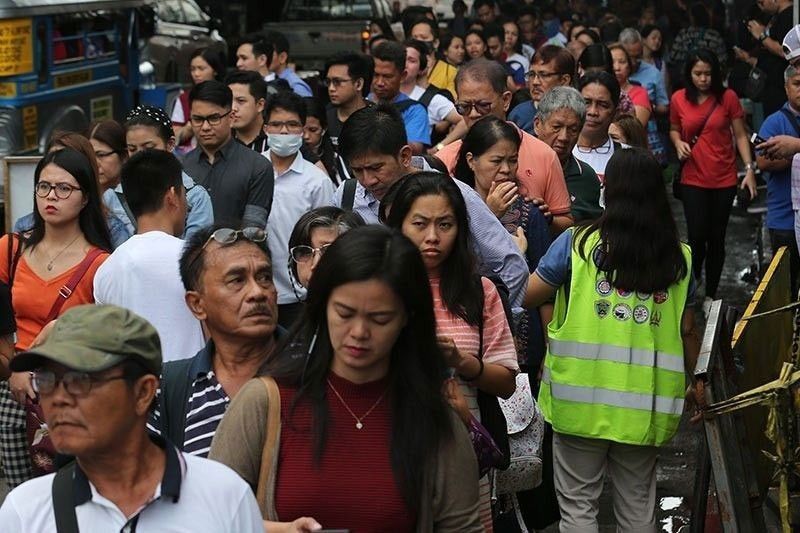
MANILA, Philippines — The country’s middle class is bearing the brunt of rising costs and higher interest rates without assistance from the government, according to state think tank Philippine Institute for Development Studies (PIDS). “The middle class is often, shall we call it in the literature, the quiet absorber of economic shocks,” PIDS senior research fellow John Paolo Rivera said in an interview with ANC, when asked which group absorbs the most economic pain at present. “They are the one absorbing rising costs without necessarily qualifying for government assistance,” he said. He said minimum wage earners are the ones immediately hit by economic shocks because the bulk of their budget goes to necessities. “Most of their income goes into consumption. So any sharp increases in the cost of living would actually affect significantly the amount of money, their purchasing power,” he said. Families of overseas Filipino workers (OFW), he added, are also vulnerable to shocks when remittance growth slows down as prices increase. “That’s why we’re trying to temper inflation so that the blow to the minimum wage earners, middle class, OFW dependent families would be mitigated,” he said. Rivera emphasized the need to address the country’s energy dependence, infrastructure, food security, productivity, investor confidence and institutional quality to achieve higher growth. “If we do not resolve or address these issues sooner, slower growth might become a new normal rather than a temporary phase,” he said. Inflation eased but remained elevated at 6.8 percent in May from 7.2 percent in April. Despite easing tensions in the Middle East, Rivera said that households remain vulnerable to shocks given the country’s dependence on oil imports. The Middle East tensions, which triggered an oil shock, translated to higher fuel prices and pushed up other costs including transportation, electricity and food in the domestic market. Rivera said that the economy is also facing persistent uncertainty, with geopolitical risk becoming part of commodity pricing. He said that uncertainty, along with a high interest rate environment, may lead to businesses delaying investment. While external shocks can trigger an economic slowdown, he said internal structural weaknesses determine how long the country’s slow growth episode can last. Within the next 12 to 18 months, he said that the economy is expected to grow modestly, unless investment conditions improve and economic confidence is restored.
多角的分析
フィリピン経済は、インフレの鈍化にもかかわらず、依然として高水準にあり、中間層の購買力を圧迫している。これは、政府の支援策が中間層に十分に行き届いていない構造的な問題を示唆している。エネルギー依存、インフラ、食料安全保障といった構造的弱点は、外部ショックに対する脆弱性を高め、持続的な成長を阻害する要因となっている。これらの問題が解決されない限り、低成長が常態化するリスクが高い。
高い金利環境と地政学リスクによる不確実性は、投資家のリスク回避姿勢を強め、国内投資を抑制する可能性がある。特に、インフラや制度の質といった構造的な問題が未解決な場合、海外からの直接投資(FDI)の呼び込みは困難になる。経済的信頼感の回復と構造改革の進展が、投資環境改善の鍵となるだろう。
中間層は、最低賃金労働者ほど直接的ではないものの、物価上昇や金利高の影響を政府の支援なしに吸収させられている。これは、社会的なセーフティネットの恩恵が中間層にまで及ばない状況を示している。また、OFW家族も送金収入の変動リスクに晒されており、フィリピン経済を支える重要な層が経済的ショックに脆弱な状態にある。これは、国民生活の安定という観点から、公衆衛生や教育への影響も懸念される。
マニラ首都圏に住む中間層の家庭では、食料品や燃料費の値上がりが家計を圧迫し、娯楽や貯蓄に回せる金額が減少している。政府からの直接的な支援がないため、節約や支出の見直しを余儀なくされている。また、地方のOFW家族は、海外での収入が不安定になることへの不安を抱え、子供の学費や医療費への影響を心配している。
背景・歴史的文脈
フィリピン経済は、長らく構造的な課題を抱えている。特に、インフラの未整備、エネルギー源の偏り、食料自給率の低さ、そして官僚主義的な制度は、経済成長の足かせとなってきた。これらの問題は、過去の政権下でも繰り返し指摘されてきたが、抜本的な解決には至っていない。中間層は、経済成長の恩恵を受けつつも、その負担も負わされる「吸収者」としての役割を強いられてきた。OFWからの送金はフィリピン経済の重要な柱だが、これも世界経済の変動や、国内の物価上昇の影響を受けやすい。
原文ソース
Philstar Nation