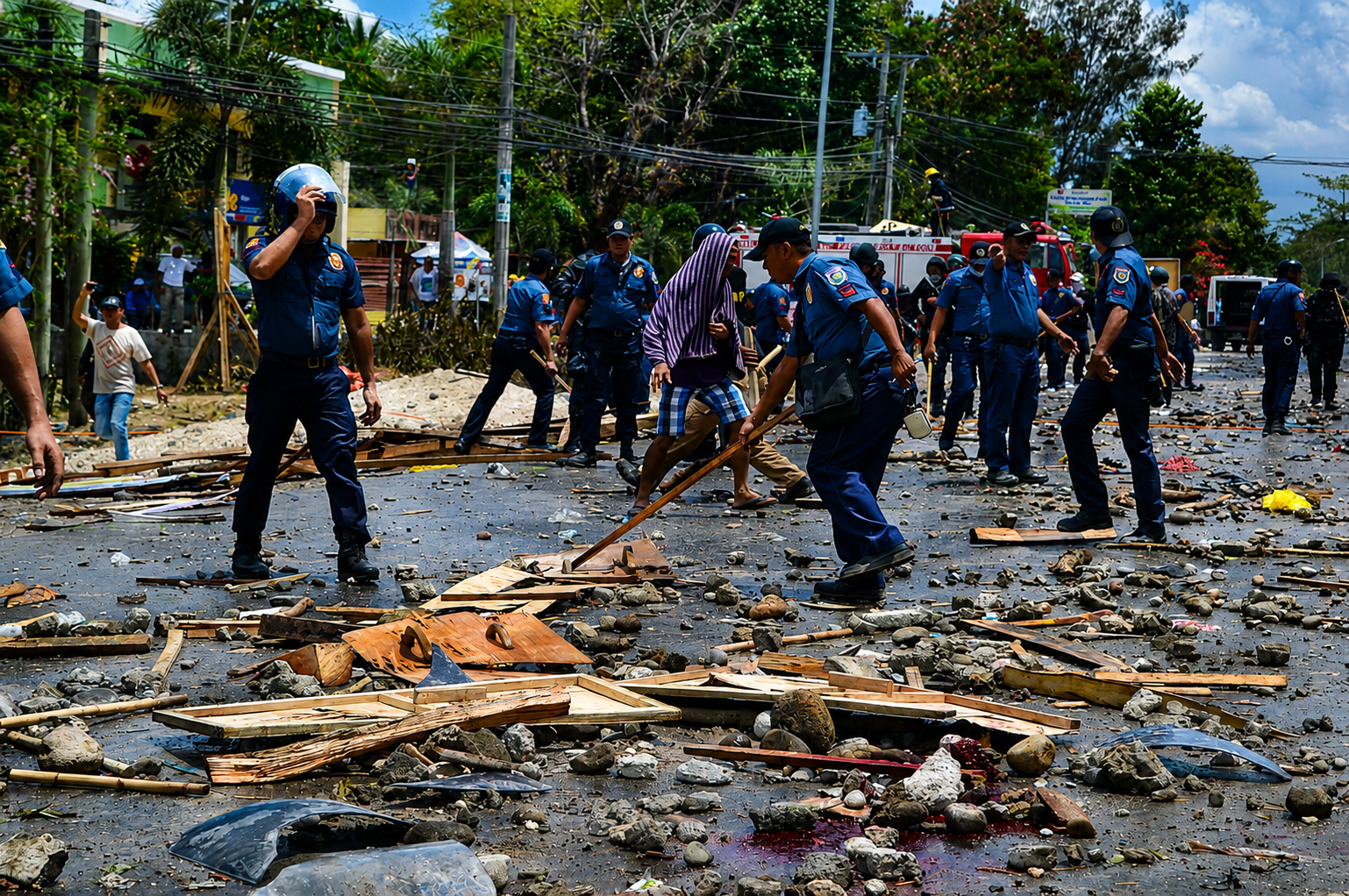
Kidapawan Lessons Crucial as Philippines Braces for Super El Niño
Environment
2026年7月1日
5
Inquirer NewsInfo

Kidapawan Lessons Crucial as Philippines Braces for Super El Niño

AI サマリー

The 2016 Kidapawan incident highlighted the Philippines' vulnerability to climate-induced food crises and governance failures. With a Super El Niño looming, strengthening food security and implementing structural reforms are urgent.

The 2016 Kidapawan bloodshed remains a defining moment in Philippine history, exposing the fragility of governance when confronted with climate shocks and food insecurity. As the country braces for the 2026-2027 Super El Niño, the lessons of Kidapawan are more urgent than ever. Famine is not a natural calamity but a governance failure, and climate shocks act as systemic stressors that destabilize economies, livelihoods, and political institutions. The tragedy revealed that farmers, mostly tenants trapped in debt-driven poverty, exploitative landlord-sharing schemes, and market cartels, face chronic food insecurity. Many also have large families, perpetuating generational cycles of deprivation. Food insecurity is always in their midst. When amplified by climate shocks, it becomes a driver of instability and political violence. The cumulative socioeconomic impact could exceed P300 billion, equivalent to 1.5 percent to 2 percent of gross domestic product. Such losses ripple across society. Rural employment declines, households face lower incomes, urban consumers confront rising food prices, and the state struggles with fiscal deficits. The social contract between government and citizens is strained, and the risk of unrest grows. Preventing unrest requires transparent relief distribution, social protection for farmers, inclusive dialogue mechanisms, and rapid response systems. Governance reform is not merely about efficiency but also about national security. Recent insights and pathways for resilience include dietary diversification, buffer stock expansion, cooperative empowerment, water infrastructure investment, and ASEAN benchmarking. The Philippines today faces multiple but deeply interrelated challenges that converge into a systemic crisis: climate shocks such as the looming Super El Niño, which are eroding agricultural yields and water security; economic fragility, amplified by peso depreciation, rising oil and fertilizer costs, and a debt-to-GDP ratio exceeding 65 percent; governance failures, including corruption, misuse of public funds, weak disaster preparedness, and overcentralized rice-centric food strategies; and social vulnerabilities seen in farmer disempowerment, nutritional imbalance from excessive rice dependence, and the heightened risk of unrest seen in the 2016 Kidapawan tragedy. These pressures are further compounded by global shocks, volatile energy markets, geopolitical conflicts, and declining rice exports from Thailand and Vietnam, making import dependence unsustainable. Taken together, these interlocking crises form a polycrisis in which climate, economic, governance, and geopolitical stresses reinforce one another, threatening food security, social stability, and national resilience. The threat of the 2026-2027 Super El Niño underscores the fragility of Philippine food systems and the urgency of decisive governance reforms. Famine is not merely a natural calamity. It is a political and governance failure. The tragic events of April 1, 2016, in Kidapawan City, where protesting tenant farmers demanding rice aid were met with lethal force, remain a stark reminder of how climate shocks can escalate into social unrest when institutions fail to protect vulnerable populations. Unless structural reforms are enacted, the specter of Kidapawan could return in new forms: silent famines, rural displacement, and widespread social instability. The Kidapawan incident occurred during the 2015-2016 El Niño, one of the strongest on record. Severe drought devastated agricultural production in Mindanao, leaving thousands of tenant farmers destitute. These farmers, tied to a debt-driven existence and exploitative landlord-sharing schemes, were already living on the margins. When government relief proved inadequate, they staged a protest demanding rice aid. The confrontation escalated into violence, resulting in deaths, injuries, and arrests (Quimpo, 2016). The tragedy revealed three systemic failures: weak disaster preparedness and relief mechanisms, poor communication and trust between farmers and government, and overreliance on rice-centric food security strategies. It also exposed the structural vulnerability of tenant farmers, whose families often have many children and remain trapped in generational poverty, tilling the soil as their parents did. When climate shocks hit the food system El Niño events are cyclical but increasingly severe due to climate change. The Philippines, situated in the Pacific typhoon belt, is highly vulnerable to both droughts and floods. Super El Niño episodes disrupt rainfall patterns, reduce water availability, and devastate staple crop yields (FAO, 2016). Fisheries and livestock sectors also suffer, compounding food insecurity. The 2026-2027 Super El Niño is already manifesting in insufficient rains for puddled rice planting, reduced fruiting of trees, and declining fish catches. These shocks translate into consumer price increases of 15 percent to 25 percent, employment losses of 160,000 to 200,000, declines in household protein intake by 15 percent to 20 percent, and a 20 percent to 30 percent rise in import dependence. For tenant farmers, climate shocks are catastrophic. Already burdened by debt and exploitative sharing schemes, they lack the buffers to withstand crop failures. Food insecurity is constant, and climate shocks amplify this risk, pushing families deeper into poverty and heightening the potential for unrest. Famines are rarely caused by absolute food scarcity. They are products of governance failures. Amartya Sen’s entitlement theory emphasizes that famines occur when people lose access to food rather than when food is unavailable (Sen, 1981). In the Philippines, governance failures manifest in corruption and inefficiency in relief distribution, debt-driven fiscal constraints limiting social protection, overcentralized food security strategies in rice, and weak farmer cooperatives. Tenant farmers are the most vulnerable to these failures. Their dependence on landlords and market cartels leaves them disempowered in value chains. Relief systems often bypass them, and social protection is minimal. The Kidapawan bloodshed exemplified how governance failures transform climate shocks into political crises. Farmers were not merely victims of drought. They were victims of institutional neglect and structural exploitation. The lessons of 2016 must guide policy now. Food security must be diversified, relief must be timely and transparent, dialogue must replace confrontation, and governance must be decentralized. Most importantly, tenant farmers must be empowered through cooperatives and social protection systems to break the cycle of debt and generational poverty. Without these reforms, the Philippines risks repeating Kidapawan in new forms: silent famines, rural displacement, and social unrest. The following strategies are critical: dietary diversification, buffer stock expansion, cooperative empowerment, water infrastructure investment, and ASEAN benchmarking.

多角的分析

経済的影響

スーパーエルニーニョによる農業生産への打撃は、食料価格の高騰を招き、インフレ圧力を増大させる。これはフィリピン経済の脆弱性を露呈し、特に低所得者層の購買力を著しく低下させる。ペソ安や輸入コストの上昇と相まって、経済全体にデフレ圧力と景気後退のリスクをもたらす。政府の財政赤字拡大も懸念される。

投資家心理

食料安全保障の不安定化は、農業関連企業や食品流通業への投資リスクを高める。一方で、気候変動対策やインフラ投資、社会保障分野への投資機会も生まれる可能性がある。しかし、統治の失敗や汚職のリスクは、海外からの直接投資を抑制する要因となり得る。

社会的影響

キダパワン事件は、貧困層、特に農村部の小作農が気候変動や経済的ショックに対して極めて脆弱であることを示した。食料不足は、社会不安や暴動の直接的な原因となり得る。政府の支援策が不十分であったり、不公平であったりする場合、国民の政府への不信感が増大し、社会の分断を深める可能性がある。これは、フィリピン社会における長年の構造的な不平等を浮き彫りにする。

市民の声

スーパーエルニーニョは、マニラ首都圏の一般市民の食卓にも直接影響を与える。米や野菜、魚介類の価格上昇は、家計を圧迫し、生活必需品の購入を困難にする。特に、地方から都市部へ出稼ぎに来ている人々や、日雇い労働者のような不安定な収入の層は、食料の確保に一層苦慮することになる。食料不足は、単なる経済問題ではなく、人々の日常生活の質を著しく低下させる。

背景・歴史的文脈

フィリピンは、太平洋の台風ベルトに位置し、気候変動の影響を受けやすい。2015-2016年のエルニーニョ現象は、深刻な干ばつを引き起こし、農作物の生産に壊滅的な打撃を与えた。この状況下で、政府の支援が不十分だったため、小作農が食料援助を求めて抗議活動を行ったが、それが武力鎮圧され、死傷者が出たのがキダパワン事件である。この事件は、気候変動による自然災害が、既存の社会経済的な構造的欠陥と結びつくことで、いかに政治的・社会的な危機へと発展するかを示した。

原文ソース

Inquirer NewsInfo

原文を読む