General articles are free for 24 hours after publish.
Japan's Record FY2027 Defense Budget Request Signals Strategic Shift
Japan has requested a record approximately 8.9 trillion yen for its FY2027 defense budget, prioritizing AI, unmanned systems, stand-off weapons, and enhanced sustained response capabilities. This marks the final year of the current defense buildup program and bridges to the next phase.
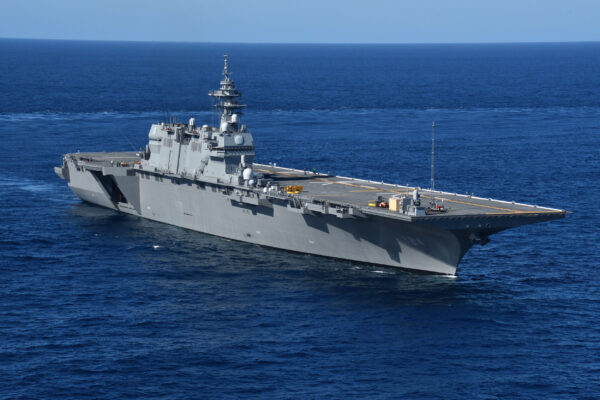
Japan's Ministry of Defense has submitted a record fiscal year 2027 budget request of approximately 8.9 trillion yen ($55.5 billion). However, this figure is considered an initial bid, as Prime Minister Takaichi Sanae's government plans to revise key security documents, including the National Security Strategy and Defense Buildup Program, by the end of 2026. Consequently, procurement quantities for major equipment may also change. While FY2027 marks the final year of the current five-year Defense Buildup Program (FY2023-2027, totaling roughly 43 trillion yen), the request aims to bridge to the next phase of Japan's defense transformation, responding to a rapidly evolving and complex security environment. The ministry has organized the request around three main pillars: adapting to 'new ways of warfare,' sustained response capabilities, and the 'foundations of defense.' The first pillar emphasizes AI, unmanned systems, stand-off capabilities, integrated air and missile defense, space, and cyber. Plans include an AI-based decision-support system for the Joint Operations Command, a next-generation AI platform, and secure cloud infrastructure. The request also covers intelligence, surveillance, reconnaissance, and attack UAVs, small unmanned ground vehicles, and research into stand-off missile launch modules for unmanned underwater vehicles. Significant funding is allocated for Japan's next-generation fighter, jointly developed with the UK and Italy under the Global Combat Air Program (GCAP), with approximately 234 billion yen ($1.5 billion) requested to advance the program. An additional 9.7 billion yen ($61 million) is sought to accelerate R&D of collaborative unmanned aircraft with autonomous decision-making capabilities. Emphasis is also placed on cost and quantity, with plans to develop lower-cost stand-off missiles and acquire systems for launch from transport aircraft, forming a 'high-low mix' strategy. The request also bolsters sustained response capabilities by prioritizing ammunition, fuel, food, transportation, and logistics. For Pacific sea-lane defense, the acquisition of 17 MQ-9B SeaGuardian UAVs and modifications to Izumo-class destroyers are planned. Regarding the defense industrial base, the ministry views 'production capacity itself as deterrence.' Plans include strengthening domestic production and technology, promoting equipment transfers and innovation, and establishing a government-backed organization. However, the weaker yen poses a challenge, increasing the cost of imported equipment and components, thereby eroding Japan's purchasing power. Information Source: The Diplomat Indonesia
Original source
The Diplomat Indonesia