General articles are free for 24 hours after publish.
Central Vietnam Faces Heavy Rains Amidst Tropical Cyclone and Cold Air
Central Vietnam is bracing for widespread heavy rainfall from September 10-17 due to a convergence of tropical depression/storm, incoming cold air, and the tropical convergence zone, raising concerns of floods and landslides.
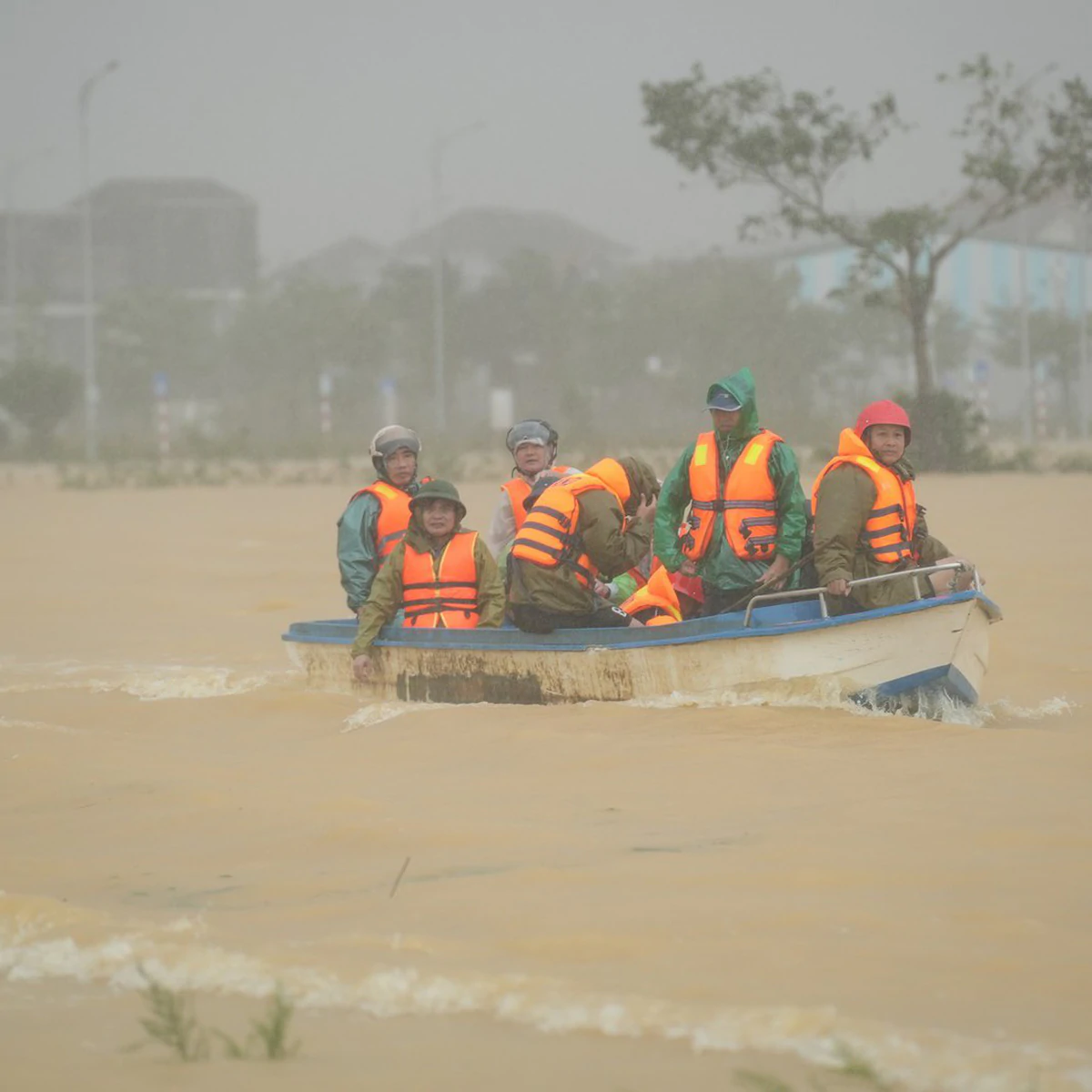
Central Vietnam is likely to experience widespread heavy rainfall in the coming days due to a combination of meteorological phenomena. According to the National Center for Hydro-Meteorological Forecasting, a tropical convergence zone is expected to form over the East Sea on September 9, with its axis passing through the central region. Furthermore, there is a high probability of a tropical depression forming over the central East Sea between September 12 and 13, with a 70-80% chance, which could subsequently intensify into a storm with a 30-40% probability. Concurrently, starting around September 9, the first cold spell of the season is anticipated to affect Vietnam. This confluence of weather conditions is projected to bring moderate to heavy widespread rainfall to the central provinces from September 10 to 17. Meteorological authorities have outlined two primary rainfall scenarios. Scenario 1 (60-70% probability) suggests heavy rains from September 10 to 16, with the epicenter of rainfall in the area from Ha Tinh to Gia Lai. Scenario 2 (30-40% probability) indicates heavy rains from around September 14 to 17, concentrated in the region from Nghe An to Hue City. Under both scenarios, central Vietnam faces a high risk of whirlwinds, lightning, flash floods, landslides, and localized flooding. Additionally, from September 9 to 12, increased thunderstorms are expected in the Central Highlands (Tay Nguyen) and southern regions due to a potential strengthening of the southwest monsoon. Vietnam, governed by a single-party communist system, has achieved rapid economic growth. However, challenges remain, including underdeveloped infrastructure and vulnerability to climate change impacts. The central region, in particular, has frequently been hit by floods and landslides in the past, and the current forecast poses significant risks to residents' livelihoods. In terms of international relations, while sovereignty disputes in the South China Sea (Bien Dong) with China persist, Vietnam is increasingly asserting its regional economic influence amidst supply chain shifts and foreign investment attraction. This natural disaster is expected to cause temporary disruptions to economic activities and underscores the urgent need for long-term infrastructure investment.
Original source
The Saigon Times