General articles are free for 24 hours after publish.
Space Arms Race Escalates: Implications for Indonesia?
The US announcement of deploying "on-orbit space control weapons" signals the full commencement of a space arms race. As China and Russia advance their technological developments, concerns arise over the implications for space-faring nations like Indonesia.
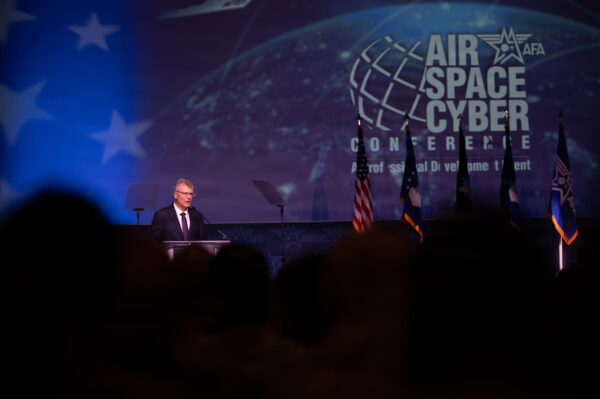
The United States' announcement that it has deployed "on-orbit space control weapons" signals the full commencement of a space arms race. U.S. Air Force Secretary Troy Meink revealed this, indicating a response to the military activities in outer space by China and Russia. In recent years, China and Russia have been developing and testing advanced technologies with the potential to destroy satellites, including cyber weapons, ground-based lasers, and robotic arms that could be used for satellite repair but also for military and intelligence purposes. In response, the U.S. Space Force has deployed "space control weapons" into orbit to enhance its capabilities to defend its space assets and military operations. General Douglas Schiess, Chief of Space Operations for the U.S. Space Force, unequivocally stated that the U.S. Space Force "uses active space-based weaponry to support United States national defense." He noted that the space domain is becoming increasingly "contested," with adversaries developing technologies to disrupt or destroy satellites in orbit. While details about these weapon systems remain scarce, the U.S. announcements are clearly a response to the space weapon development that Russia and China have been pursuing for years. Notably, since China's anti-satellite (ASAT) test in 2007, the U.S., India, and Russia have conducted similar tests, generating thousands of pieces of space debris in orbit and creating serious problems. Russia's 2021 ASAT test, according to U.S. Space Command, resulted in the creation of "more than 1,500 pieces of trackable orbital debris," which the United States viewed as a direct threat. These ASAT tests were conducted at high altitudes, meaning the generated debris could remain in orbit for decades, raising concerns about the sustainability of outer space. Furthermore, a range of non-kinetic counterspace weapons, including electromagnetic pulses, high-powered lasers, and high-powered microwaves, as well as electronic warfare and cyber attacks, have been deployed. Incidents of interference, disruption, and destruction of space assets have been increasing since around 2008, with many of these threats believed to originate from Russia and China. The U.S. public acknowledgment of space weapon deployment has led to speculation that Russia and China may further advance their weapon development. However, the reality is that both countries have been developing and deploying these weapons while advocating for the "demilitarization of space" and its "peaceful use." Despite calls for keeping space safe and sustainable, a space arms race appears to be becoming inevitable. Indonesia, as a growing hub for space utilization in the ASEAN region, is increasingly reliant on satellite technology for communication, disaster management, and surveillance. The escalation of this space arms race could pose new risks to the security and sustainability of outer space for Indonesia and many other nations. Source: The Diplomat Indonesia
Original source
The Diplomat Indonesia