Philippines Fuel Prices Set for Minor Rollback or Increase Amid Renewed Middle East Tensions
Fuel prices in the Philippines are poised for a slight rollback or increase starting June 30. Renewed Middle East tensions are impacting global crude oil prices, leading to potential adjustments at the pump.
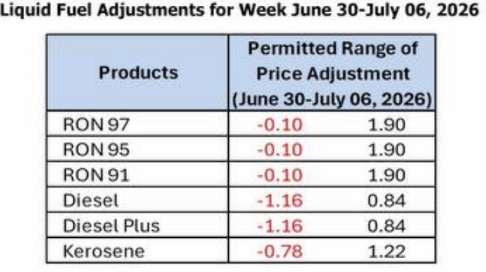
MANILA, Philippines – Pump prices are set for a slight rollback or increase starting Tuesday, June 30, as renewed tensions in the Middle East impact global crude oil prices. The Department of Energy (DOE) announced permitted price range adjustments for the week of June 30 to July 6: Gasoline – from a decrease of 10 centavos per liter to an increase of up to P1.90 per liter Diesel – from a decrease of P1.16 per liter or an increase of up to 84 centavos per liter Kerosene – from a decrease of 78 centavos per liter to an increase of P1.22 per liter This adjustment follows a significant rollback last week, where pump prices dropped by up to P5.90 per liter for gasoline, P11.04 for diesel, and P11.82 for kerosene. This previous decrease was attributed to easing global oil prices amid hopes of a slowdown in US-Iran hostilities, which had reduced supply risks in the Middle East, particularly concerning the Strait of Hormuz, a critical oil shipping route. However, recent exchanges between the US and Iran have reignited fears of supply disruptions in the Persian Gulf, leading to a rebound in oil prices. While the US and Iran have since agreed to halt attacks and renew talks, the full impact may not yet be reflected in this week's fuel prices. The DOE had previously warned that while crude prices softened on expectations of improved Strait of Hormuz flows and potential Iranian supply return, declines could be limited by low inventories and uncertainty beyond any temporary ceasefire. The same DOE monitor noted that Dubai crude prices fell by around $14 per barrel during the June 15 to 19 trading period. International prices of gasoline, kerosene, and diesel also decreased by around $12 per barrel, $23 per barrel, and $21 per barrel, respectively. However, the DOE also noted that fresh military exchanges had “reignited geopolitical concerns,” driving a rebound in crude prices after early-week price action had been weighed down by expectations of a US-Iran peace deal. Despite last week's rollback, local pump prices remain considerably higher than levels recorded before the conflict between Iran and US-Israeli forces began on February 28. In the last full week before the conflict, DOE data showed common retail prices in Metro Manila at P56 per liter for gasoline RON95, P54.70 per liter for gasoline RON91, P55 per liter for diesel, and P83.47 per liter for kerosene. The Philippines, as a net importer of petroleum products, remains highly susceptible to global oil price swings and disruptions in international supply routes. This latest price adjustment underscores the immediate impact of Middle East geopolitical instability on the cost of living for Filipinos. – Rappler.com
多角的分析
フィリピン経済は石油製品の純輸入国であり、国際原油価格の変動は直接的に国内のインフレ率と家計の購買力に影響を与える。今回の価格変動は、中東情勢の不安定さがもたらす供給リスクが、既にインフレ圧力に直面しているフィリピン経済にとってさらなる下押し圧力となる可能性を示唆している。特に、燃料価格の上昇は輸送コストの増加を通じて、食料品をはじめとする広範な財・サービスの価格上昇を招き、家計を圧迫する。
国際原油価格の変動は、フィリピンのエネルギー関連企業や輸送業者の収益性に直接影響を与える。また、インフレ圧力の高まりは、中央銀行の金融政策決定にも影響を与え、金利上昇のリスクを高める可能性がある。これは、国内消費や企業投資の抑制につながり、株式市場や債券市場全体のリスクセンチメントに影響を及ぼす可能性があるため、投資家は地政学的リスクとインフレ動向を注視する必要がある。
燃料価格の変動は、フィリピン国民、特に低所得者層の生活に直接的な影響を与える。ガソリンやディーゼル価格の上昇は、日々の通勤費や輸送費の増加を意味し、家計の負担を増大させる。また、輸送コストの上昇は食料品などの生活必需品の価格にも波及するため、国民全体の生活費の上昇につながる。これは、社会的不満の温床となり得る。
中東情勢の緊迫化は、遠い地域の問題でありながら、フィリピン国民の財布に直接影響します。ガソリンやディーゼルが少しでも上がると、毎日の通勤費が増え、食料品などの物価も上がるので、家計が本当に苦しくなります。昨年の大きな値引きは嬉しかったのですが、またすぐに上がるとなると、生活がどうなるのか不安です。政府には、国民の生活を守るための対策をしっかり取ってほしいと願っています。
背景・歴史的文脈
フィリピンは石油製品の純輸入国であり、そのエネルギー供給の約8割を輸入に依存している。そのため、国際原油価格の変動には極めて敏感である。特に、中東情勢の緊迫化は、ホルムズ海峡のような主要な海上輸送ルートの安全保障リスクを高め、原油供給の不安定化を通じてフィリピン国内の燃料価格に直接的な影響を与える。過去にも、湾岸戦争やイラク戦争、近年のイランと欧米諸国の対立など、中東情勢の変動はフィリピンの燃料価格に大きな影響を与えてきた。2023年後半から2024年初頭にかけても、中東地域での紛争激化は原油価格の高騰を招き、フィリピン国内でも度重なる燃料価格の値上げが発生していた。
原文ソース
Rappler Business