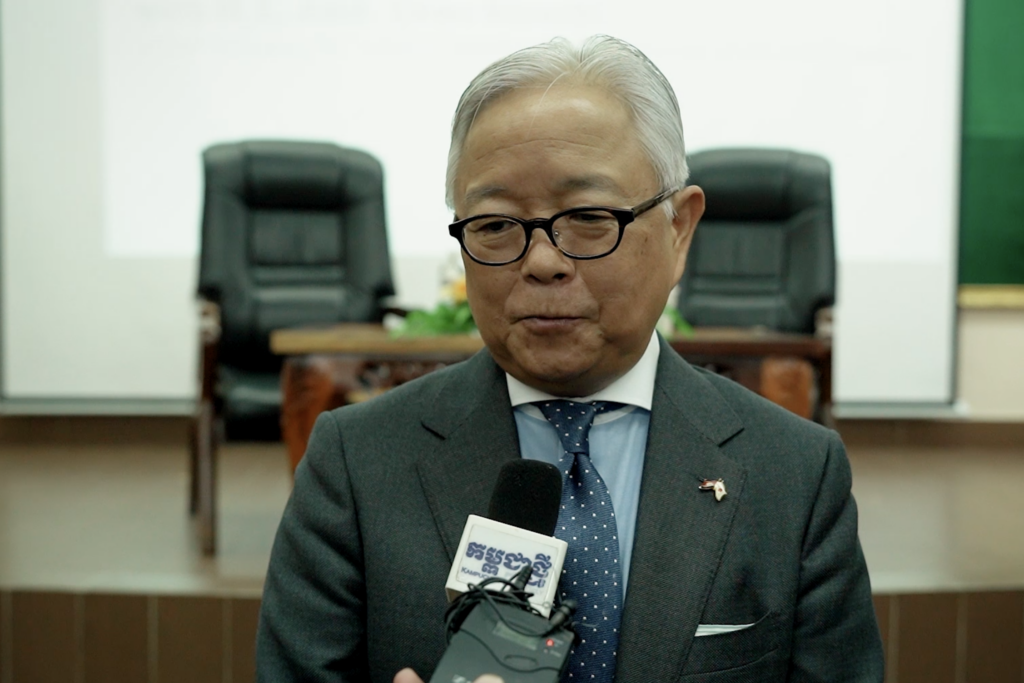
Japan Backs UNCLOS for Cambodia-Thailand Maritime Dispute Resolution
The Japanese Ambassador to Cambodia has expressed support for resolving the Cambodia-Thailand maritime dispute using international legal mechanisms, including UNCLOS, reaffirming commitment to a rules-based order and freedom of navigation.
This article requires PRO
This article is outside the free access window or is a special report. PRO unlocks it and the full archive.
Related articles
- Cambodian, Lao Youth Leaders Discuss Strengthening Bilateral Cooperation
Cambodian People's Party Vice President Hun Many met with Lao People's Revolutionary Party Secretary-General Thongly Sisoulith in Phnom Penh. They affirmed progress in bilateral ties and agreed to enhance cooperation in youth exchanges and human resource development.
- Cambodia and Laos Celebrate 70 Years of Strong Diplomatic Ties, Eyeing Enhanced Youth Cooperation
Celebrating 70 years of diplomatic relations, Cambodian Prime Minister Hun Manet met with Lao youth leaders. Building on traditional friendship, both nations, now 'Comprehensive Strategic Partners', agreed to enhance youth exchanges to foster mutual benefits for generations to come.
- Cambodia and Saudi Arabia Reaffirm Commitment to Deepening Bilateral Ties
Cambodia and Saudi Arabia have reaffirmed their commitment to deepening bilateral relations, expanding economic and social development initiatives, and enhancing regional religious cooperation. Saudi Arabia pledged continued humanitarian assistance to Cambodia.
- Cambodia at Crossroads: Balancing China Ties, Economic Growth, and Domestic Challenges
Cambodia is pushing for deeper ties with China and economic development, while facing urgent domestic challenges related to political stability and social issues. Complex diplomatic and economic policies are unfolding amid China's growing influence in ASEAN and Cambodia's need to maintain sovereignty.