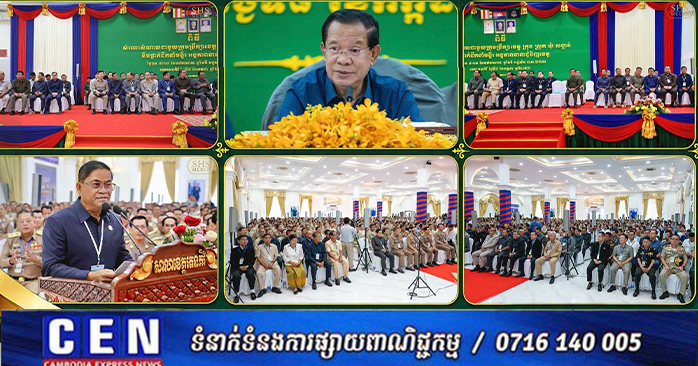
Hun Sen Urges Swift, Fair Resolution of Land Disputes in Ratanakiri
Security
2026年7月8日
5
CEN Cambodia

Hun Sen Urges Swift, Fair Resolution of Land Disputes in Ratanakiri

AI サマリー

Senate President Hun Sen met with local authorities in Ratanakiri Province, directing swift and fair resolution of land disputes, particularly outside the judicial system. He also shared a vision for the province as Cambodia's fourth economic hub and praised contributions to development.

Senate President Hun Sen held a meeting with 785 local authorities from Ratanakiri Province on the morning of Wednesday, the 9th day of the waning moon of the month of Asadha, in the Year of the Dragon, the 8th year of the Sakaraj Era 2570, corresponding to July 8, 2026, in Banlung City. This event was part of his ongoing nationwide tour to engage with provincial, municipal, district, commune, and village leaders. This marks the 18th mission and the 21st province visited by Samdech Techo in his engagements with government officials and leaders across the country. His previous visits included Kampong Cham, Tbong Khmum, Kampong Speu, Takeo, Kampot, Kep, Svay Rieng, Prey Veng, Phnom Penh, Kampong Chhnang, Pursat, Kampong Thom, Kandal, Siem Reap, Oddar Meanchey, Banteay Meanchey, Battambang, Pailin, Kratié, and Mondulkiri, culminating in Ratanakiri today. According to a report by H.E. Nhem Samoeun, Governor of Ratanakiri Province, the province is situated in northeastern Cambodia, approximately 588 kilometers from the capital, Phnom Penh. It covers a total area of 10,782 square kilometers, comprising one city, eight districts, 46 communes, and four sub-communes, with 243 villages. Ratanakiri borders Stung Treng Province to the west, Vietnam's Gia Lai and Quang Ngai provinces to the east, Laos' Attapeu Province to the north, and Mondulkiri Province to the south. The province features one international border gate: the O'Yadaw International Border Checkpoint. Under the leadership of successive governments, the province has experienced continuous development. Ratanakiri hosts nine large-scale factories, including five rubber processing plants, two banana processing plants, one combined rubber and fruit processing plant, and one cassava processing plant. The province also has companies operating in the mining sector, such as two gold mining companies, ten stone quarrying businesses, three construction stone businesses, and eight sand quarrying businesses for construction. H.E. Chea Thireth, a spokesperson for Samdech Techo, stated that the purpose of Samdech Techo's visit and meeting with administrative officials is to implement and strengthen accountability between the Senate and the electorate, ensuring transparency and promoting the effectiveness of grassroots work. It also aims to foster closer relationships with local authorities and remind local officials to enhance their dedication to their duties and the provision of public services to citizens. On this occasion, Samdech Techo Hun Sen expressed his pleasure at returning to meet with the administrative officials of Ratanakiri Province. He praised and highly valued the efforts of the provincial leadership, officials, and grassroots teams in their past work. Samdech Techo stated that this northeastern region province will become Cambodia's fourth significant economic pole, focusing on the agri-industry and mineral resource sectors. This economic pole will contribute to driving economic growth and achieving Cambodia's vision of becoming a high-income country by 2050. He reminded all officials, especially commune council members, to continue diligently fulfilling their roles and responsibilities in serving the nation and the people, particularly in providing necessary and essential services to citizens quickly, efficiently, and effectively. Samdech Techo also encouraged and supported the strengthening of tax revenue collection and customs, along with strict measures to prevent tax evasion or undeclared business activities to increase national revenue. Samdech Techo also recalled the importance for all officials to maintain national stability and focus on preserving social order and security, continuing the implementation of the "Safe Village-Commune" policy, which includes cracking down on various crimes such as robbery, armed robbery, drug trafficking, and technological offenses. Samdech Techo also urged authorities at all levels to continue paying attention to former soldiers and retirees, recognizing their significant contributions to national development. He stressed the importance of caring for them through visits and organizing events to prevent them from feeling isolated. Samdech Techo further reminded and advised authorities and relevant institutions to pay close attention to the well-being and living conditions of fallen soldiers, disabled soldiers, and their families. He emphasized that the management and care of veterans should be thorough, encouraging their children to receive higher education and become intellectuals to repay their immense contributions to the nation. Samdech Techo also advised authorities to pay close attention to resolving land disputes for citizens promptly and effectively, particularly emphasizing out-of-court settlements without bias towards any party. Samdech Techo also appealed to authorities at all levels to strengthen the protection, conservation, and prevention of all natural resource crimes. Samdech Techo reminded all officials to focus on grassroots work and avoid disappointing the people, reminding them that officials are not masters of the people. Samdech Techo further instructed the Ratanakiri provincial authorities to enhance border cooperation with Vietnam and Laos, ensuring that the borders of the three countries remain borders of peace and cooperation, especially to promote better economic and trade relations between them. Finally, Samdech Techo Hun Sen praised officials at all levels in Ratanakiri Province for their collaborative efforts in developing the province and wished all civil servants happiness and prosperity. Copyright: Sothly

多角的分析

経済的影響

フン・セン氏がラタナキリ州をカンボジア第4の経済的中心地と位置づけ、農工業と鉱物資源開発に重点を置く構想は、カンボジア経済の地域的多様化と成長戦略の一環である。過去には経済活動がプノンペンやシアヌークビル周辺に集中する傾向があったが、ラタナキリのような内陸部の開発は、国内格差の是正と新たな雇用創出に繋がる可能性がある。しかし、鉱物資源開発には環境への影響や、開発による利益が地域住民にどれだけ還元されるかといった課題も伴う。過去の事例では、資源開発が地域社会との摩擦を生むケースも少なくないため、持続可能な開発と地域社会との共存が鍵となる。

投資家心理

ラタナキリ州を経済的中心地とする構想は、資源開発や農産物加工分野への投資機会を示唆している。特に、ベトナムやラオスとの国境地域であることから、域内貿易の活性化も期待できる。しかし、投資家にとっては、インフラ整備の状況、土地所有権の安定性、そして汚職のリスクといった要素を慎重に評価する必要がある。過去、カンボジアでは大規模開発プロジェクトにおいて、土地収用を巡る問題や、環境規制の緩さから投資リスクが高まる事例が見られた。透明性の高い法制度の整備と、地域社会との良好な関係構築が、投資を呼び込む上で不可欠となるだろう。

社会的影響

土地紛争の迅速かつ公正な解決という指示は、カンボジア社会における長年の課題である土地問題への対応を示すものだ。特に、司法手続き外での解決を求める姿勢は、裁判所の負荷軽減と迅速な問題解決を目指す意図があると考えられる。しかし、過去の事例では、土地紛争の解決プロセスにおいて、権力関係や経済的格差が影響し、必ずしも全ての住民が公平な扱いを受けられないという懸念も指摘されてきた。ラタナキリ州は先住民コミュニティも多く居住しており、彼らの土地権や伝統的権利がどのように保護されるかが、社会的な公平性の観点から問われることになる。また、元軍人や障害を負った軍人への配慮は、社会的な弱者への支援という側面があるが、その支援が実質的に行き届くかどうかが重要である。

市民の声

市民、特にラタナキリ州の住民にとっては、土地紛争の迅速な解決は生活の安定に直結する重要な課題である。これまで、土地を巡るトラブルは多くの市民の生活を不安定にし、時にはコミュニティ間の対立を生んできた。フン・セン氏の指示は、これらの問題への一定の期待感を与えるだろう。しかし、問題解決が「迅速かつ公正に」行われるかは、現場の行政官の運用次第である。また、元軍人や障害を負った軍人への配慮は、彼らとその家族の生活改善に繋がる可能性があるが、具体的な支援策の内容と、それが確実に届く仕組みが重要となる。若者世代にとっては、ラタナキリ州が将来的な経済的中心地となるというビジョンは、新たな雇用機会や教育機会への期待感をもたらすかもしれない。

背景・歴史的文脈

カンボジアにおける土地問題は、ポル・ポト政権崩壊後の混乱期を経て、現代に至るまで深刻な課題となっている。特に、都市部や経済開発が進む地域では、土地収用や不法占拠、そしてそれを巡る紛争が頻発してきた。フン・セン政権は、経済発展を優先する中で、土地開発を奨励する一方で、国民の権利保護も掲げてきたが、その実行にはしばしば矛盾が生じてきた。ラタナキリ州のような地方部では、先住民コミュニティの土地権や、森林資源を巡る紛争も根深い問題となっている。今回のフン・セン氏の指示は、これらの長年の課題に対して、行政による介入を強化し、迅速な解決を図る意図を示していると考えられる。

原文ソース

CEN Cambodia

原文を読む