General articles are free for 24 hours after publish.
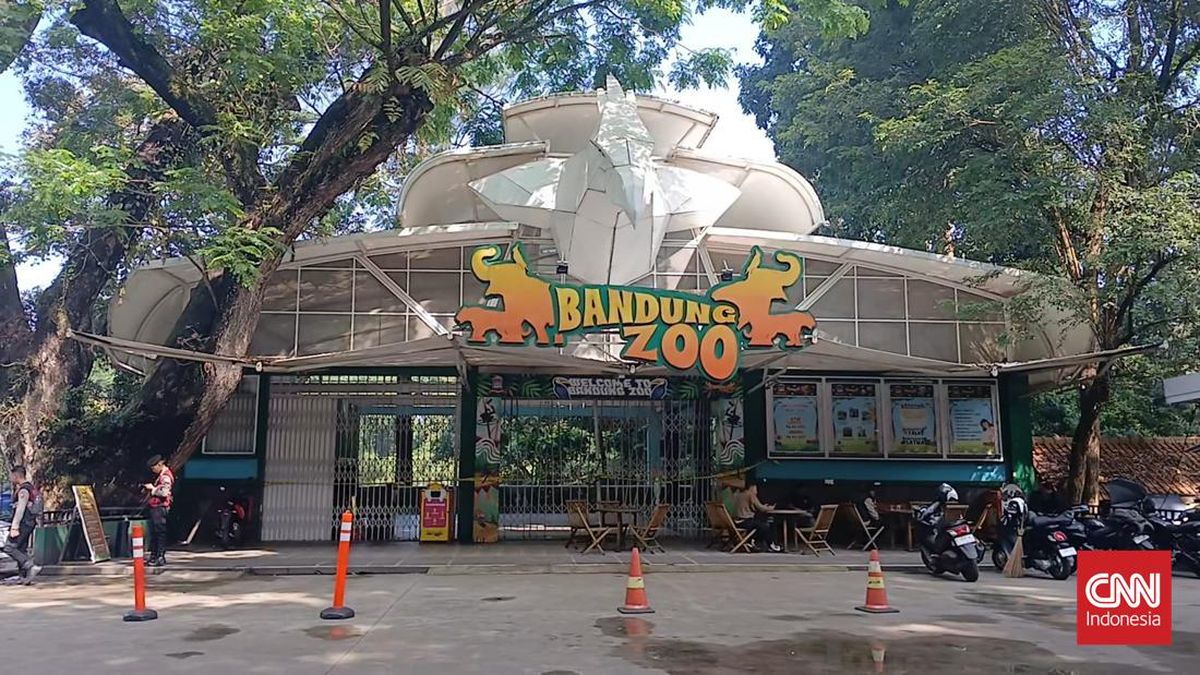
Bandung Zoo Implements Measures to Protect Animals from Volcanic Ash
Bandung Zoo is implementing protective measures for its animals against volcanic ash from the Anak Krakatau eruption, including isolating them in indoor enclosures and covering outdoor ones. While current impacts are minimal, stricter actions will be taken if ashfall intensifies.
Bandung Zoo is implementing protective measures for its animals against the impact of volcanic ash from the eruption of Mount Anak Krakatau. Rohmat, an official at the zoo, stated that one of the primary mitigation efforts is to move animals into enclosed or isolated cages to prevent exposure to ash. "Some animals, especially those in display enclosures with night quarters, might not be let out. They may stay in their sleeping areas or holding pens for some time, including for meals and drinks," Rohmat explained. For animals housed in open-air enclosures without dedicated indoor spaces, the zoo plans to use curtains or plastic sheeting to cover their habitats if ashfall exceeds certain thresholds. Additionally, the zoo will conduct spraying to clean enclosures and the surrounding area, though this has not yet been implemented. The zoo continues to carry out its routine body security measures for several enclosures. Currently, the zoo has not experienced significant impacts from volcanic ash due to the dense foliage of trees within its premises, which helps filter out much of the ash. "So far, Bandung Zoo hasn't felt it much regarding volcanic ash exposure. Because there are many trees in Bandung Zoo, maybe much of it is still filtered by the trees. But I see on several trees, they still look green, there's no ash flying around yet," Rohmat said. The zoo's mitigation measures are based on continuous monitoring by animal keepers. If ashfall becomes widespread in the area, the planned mitigation steps will be activated. The eruption of Mount Anak Krakatau began on Friday night (September 4th), and by Monday (September 7th), volcanic ash had spread to areas including Jakarta, Lampung, and West Java. According to data from the Meteorology, Climatology, and Geophysics Agency (BMKG), as of 4:00 AM WIB on Monday, volcanic ash was detected moving away from the volcano's peak at two different altitude layers with distinct dispersal directions. The lower layer (15,000 feet/4.57 km) was moving southeast to northwest, potentially affecting air quality and visibility in parts of Jakarta, Banten, Lampung, and West Java. The BMKG reported, "At this altitude, ash dispersal has the potential to affect air quality and visibility in the affected areas." Meanwhile, the upper layer (50,000 ft/15.24 km) was moving southwest to west, covering the Indian Ocean southwest of Bengkulu, as well as Lampung and Banten. "At this altitude, ash dispersal primarily affects aviation as it is on the flight path of aircraft," the BMKG added. Furthermore, volcanic ash dispersal on Monday morning was predicted to spread further westward.
Original source
CNN Indonesia