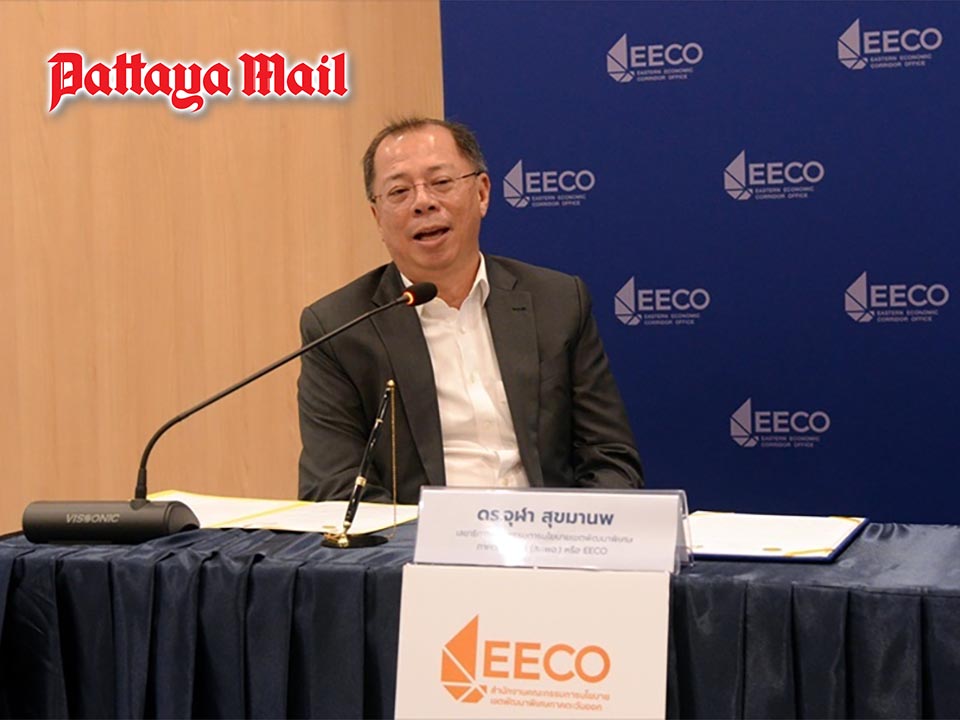
EEC Warns of Development Delays After High-Speed Rail Deal Collapse
The Eastern Economic Corridor (EEC) in Thailand expresses concern over development delays following the termination of a high-speed rail contract linking three major airports. The EEC Secretary-General urges a swift decision on alternative solutions.
The Eastern Economic Corridor (EEC) says the rail connection linking three major airports remains essential for Thailand’s future development, despite the termination of the high-speed rail contract between the State Railway of Thailand (SRT) and the private consortium. EEC Secretary-General Chula Sukmanop said that after Asia Era One Co., Ltd. exercised its contractual right to end the public-private partnership agreement, the SRT and the private partner must follow the contract conditions, including discussions over rights, responsibilities, assets and any related compensation. He stressed that compensation and damages are matters between the two contractual parties, as the EEC is not directly involved in the agreement. “The contract issue belongs to the SRT and the private sector. Once the contract ends, both sides must proceed according to the agreement. But the government must consider how the project will continue because the rail connection to U-Tapao Airport remains necessary,” Chula said. Authorities will discuss options with the SRT, including whether to continue with a similar model, adjust the project structure or consider a new approach. A decision on whether a new bidding process will be launched has not yet been made. The issue will be presented to the Eastern Economic Corridor Policy Committee (EEC Board), chaired by the prime minister, for consideration. A meeting date has not yet been set. Chula acknowledged that the project has already lost significant time, saying Thailand has spent around eight years dealing with delays. He urged authorities to focus on moving forward rather than continuing to revisit past problems. “The past cannot be changed. The question is whether we stay where we are or move forward. I believe we must move forward because otherwise we will never reach the future,” he said. Regarding concerns that the contract termination could affect investor confidence, Chula said the government’s priority should be providing a clear future direction. He added that the future project does not necessarily have to remain exactly the same as the original high-speed rail plan. All options remain open, including different rail solutions, as long as they support connectivity to U-Tapao Airport and the wider EEC development strategy. One major challenge for the original project was financial feasibility. Chula said banks and financial institutions require projects to demonstrate sufficient economic returns before providing funding. Any new approach must therefore consider investment feasibility, construction timelines and the long-term development needs of the EEC. He said one possible option involves a rail system covering around 160 kilometers, but all alternatives must be studied together with the SRT before a final decision is made. The EEC maintains that while the project may require a new direction, Thailand must continue improving transport links to support investment, tourism and future economic growth.
多角的分析
高速鉄道計画の契約解除は、EEC開発におけるインフラ投資の遅延を招く可能性がある。特に、ウタパオ空港への接続は、EECのハブとしての機能強化に不可欠であり、その遅延は周辺地域への物流、観光、および産業誘致に悪影響を及ぼす。財政的実現可能性が当初から課題であったことを踏まえると、新たな計画ではより現実的な収益モデルの提示や、国際的なインフラファンドからの資金調達戦略が重要となる。過去の遅延が8年に及ぶという事実は、タイのインフラプロジェクトにおける計画・実行能力の課題を示唆しており、今後のプロジェクト推進において、より迅速かつ効率的な意思決定プロセスが求められる。
今回の契約解除は、タイにおける大規模インフラプロジェクトの実行リスクに対する投資家の懸念を再燃させる可能性がある。特に、PPPモデルにおける契約履行や紛争解決の不確実性は、将来的な投資判断に影響を与えうる。EEC事務局長が「将来のプロジェクトは必ずしも元の計画通りである必要はない」と述べている点は、柔軟なアプローチを示唆する一方で、計画の不確実性を増大させる可能性もある。投資家が求めるのは、明確で安定した事業環境と、予測可能な収益性であるため、政府は迅速に代替案を提示し、その実現可能性と収益見通しを具体的に示す必要がある。
高速鉄道計画の遅延は、タイ国民、特にEEC地域に居住または通勤する人々の日常生活に間接的な影響を与える可能性がある。物流コストの増加は物価上昇につながり、地域経済の活性化の遅れは雇用機会の創出を鈍化させる。また、ウタパオ空港へのアクセス改善は、観光客の利便性向上に直結するため、地域経済の重要な柱である観光業の回復・成長にも影響が及ぶ。チュラ事務局長が「過去は変えられない。前進しなければ未来に到達できない」と述べたように、国民はインフラ整備の遅れによる機会損失を懸念しており、政府には具体的な進展が求められている。
高速鉄道計画の契約解除は、タイ国民、特にEEC地域に居住または通勤する人々の日常生活に間接的な影響を与える可能性がある。物流コストの増加は物価上昇につながり、地域経済の活性化の遅れは雇用機会の創出を鈍化させる。また、ウタパオ空港へのアクセス改善は、観光客の利便性向上に直結するため、地域経済の重要な柱である観光業の回復・成長にも影響が及ぶ。チュラ事務局長が「過去は変えられない。前進しなければ未来に到達できない」と述べたように、国民はインフラ整備の遅れによる機会損失を懸念しており、政府には具体的な進展が求められている。
背景・歴史的文脈
タイ東部経済回廊(EEC)開発計画の一環として、バンコク、ドンムアン、スワンナプーム、そしてウタパオ空港を結ぶ高速鉄道プロジェクトは、2016年に発表された。当初は2019年の着工を目指していたが、土地収用、環境アセスメント、そしてPPP契約における民間コンソーシアムとの条件交渉などで遅延が生じ、8年もの歳月が経過した。今回、主契約者であるAsia Era One Co., Ltd.が契約解除権を行使したことで、プロジェクトは新たな局面を迎えた。この遅延は、タイにおける大規模インフラプロジェクトの計画・実行における課題、特に官民間の連携や意思決定プロセスの非効率性を示唆している。
原文ソース
Pattaya Mail