General articles are free for 24 hours after publish.
Laos' First Green Bond Fuels EV Charging Network Expansion
Laos has issued its first green bond, driving the expansion of its EV charging infrastructure. Cambodian experts are watching the impact of this move on regional EV adoption and sustainable infrastructure development.
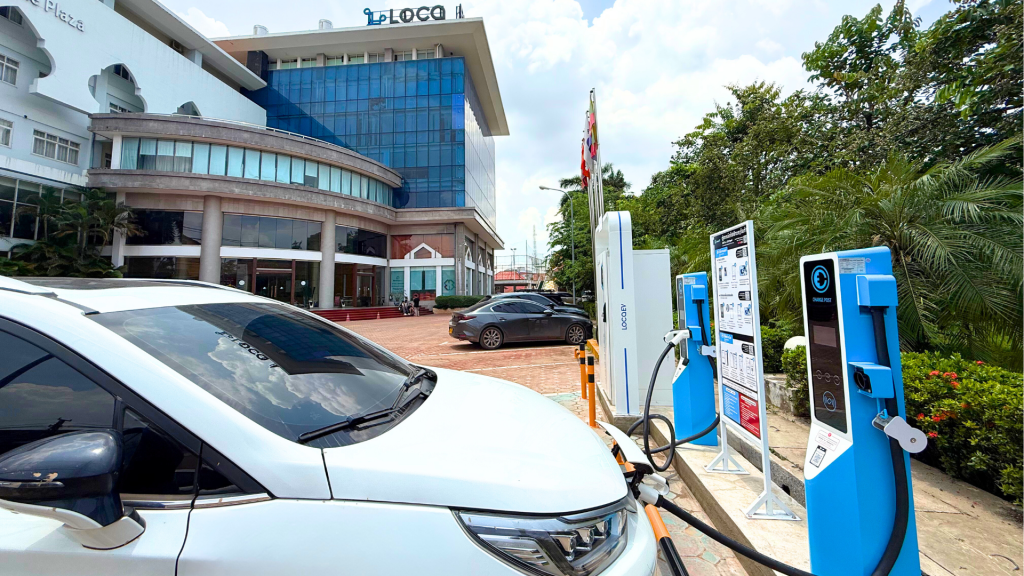
Laos has issued its first-ever green bond, enabling ride-hailing and electric vehicle (EV) charging company LOCA to raise funds for expanding the country’s EV infrastructure. The green bond raised a total of approximately $997,700, which will finance the development of 15 charging stations equipped with 60 charging guns across Laos. PIDG (Private Infrastructure Development Group) invested $300,000 through its project development and investment arm, InfraCo. PIDG's participation helped attract domestic institutional investment through LDB Securities, a subsidiary of Lao Development Bank. This transaction marks a milestone for Laos' relatively small capital market, establishing a potential financing model for climate-related infrastructure. This could serve as a reference for countries like Cambodia looking to utilize domestic capital for sustainable infrastructure development in the region. LOCA had previously received a $2.5 million convertible loan from PIDG in 2025, which supported the installation of 54 charging stations. The company currently operates 82 charging stations covering all 18 provinces of Laos. The additional stations financed by the green bond are expected to strengthen the national network and make EV ownership more practical outside the country’s largest urban centers. Laos has set a target for EVs to account for 30% of the country's vehicle fleet by 2030, a goal that is expected to require approximately 500 charging stations nationwide. The EV shift is also seen as an opportunity to reduce dependence on fuel imports and utilize the country's abundant hydropower resources to boost domestic energy consumption. The Lao government introduced policies in 2023 promoting the wider development of the EV industry, covering vehicle production and supply, batteries, after-sales services, and charging infrastructure. The CEO of LOCA stated that the green bond issuance demonstrates that green financing can be raised within Laos and channeled into infrastructure delivering measurable national benefits. He said the proceeds would support charging facilities available to EV drivers across the country, helping reduce imported-fuel dependence, retain foreign currency domestically, and advance Laos’ climate commitments. LOCA Co-CEO and Chief Financial Officer Phonepasong Mixab said bringing the country’s first green bond to market required the creation of a framework aligned with international standards, an independent second-party opinion, and cooperation among investors, regulators, and securities-sector partners. The transaction received support from PIDG, the Asian Development Bank, and participating securities firms. LOCA said it hopes the issuance will establish a benchmark and encourage other Lao businesses to raise sustainable financing through the domestic capital market. Connor Dawson, head of asset management at InfraCo, said PIDG’s previous engagement with LOCA had increased confidence in the company’s ability to deliver its expansion plans. He said the investment aligns with PIDG’s mandate to attract private-sector participation into infrastructure and technology supporting climate action, inclusion, and market development. Founded in 2018, LOCA began as Laos’ first ride-hailing platform before expanding into EV charging and financial technology services. The company has more than 1,000 active drivers, with over 90% operating electric vehicles. It has set a goal of achieving a fully electric ride-hailing fleet by 2030. Laos’ wider electric vehicle market has expanded rapidly, rising from around 50 vehicles in 2021 to more than 15,000 in 2025, according to LOCA. The company has previously received ASEAN Business Awards for digital transformation and sustainability, as well as a regional clean-energy technology award for its work in electric mobility. PIDG is funded by the governments of the United Kingdom, the Netherlands, Switzerland, Australia, and Sweden, alongside Global Affairs Canada. Since 2002, the group has committed $6.6 billion to 286 infrastructure projects, mobilizing $32.7 billion from private investors and $51.4 billion in overall financing. Source: Cambodia Investment Review
Original source
Cambodia Investment Review