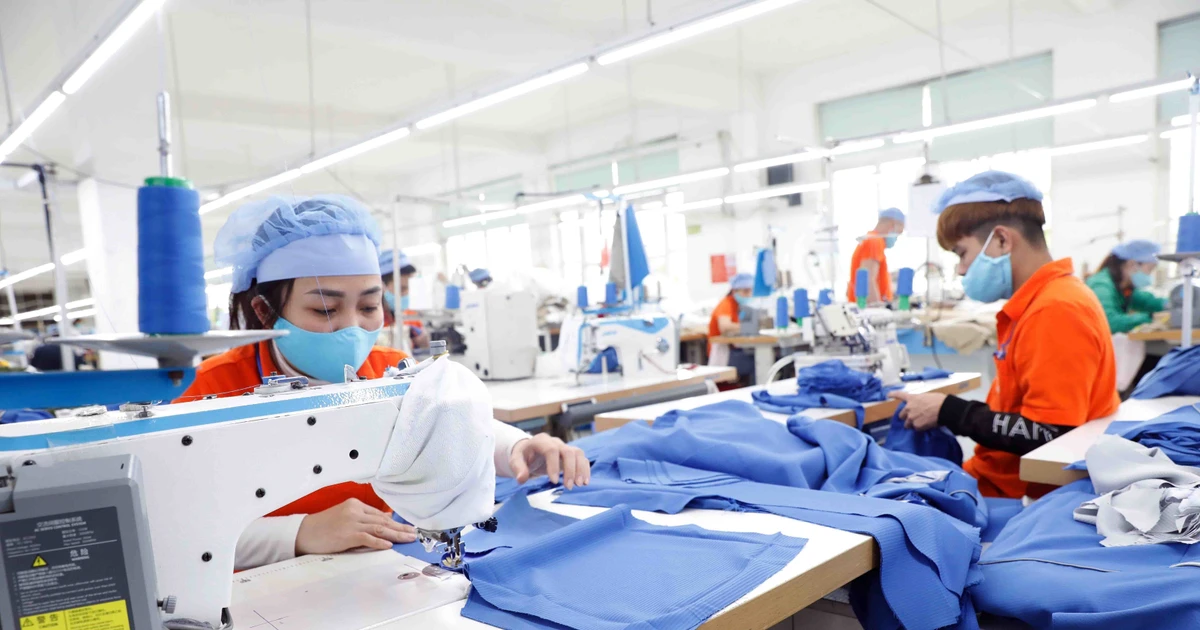
Vietnam's Textile, Garment Exports Rise 1.7% in First Half, Preparing for EU's Digital Product Passport
Economy
2026年7月7日
5
VietnamPlus English
Relations
🇻🇳Vietnam🇪🇺European Union

Vietnam's Textile, Garment Exports Rise 1.7% in First Half, Preparing for EU's Digital Product Passport

AI サマリー

Vietnam's textile and garment exports reached $14.53 billion in the first four months of 2026, a 4.3% year-on-year increase. The industry is accelerating data infrastructure development in preparation for the EU's Digital Product Passport implementation in 2028. A key challenge remains the industry's localization rate, which is only about half of the value chain, indicating significant reliance on imported inputs.

Vietnam's textile and garment industry has seen its exports rise by 1.7% in the first half of 2026, reaching $14.53 billion. This growth is closely linked to the industry's efforts to prepare for the European Union's planned implementation of the Digital Product Passport (DPP) from 2028. Statistics from the Ministry of Industry and Trade (MoIT) indicate that the localization rate within Vietnam's textile and garment sector accounts for only about half of the value chain. This means a significant portion of production revenue is spent on imported fabrics and other inputs, posing a structural challenge to maintaining competitiveness and ensuring sustainable growth in the international market. According to the latest data from the Vietnam Textile and Apparel Association (VITAS), exports in the first four months of this year increased by 4.3% year-on-year. This expansion is further underscored by robust gains in other key export categories, including electronics, computers, machinery, wooden furniture, and agricultural produce, signaling that Vietnamese firms are effectively capturing reviving orders across major destinations. Vietnam is actively working towards obtaining an investment-grade sovereign credit rating from international agencies such as S&P Global Ratings, Moody's Ratings, and Fitch Ratings. This initiative is crucial for enhancing Vietnam's credibility in the international financial markets and facilitating access to capital on more favorable terms. In terms of port infrastructure, the Container Port Performance Index (CPPI) 2025, jointly released by the World Bank (WB) and S&P Global Market Intelligence, ranked Cai Mep Port and Hai Phong Port among the world's 20 most efficient container ports for the second consecutive year. Cai Mep Port secured the 11th position, while Hai Phong Port ranked 13th. The WB attributes this performance to a robust recovery in exports, which expanded by over 15% during 2024–2025, and Vietnam's ability to sustain strong GDP growth of 7% and 8% in consecutive years. Furthermore, in the realm of power infrastructure development, Trung Nam Hydroelectric Corp is set to develop the Dong Nai 2 Hydropower Reservoir Floating Solar Power Plant project with an investment exceeding VND 4.92 trillion (approximately $188.2 million USD). This 240-MW plant is expected to generate about 464.19 million kWh of electricity annually. Economically, the industrial growth in the first half of 2026 marks the strongest performance since 2019, highlighting the sector's solid recovery and providing a firm foundation for Vietnam to sustain robust economic growth throughout the year. With manufacturing continuing to lead, supported by improving demand, employment, and production capacity, the industry is expected to remain a key pillar of economic expansion. Source: VietnamPlus English

多角的分析

経済的影響

ベトナムの繊維・衣料品産業は、EUのデジタル製品パスポート(DPP)導入という新たな規制に対応するため、データインフラ構築を急いでいる。これは、サプライチェーンの透明性向上とトレーサビリティ強化を求める国際的な潮流を反映している。しかし、国内の現地調達率が約5割にとどまる現状は、原材料の輸入依存度が高く、コスト面や供給リスクの面で脆弱性を抱えていることを示唆している。DPPへの対応は、単なる規制遵守に留まらず、サプライチェーン全体のデジタル化と高度化を促す契機となり得るが、中小企業にとっては設備投資や人材育成の負担増につながる可能性もある。輸出の堅調な伸びは、グローバルな需要回復とベトナムの生産能力の高さを示しているが、輸入依存構造の改善が長期的な競争力強化の鍵となるだろう。

投資家心理

ベトナムの繊維・衣料品産業は、EU市場へのアクセス維持のためにDPP対応が不可欠であり、これは関連するITインフラやコンサルティングサービスへの投資機会を生み出す可能性がある。また、港湾インフラの効率性向上は、物流コストの削減に繋がり、輸出競争力を高めるため、インフラ関連への投資妙味が増す。ベトナムが投資適格級の国家信用格付け取得を目指す動きは、外国からの直接投資(FDI)の誘致に有利に働く。ただし、輸入原材料への依存度が高い構造は、為替変動リスクや地政学リスクの影響を受けやすい点に留意が必要である。全体として、ベトナム経済の堅調な成長と輸出の回復は、多様なセクターへの投資機会を提供しているが、規制対応やサプライチェーンの構造的課題への理解が投資判断において重要となる。

社会的影響

EUのDPP導入は、製品の生産過程における環境負荷や労働条件に関する情報開示を求めるものであり、これはベトナムの繊維・衣料品産業における労働者の権利保護や、より持続可能な生産慣行への移行を促す可能性がある。しかし、中小企業や地方の工場では、新たなITシステム導入やデータ管理能力の不足が、労働者の雇用や賃金に影響を与えるリスクも考えられる。また、港湾の効率性向上は、物流の円滑化に貢献し、国内消費者の商品アクセス向上にも繋がる可能性がある。一方で、ベトナムのインフラ開発は、地方と都市部の格差を是正し、地域経済の活性化に寄与する一方で、開発に伴う環境への影響や、土地収用に関する住民との合意形成が課題となる場合もある。

市民の声

EUのDPP導入は、衣料品がどのように作られているか、環境に優しいかといった情報が消費者に提供されるようになることを意味する。これにより、ベトナムの衣料品メーカーは、よりクリーンで倫理的な生産方法を採用する必要に迫られるだろう。これは、長期的には労働環境の改善につながる可能性がある。また、港湾の効率化は、輸入物資の価格低下や、輸出製品の競争力向上を通じて、国民生活にも間接的な恩恵をもたらす可能性がある。しかし、新しい規制への対応コストが製品価格に転嫁される可能性も否定できず、消費者の負担が増加する懸念もある。ベトナムが国際的な信用格付けの向上を目指すことは、経済全体の安定に繋がり、国民の生活基盤の強化に貢献することが期待される。

背景・歴史的文脈

ベトナムの一党体制下では、政府は経済成長を最優先課題として掲げ、外国直接投資(FDI)を積極的に誘致してきた。特に繊維・衣料品産業は、低賃金労働力を背景に輸出産業として発展し、GDPや雇用に大きく貢献してきた。しかし、その成長は輸入原材料への依存度を高め、グローバルサプライチェーンにおける下請け的な位置づけが固定化する傾向もあった。近年、EUなどの先進国市場では、環境・社会・ガバナンス(ESG)への配慮が貿易の条件として重視されるようになり、DPPのような新たな規制が登場している。これは、ベトナムが単なる生産拠点から、より付加価値の高い、持続可能な生産体制へと転換する必要に迫られていることを示している。港湾インフラの強化は、輸出入の効率化を通じて経済成長を支えるための長年の課題であり、国際的な評価向上は、ベトナムの経済的地位を高めるための重要なステップである。

原文ソース

VietnamPlus English

原文を読む