Trike Drivers in Agusan del Sur Lament Soaring Gasoline Prices
Economy
2026年7月8日
4
Inquirer NewsInfo

Trike Drivers in Agusan del Sur Lament Soaring Gasoline Prices

AI サマリー

Tricycle drivers in San Francisco, Agusan del Sur are struggling with gasoline prices reportedly P10 to P15 higher per liter than in neighboring towns, impacting their livelihoods. A local councilor also questioned the uniform pricing among stations.

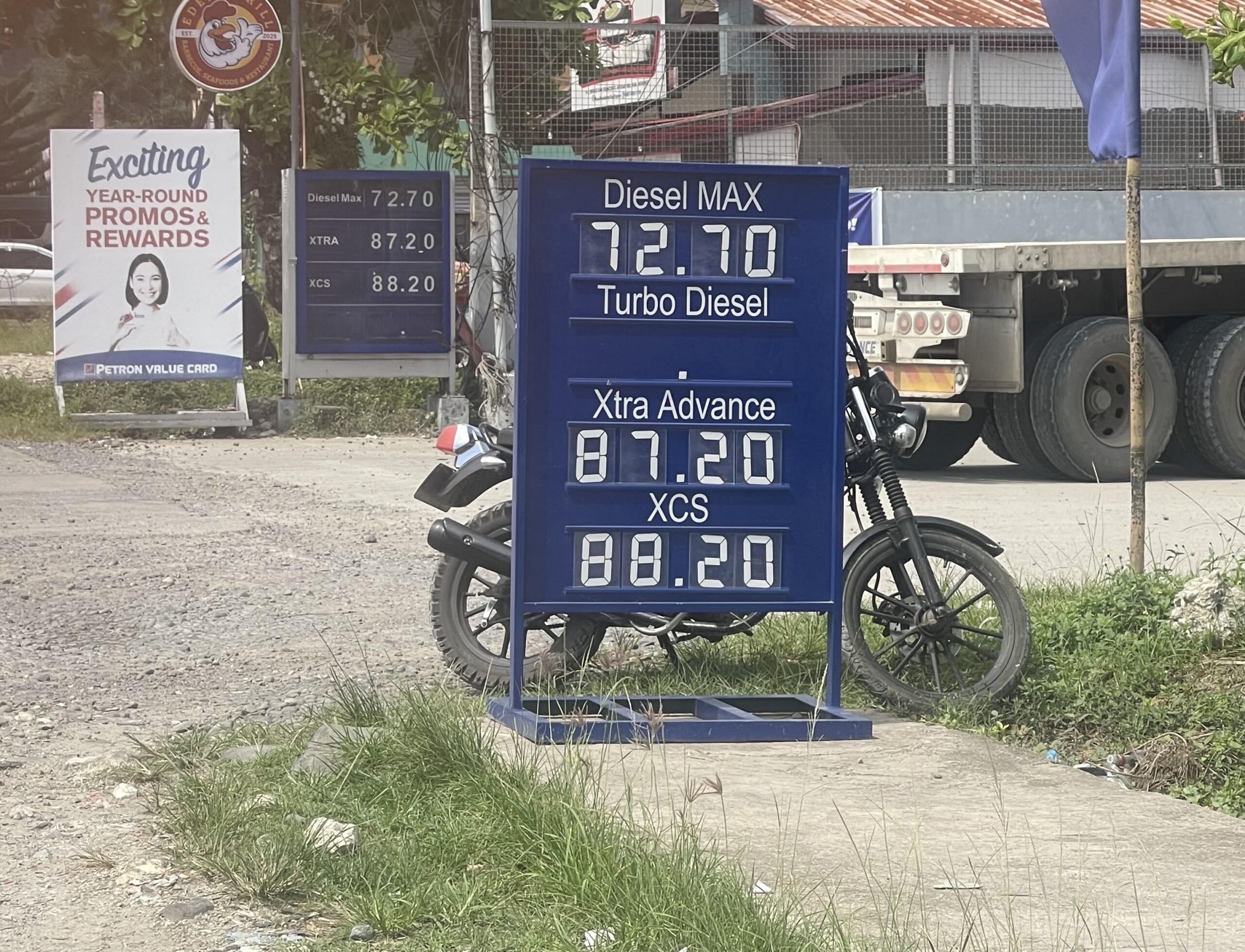
SAN FRANCISCO, Agusan del Sur — Tricycle drivers in this town have decried gasoline prices that are reportedly P10 to P15 higher than those in neighboring municipalities, stressing it made it harder for them to make ends meet. This developed as a local official noted that gasoline prices here are being sold almost at the same price, which left consumers without a choice. On Tuesday, another round of mixed oil price adjustments took effect, with gasoline prices projected to decrease, while diesel and kerosene are likely to increase. Based on estimates from the Department of Energy (DOE), gasoline prices may go down by P1.75 per liter or increase by as much as P0.25 per liter, depending on the pricing decisions of oil companies. Diesel prices, meanwhile, are expected to rise by P1.57 to P3.57 per liter, while kerosene could increase by P1.70 to P3.70 per liter. Jonathan Perez, a tricycle driver plying the Zone 1 route around the San Francisco town center, said gasoline prices in most fuel stations here range from ₱87 to ₱89 per liter. He noted that those prices are significantly higher compared to those in the nearby towns of Prosperidad and Rosario in Agusan del Sur, as well as Barobo and Tagbina in Surigao del Sur. Perez said he visited Tagbina last Sunday and observed that gasoline was being sold at around ₱72 per liter in local gas stations, while a fuel station in Barangay Tambis, Barobo priced gasoline at ₱75 per liter. Another driver, who hails from Prosperidad town, said gasoline prices there range only from ₱78 to ₱81 per liter. “The gasoline boys always tell us that the reason fuel prices are higher in San Francisco is because taxes imposed by the local government are high. But how come they only pay taxes once a year?” Perez asked. He said the high cost of gasoline has greatly affected his family’s daily income. He noted that he earns only around ₱200 to ₱300 a day, making it harder to provide for their basic needs as gasoline prices soar. Sangguniang Bayan member John CD Paredes also observed that gasoline prices in San Francisco are, indeed, higher compared to those in neighboring towns. However, he also expressed concern over the apparent uniformity of gasoline prices among fuel stations in the town. “On a personal note, when businesses are supposed to be competing with each other, I have observed that most gasoline stations here have the same pump prices,” he observed. “Whether this is due to collusion or simply similar pricing decisions, the consumer is left with no choice because of the uniformity of prices,” he said. While Paredes said that gasoline prices in San Francisco are noticeably higher than in other towns, diesel prices appear to be comparable, and in some cases, even lower than those in nearby areas. He cited that under Republic Act 8479 or the Downstream Oil Industry Deregulation Act of 1998, oil companies are allowed to adjust pump prices based on supply, demand, foreign exchange rates, and other market factors without prior government approval. Paredes said the role of the LGU is limited “to administrative, safety, and oversight functions at the community level.” “Simply stated, the local government unit has no control over the pricing of fuel products,” Paredes said.

多角的分析

経済的影響

ガソリン価格の高騰は、フィリピン経済における輸送コストの増加に直結し、インフレ圧力を高める。特に地方部では、トライシクルのような小規模輸送手段への依存度が高いため、家計への影響が深刻化する。これは、農産物などの輸送コスト増にもつながり、食料品価格の上昇を招く可能性がある。石油価格の国際的な変動に加え、国内の税制や流通構造が、このような地域差を生む要因となっていると考えられる。

投資家心理

燃料価格の地域差は、事業運営コストの予測可能性に影響を与える。特に、物流や輸送を主要な事業とする企業にとっては、サプライチェーンのコスト管理がより複雑になる。また、消費者の購買力が低下すれば、国内市場への投資意欲も減退する可能性がある。石油精製・販売会社は、地域ごとの需要と供給、規制環境を慎重に分析し、価格戦略を調整する必要がある。

社会的影響

サンフランシスコ町でガソリン価格が近隣町より顕著に高い状況は、地域住民、特に日々の生計を公共交通機関に依存するトライシクル運転手やその家族の生活を直接的に苦しめている。1日あたり200~300ペソという限られた収入の中で、燃料費の増加は食費や教育費といった必要最低限の支出を削らざるを得ない状況を生み出している。また、ガソリンスタンド間の価格統一は、競争原理が働いていない可能性を示唆し、消費者の不利益につながっている。

市民の声

サンフランシスコ町で生活する市民、特にトライシクル運転手やその家族は、ガソリン価格の高騰により、日々の生活費のやりくりに非常に苦労しています。近隣の町よりも高い価格設定は、収入の大部分が燃料費に消えていくという状況を生み出し、食料やその他の必需品への支出を減らさざるを得なくなっています。また、ガソリンスタンドの価格がどこも同じであることは、不公平感や、自分たちが不利な状況に置かれているのではないかという不安を感じさせています。

背景・歴史的文脈

フィリピンでは、石油産業の自由化(Republic Act 8479)により、国内の石油会社が価格を自由に設定できるようになった。これにより、市場原理に基づいた価格競争が期待されたが、実際には、国際原油価格の変動、為替レート、そして一部地域での独占的な市場構造や、地方自治体の税制などが複雑に絡み合い、地域によってガソリン価格に大きな差が生じることがある。特に、輸送インフラが未整備な地方部では、輸送コストの増加が直接的に小売価格に反映されやすい傾向がある。

原文ソース

Inquirer NewsInfo

原文を読む