General articles are free for 24 hours after publish.
Cambodia's 'Tarot Orange' Cultivation Shows Market Potential for Empty Land
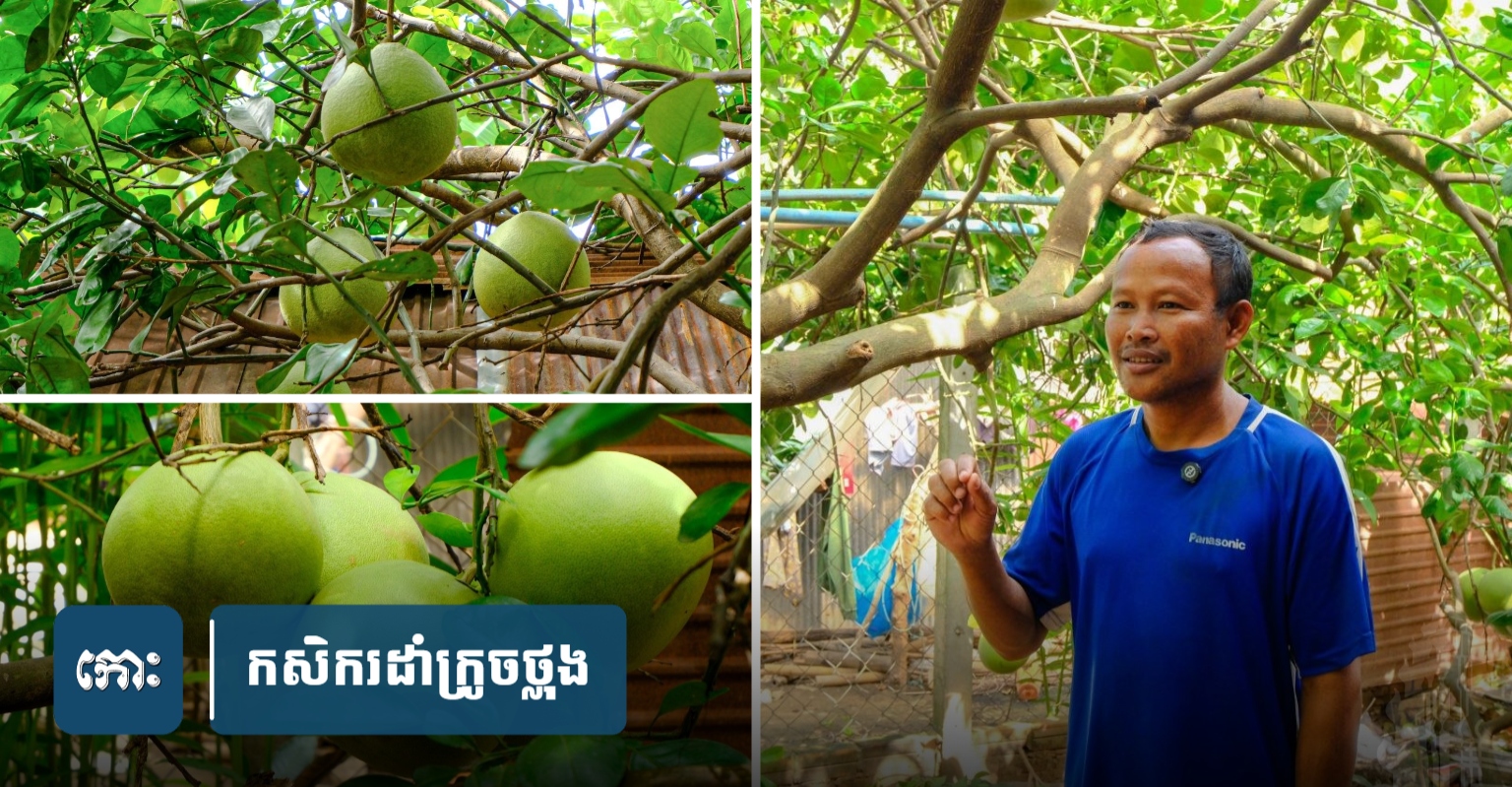
In Cambodia's Siem Reap province, the cultivation of 'Tarot Oranges' on unused land is gaining attention. This orange variety boasts high market demand and a relatively short cultivation period, making it a promising source of sustainable income. Farmers are encouraged to utilize their spare land effectively to improve household financial stability.
Residents in Pouk district, Siem Reap province, are being encouraged to cultivate diverse crops on their unused land surrounding their homes to improve their livelihoods. In particular, the 'Tarot Orange' is highlighted for its high market demand and potential to generate stable income over the long term. Vong Sara, a farmer from Bunknaar village in Pouk district, urges fellow citizens with spare land to seize the opportunity to plant various fruits and other crops to enhance their daily lives. He specifically recommends the 'Tarot Orange,' citing its strong market demand and the ease of selling, with traders coming directly to purchase. He also notes that unlike many other fruits, its harvest season is not strictly defined. According to Vong, it takes approximately seven months from flowering for the 'Tarot Orange' to be ready for harvest. Saplings propagated through grafting may take about five years to begin yielding fruit. The market price for one orange ranges from 7,000 to 10,000 riels (approximately $1.75 to $2.50). In addition to selling the fruit, he also sells grafted saplings, with small ones priced at 20,000 riels ($5) and larger ones at 30,000 riels ($7.50). Vong emphasizes that proper soil selection and adequate watering are the most crucial factors for achieving good yields naturally. He points out that during the hot season, watering to clean the leaves and flowers is vital to prevent fruit rot and improve fruit set. Based on his experience, Vong strongly hopes that people will turn their attention to cultivating crops on their spare land, creating sustainable income for their families. Source: Koh Santepheap Khmer
Original source
Koh Santepheap Khmer