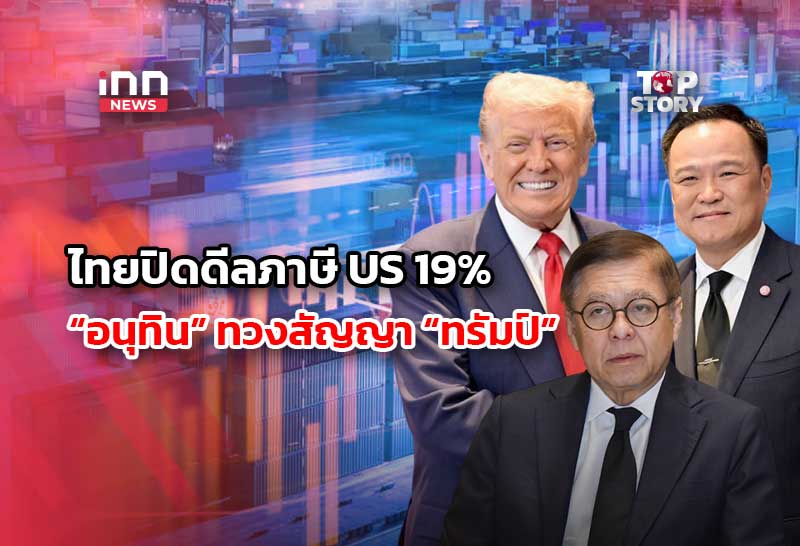
Thailand Faces '19% Tariff' Hurdle in US Trade Deal Amid Section 301 Concerns
Thailand's Deputy Prime Minister and Foreign Minister has commented on the progress of trade deal negotiations with the United States. While key aspects have reportedly been agreed upon, concerns remain about the impact of additional tariffs imposed under the US's 'Section 301' on Thai exports.
Read up to 3 eligible full articles per Japan day (JST) for free
Create a free account to open up to 3 eligible full articles per Japan calendar day (JST). Headlines and summaries remain available across ASEAN 7.
Related articles
- Japan Warns Thailand & ASEAN: 'Growth Alone Isn't Enough,' Urges Partnership
Japan has urged Thailand and ASEAN nations to build equitable partnerships beyond mere economic growth, emphasizing the need to be co-creators of the future rather than passive recipients. This message may prompt a re-evaluation of economic relations between Japan and the region.
- Pattaya Explores Waste Management Cooperation with Redemptorist Foundation
Pattaya City representatives visited the Redemptorist Foundation for People with Disabilities to observe its waste management system. Discussions centered on the potential application of the foundation's advanced practices to Pattaya's own waste management efforts.
- Thai PM Affirms No Disadvantage in US-China Deals, Secures China's Pledge on Water Pollution
Thai Prime Minister Anutin Charnvirakul has emphasized that Thailand is not at a disadvantage in its dealings with the US and China following recent diplomatic engagements. Notably, he secured a clear pledge from Chinese President Xi Jinping that China will not support activities causing water pollution, addressing transboundary environmental concerns. The Prime Minister also reported on efforts to expand trade and attract investment through multilateral discussions at ASEAN and APEC.
- Thai PM Meets Chinese President, Agree on Transboundary Water Pollution Control and Economic Cooperation
Thai Prime Minister Srettha Thavisin met with Chinese President Xi Jinping after the APEC Summit, confirming cooperation to address transboundary water pollution. Agreements were reached to strengthen collaboration in various fields including economy, investment, infrastructure, and security, aiming to deepen bilateral relations.