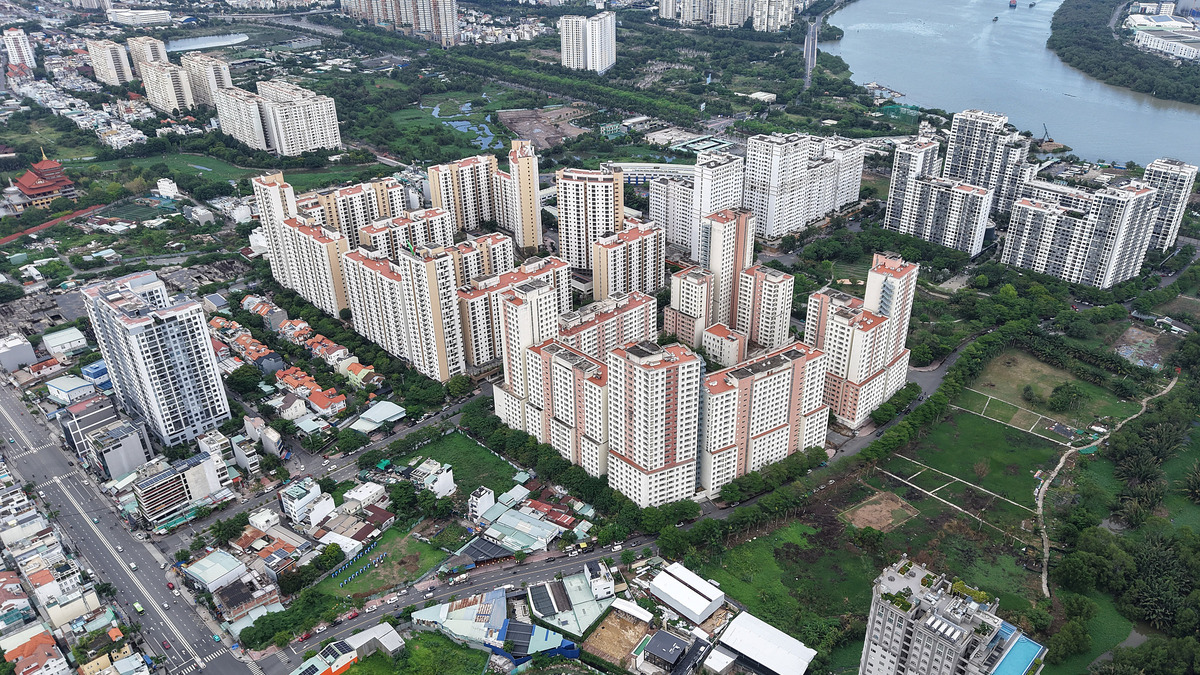
Ho Chi Minh City Proposes Authority to Set Price Ceilings for Affordable Commercial Housing
The Ho Chi Minh City Real Estate Association (HoREA) has proposed granting the city's People's Committee the authority to set price ceilings for affordable commercial housing, aiming to expand the supply of this segment. This comes amid a lack of mechanisms for pricing housing based on income levels and soaring property costs.
The Ho Chi Minh City Real Estate Association (HoREA) has proposed granting the city's People's Committee the authority to set price ceilings for affordable commercial housing, aiming to expand the supply of this segment. This comes amid a lack of mechanisms for pricing housing based on income levels and soaring property costs. In its feedback on the draft Special Urban Law, HoREA suggested that the Ho Chi Minh City People's Committee be empowered to stipulate the maximum selling and rental prices (price ceilings) for commercial housing that are suitable for the payment capacity of middle and low-income earners in urban areas. Currently, the law does not have specific regulations for commercial housing at prices suitable for payment capacity (or affordable housing), nor does it have a mechanism to determine the maximum selling or rental price for this type of housing. However, in previous feedback on pilot mechanisms for developing commercial housing for the middle-income group, HoREA indicated that in urban areas, single individuals with incomes of around VND 21-30 million per month and families of four with VND 40-50 million per month are considered the middle-income group. The appropriate apartment price for this group would range from VND 30-70 million per square meter. The association also argued that since current law already grants provincial People's Committees the authority to decide rental prices for social housing, a similar mechanism could be applied to the affordable commercial housing segment to create a legal framework for its development. According to the proposal, businesses voluntarily investing in affordable commercial housing projects would still be able to determine their selling and rental prices independently, as long as they do not exceed the ceiling price set by the Ho Chi Minh City People's Committee. In return, these projects would benefit from preferential policies and support as stipulated in the Special Urban Law. HoREA further proposed including "commercial housing suitable for the payment capacity of middle and low-income earners" within the scope of special mechanisms that the Ho Chi Minh City People's Council can issue, covering investment, construction, taxation, credit, and development support policies. The association also suggested expanding the authority of the Ho Chi Minh City People's Committee to approve its own investment and construction procedures for this segment. HoREA stated that current regulations exclude all commercial housing from special mechanisms, leaving the city without tools to promote the development of affordable commercial housing. Adding these provisions would shorten investment procedures, encourage corporate participation, and increase supply. Mr. Le Hoang Chau, Chairman of HoREA, commented that these proposals aim to concretize the orientation of developing housing segments affordable to people's payment capacity and rapidly developing the rental housing market at reasonable prices, in line with the state's orientation for housing development. The proposal comes at a time when housing prices in Ho Chi Minh City remain persistently high, while the supply of affordable housing is increasingly scarce. Many experts believe that the formation of a commercial housing segment with controlled prices, coupled with preferential policies, could contribute to expanding supply and increasing housing access opportunities for urban residents. Source: VnExpress
多角的分析
ホーチミン市における手頃な価格の住宅不足は、不動産市場の構造的な問題を示唆しています。過去数年間、高所得者層向けの高級物件や投資目的の物件への供給が集中し、中間・低所得者層のニーズが満たされてきませんでした。これは、都市化の進展と地方からの人口流入に伴う住宅需要の増加と、供給側のミスマッチが原因と考えられます。今回の提案は、価格統制という形で市場介入を図るものですが、過度な価格抑制は供給意欲を削ぐリスクも孕んでいます。過去には、社会住宅政策が十分な成果を上げられなかった事例もあり、価格設定の柔軟性とインセンティブのバランスが重要となります。
投資家にとって、ホーチミン市の手頃な価格の住宅セグメントへの参入は、新たな機会となる可能性があります。しかし、価格上限の設定は、収益性の低下を招くリスクを伴います。過去の事例では、政府による価格統制が不動産開発の鈍化を招いたケースも存在します。今回の提案が具体化された場合、投資家は、優遇措置や支援策(税制優遇、低利融資など)の有無、およびその内容を慎重に評価する必要があります。また、長期的な視点では、都市の持続的な発展と人口動態の変化を踏まえ、需要構造の変化に対応できる柔軟な事業戦略が求められるでしょう。
ホーチミン市における住宅価格の高騰は、多くの市民、特に中間・低所得者層にとって深刻な生活課題となっています。若年層や子育て世代は、安定した住居の確保が困難になり、結婚や将来設計に影響を受けています。また、住宅価格の上昇は、生活費全体の圧迫にもつながり、消費行動にも影響を与えかねません。今回の提案が、手頃な価格の住宅供給を増やし、住宅へのアクセスを改善することで、市民の生活の安定と社会全体の公平性に寄与することが期待されます。しかし、価格上限の設定が、実際の供給量や住宅の質にどのような影響を与えるかは、今後の注視が必要です。
ホーチミン市民、特に収入が平均的な家庭にとって、住宅購入は依然として大きな夢であり、多くの人にとっては手が届かない現実となっています。過去数年間、不動産価格は上昇の一途をたどり、特に中心部では、手頃な価格の物件を見つけることは至難の業です。今回の提案は、一部の市民からは歓迎されるかもしれませんが、価格上限が設定されたとしても、それが実際に十分な量の住宅供給につながるのか、また、品質が犠牲にならないかといった懸念も存在します。過去には、政府の介入が期待通りの効果をもたらさなかったケースもあり、市民は具体的な政策の実施とその結果を注視しています。
背景・歴史的文脈
ベトナムでは、経済改革(Đổi Mới)以降、急速な都市化と人口増加が進み、特にホーチミン市のような大都市では住宅需要が供給を大きく上回っています。過去、政府は社会住宅の建設を推進してきましたが、中間・低所得者層向けの商業住宅セグメントについては、明確な価格設定メカニズムが欠如していました。不動産価格の高騰は、所得格差の拡大や社会的不満につながる懸念から、政府はこれまでも市場への介入を試みてきました。今回の提案は、特別都市法という枠組みの中で、地方政府に一定の裁量権を与えることで、より実情に即した住宅政策の実現を目指すものです。
原文ソース
VnExpress