General articles are free for 24 hours after publish.
Indonesia's Deforestation Accelerates: Energy Transition and Strategic Projects Emerge as New Drivers
Indonesia's natural forests are in crisis, shrinking to 88.43 million hectares (47% of land area) by 2025, with severe fragmentation in Kalimantan and Sumatra. While Papua retains the largest intact forests, fragmentation is emerging. Deforestation is now driven not only by conventional factors but also by new projects like energy transition initiatives and food estates.
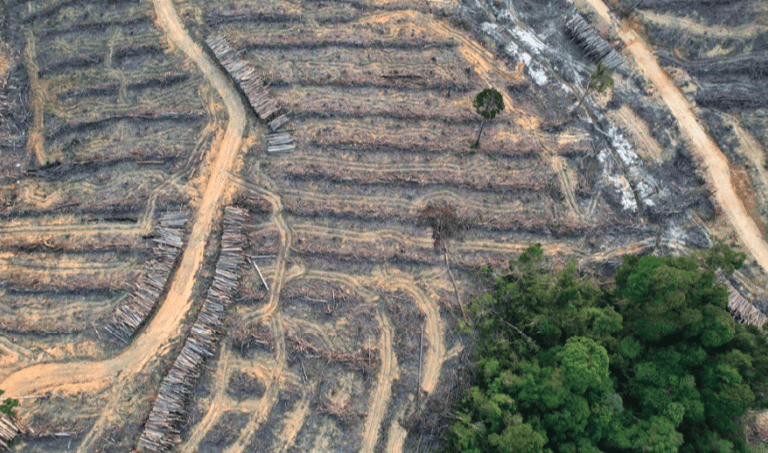
Indonesia's natural forests are facing a severe crisis. According to a report by Forest Watch Indonesia (FWI), by 2025, the area of natural forests in Indonesia has shrunk to 88.43 million hectares, or about 47% of the country's land area. This represents a decrease of 1.06 million hectares compared to 2024. Regionally, Kalimantan and Sumatra are the areas with the most severe fragmentation of natural forests, with 1.55 million hectares and 928,760 hectares affected, respectively. Meanwhile, Papua still retains the largest expanse of natural forests, accounting for 25.46 million hectares, or over 80% of Indonesia's remaining natural forests. However, even in Papua, approximately 2.45 million hectares of natural forests are beginning to show signs of moderate fragmentation. The fragmentation of forests and loss of habitat are closely linked to the increase in deforestation in a given region. For the period of 2024–2025, Kalimantan experienced the widest area of deforestation (352,070 hectares), followed by Sumatra (269,250 hectares) and Papua (169,020 hectares). This forest shrinkage is in line with a 37% surge in the deforestation rate during the 2024–2025 period. Almost all regions have seen an increase in deforestation. Kalimantan, again, recorded the largest increase, with total deforestation rising from 227,490 hectares in 2023–2024 to 352,070 hectares in 2024–2025. Ogy Dwi Aulia, Head of the Research and Information Data Division at FWI, emphasized that the loss of natural forests is no longer solely due to conventional expansion. Instead, it is transforming into new modes under the guise of energy transition and national strategic projects (PSN). An example is the 2.3-million-hectare large-scale food estate project in Merauke Regency, South Papua. Approximately 34.5% of the Merauke food estate area is still natural forest, and during the 2024–2025 period, deforestation in this area amounted to about 17,900 hectares. This project not only threatens natural forests but also potentially impacts 11,000 hectares of peatland and the survival of over 159 species. Source: Mongabay Indonesia
Original source
Mongabay Indonesia