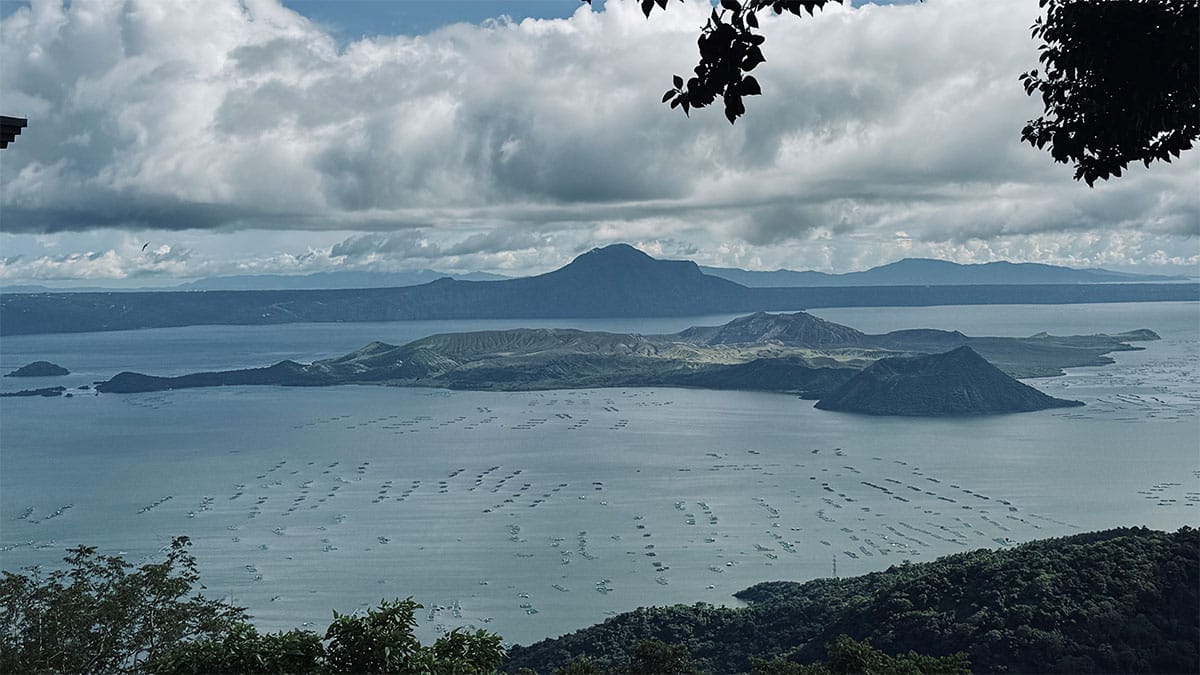
Taal Volcano Emissions Hit Year's Low, Alert Level 1 Remains
Sulfur dioxide emissions from Taal Volcano have dropped to their lowest level this year at 59 metric tons per day, according to the Philippine Institute of Volcanology and Seismology (Phivolcs). However, Alert Level 1 remains in effect, with the possibility of eruptive activity not ruled out.
Sulfur dioxide (SO2) emissions from Taal Volcano in Batangas have significantly dropped to their lowest level this year, the Philippine Institute of Volcanology and Seismology (Phivolcs) reported on Wednesday. However, the institute maintained Alert Level 1, stating that the volcano remains in an "abnormal condition" with the possibility of eruptive activity not ruled out. According to Phivolcs' latest volcano bulletin, only 59 metric tons of sulfur dioxide were emitted from the Main Crater over the past 24 hours. The gas plume rose approximately 600 meters above Taal Volcano Island before drifting north-northeast, a level classified as moderate by the agency. This measurement marks a substantial decline from the daily emissions of 542 metric tons recorded from July 10 to 14. It also surpasses the previous lowest daily average for the year of 78 metric tons, logged from January 1 to 8. For comparison, the volcano's highest sulfur dioxide emission this year reached 5,287 metric tons on June 4. Volcanic activity also remained subdued during the monitoring period, with Phivolcs recording only one volcanic earthquake over the past 24 hours. The peak seismic activity this month was observed on July 6, when the agency recorded 120 volcanic earthquakes and 113 volcanic tremors. Furthermore, no upwelling of hot volcanic fluids in the Main Crater Lake or volcanic smog (vog) was reported during the monitoring period. Despite these observations, Phivolcs reiterated that Taal Volcano remains under Alert Level 1, emphasizing that this does not signify a return to normal conditions and that the potential for eruptive activity persists. Taal Volcano, an active volcano located in Batangas province in southern Luzon, can directly impact the lives and economic activities of residents in surrounding areas. It has a history of major eruptions, each prompting evacuation advisories and heightened alert levels. The current decrease in emissions could be temporary, and Phivolcs plans to continue close monitoring.
多角的分析
二酸化硫黄排出量の低下は、地域経済にとって一時的な安心材料となる。火山活動の沈静化は、観光業や農業への直接的な被害リスクを低減させるため、投資家や地元企業にとってはポジティブな兆候と捉えられる。しかし、Phivolcsが警戒レベル1を維持していることから、予期せぬ活動再開のリスクは依然として存在し、経済活動の完全な回復には不確実性が残る。過去の噴火では、交通網の寸断や農作物の被害、観光客の激減といった経済的打撃が発生しており、今回の排出量低下が長期的な安定につながるかは注視が必要である。
タール火山の二酸化硫黄排出量が今年最低水準に達したことは、短期的なリスクオフ要因の軽減として投資家にとって好材料となり得る。特に、タール火山周辺地域の観光関連産業や不動産投資においては、活動の沈静化が期待される。しかし、警戒レベル1の維持は、依然として潜在的な噴火リスクが存在することを示唆しており、大規模な噴火が発生した場合のインフラ被害やサプライチェーンへの影響を考慮すると、慎重な姿勢が求められる。過去の噴火事例では、フィリピン証券取引所総合指数(PSEi)にも一時的な影響が見られたことから、地政学リスクの一環として、この火山の動向は引き続き注視されるべきである。
タール火山の二酸化硫黄排出量の低下は、火口周辺地域に住む住民にとって、呼吸器系疾患のリスク低減や、火口湖からの火山性スモッグ(vog)による視界不良や作物への被害懸念の緩和につながる。しかし、警戒レベル1の維持は、住民に依然として不安を残す。特に、2020年の大規模噴火で被災した人々にとっては、いつ噴火が再開するかという不確実性が生活の再建を妨げる要因となり得る。バタンガス州の住民は、火山の活動状況によって避難生活を強いられる経験をしており、今回の排出量低下が永続的な安全を保証するものではないことを理解している。Phivolcsは、今後も住民への正確な情報提供と避難計画の周知を継続する必要がある。
タール火山の二酸化硫黄排出量が今年最低になったというニュースは、マニラ首都圏やその周辺で暮らす私たちにとって、少し安心できる材料です。以前は、火山から出るガスが空気を悪くしたり、遠くまで影響したりすることが心配でした。特に、バタンガス地域に住む家族や友人は、噴火の度に避難を余儀なくされるので、今回のニュースは朗報かもしれません。ただ、まだ警戒レベルが1だというのは、完全に安心できるわけではないということですよね。2020年の噴火の時のことを考えると、いつまた状況が変わるか分からないので、引き続き注意が必要です。特に、タール湖周辺の観光業に携わる人々にとっては、この状況が長く続いてほしいと願っていますが、同時に、万が一に備えることも大切だと感じています。
背景・歴史的文脈
タール火山は、フィリピンで最も活発な火山の1つであり、ルソン島南部、マニラ首都圏から約90km南に位置する。その爆発的な噴火の歴史は古く、特に1965年と1977年の噴火は甚大な被害をもたらした。2020年1月には大規模な噴火が発生し、数万人規模の住民が避難し、マニラ首都圏にも火山灰が飛散して航空便が欠航するなど、社会・経済に大きな影響を与えた。この噴火により、タール湖内の火山活動が活発化し、二酸化硫黄の排出量が増加する傾向が続いている。Phivolcsは、タール火山の活動を常に監視し、警戒レベルシステム(0から5まで)を用いて、住民への情報提供と避難勧告を行っている。今回の排出量低下は、火山活動の一時的な沈静化を示すものと考えられるが、過去の経緯から、その動向は引き続き注視される必要がある。
原文ソース
Inquirer NewsInfo