General articles are free for 24 hours after publish.
Vietnam Promotes Community Engagement Through Revitalizing Local Cultural Houses
Hanoi, Vietnam is revitalizing local cultural houses by focusing on activities that meet community needs. Model projects in Dong Khe and Hau Ai villages are transforming these facilities into vibrant hubs for resident interaction through sports, reading, and club activities.
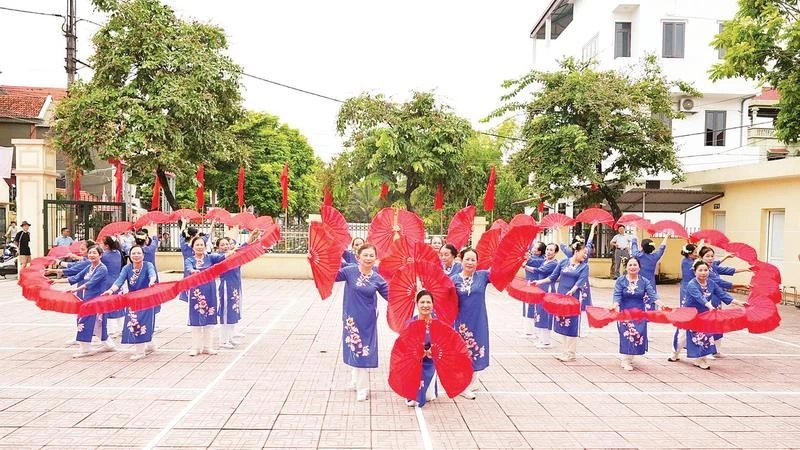
Hanoi, Vietnam is actively revitalizing its community cultural houses (Nhà văn hóa) at the village level, aiming to better serve the diverse needs of local residents. Model projects in Dong Khe village (Dan Phuong district) and Hau Ai village (Son Dong district) are redefining the role of these facilities as hubs for cultural and sports activities deeply rooted in the daily lives of the community. The Dong Khe village cultural and sports facility, spanning over 800 square meters, includes a community hall, volleyball court, table tennis area, green spaces, and restrooms. Beyond physical, cultural, and artistic activities, it hosts a community library, summer programs for children, skills education, and awareness campaigns on law and environmental protection. The initiative also incorporates IT applications and digital transformation (DX). This integrated approach allows for diverse daily uses: sports in the afternoon, club activities in the evening, a reading and skills development space for children, and a venue for community gatherings. Similarly, Hau Ai village's cultural house, covering 1,298 square meters, features a two-story hall with 150 seats, a sports court exceeding 1,000 square meters, an LED screen, and computers. A notable aspect in Hau Ai is the existing vibrant activity of clubs such as Chèo (traditional music drama), cultural and artistic groups, health promotion clubs, and volleyball teams. This provided a strong foundation for the model project, allowing for immediate operation without needing to establish new activities from scratch. Both villages share a common focus on activities close to daily life, including volleyball, badminton, table tennis, health exercises, chess, arts, and reading. These activities are suitable for a wide range of ages, do not require significant travel, and are easily sustainable. This approach is helping to transform the image of cultural houses, which were previously often underutilized, primarily serving for meetings or events. By becoming spaces where residents engage in sports, read, join clubs, or bring their children for community activities, these facilities are truly becoming living spaces. Currently, Hanoi has 126 communes and wards, with 40 (31.75%) still lacking municipal-level cultural facilities. The city boasts a network of 4,534 cultural houses and community activity points across its 2,501 villages and 3,049 residential groups. These figures highlight Hanoi's extensive grassroots cultural infrastructure, while simultaneously underscoring the need for continuous improvement in both facilities and their operational efficiency. The experiences of Dong Khe and Hau Ai suggest that success lies not solely in investing in extensive equipment, but primarily in identifying community needs and designing activities that draw people to the cultural houses. When sports courts are filled, clubs are active, libraries are frequented, children have play areas, and residents have meeting places, cultural facilities truly fulfill their value. Source: Nhan Dan
Original source
Nhan Dan