General articles are free for 24 hours after publish.
Zheng He's Shifting Symbolism Reflects China's Evolving Maritime Strategy
China has long utilized the Ming Dynasty navigator Zheng He as a diplomatic symbol, but his role has evolved recently. Once a testament to 'peaceful rise,' his symbolism is diminishing with naval expansion, with greater emphasis now placed on contemporary policies and actions.
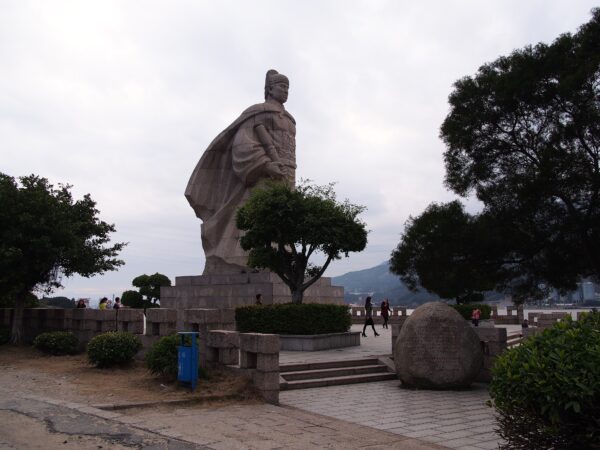
The Communist Party of China has long employed the Ming Dynasty’s renowned navigator Zheng He as a symbol in its maritime strategy and foreign policy. However, in recent years, Zheng He's symbolic role has been evolving, reflecting shifts in China's maritime goals and capabilities. Zheng He has occupied a significant place in China's diplomatic narratives long before President Xi Jinping's Belt and Road Initiative (BRI). Shortly after the founding of the People's Republic of China, he was positioned as evidence of China's historical maritime outreach and peaceful development. Particularly under the Hu Jintao and Wen Jiabao administrations, he was used as a crucial argument to convey the 'peaceful rise' to the international community. Zheng He's extensive voyages were presented as proof that China had pursued peaceful relations with other countries in the past, thereby sending a message that China's current rise would be similarly peaceful. At a time when China needed to alleviate international concerns about its military buildup, the story of Zheng He served as an excellent example of how to balance having a powerful navy with exercising it peacefully. However, since the latter half of the 2010s, the use of this symbol began to change. In particular, as the People's Liberation Army Navy (PLAN) transitioned its strategy from 'offshore waters defense' to 'open seas protection,' and rapidly expanded its naval power through carrier construction, establishment of overseas bases, and increased shipbuilding capacity, the importance of Zheng He's narrative has relatively declined. Since 2019, references to Zheng He by top leadership have decreased, and he is no longer frequently invoked as he once was, especially in discussions concerning regional maritime order. The background to this change lies in the fact that China's naval power has actually grown, and its actions are now directly assessed by the international community. The era when Zheng He's story linked formidable maritime power with voluntary restraint has ended. China is now compelled to demonstrate its 'peaceful intentions' in its maritime strategy through contemporary policies and actual conduct, rather than historical symbols. Currently, Zheng He is primarily mentioned in bilateral relations when discussing historical ties with specific countries. Source: The Diplomat Indonesia
Original source
The Diplomat Indonesia