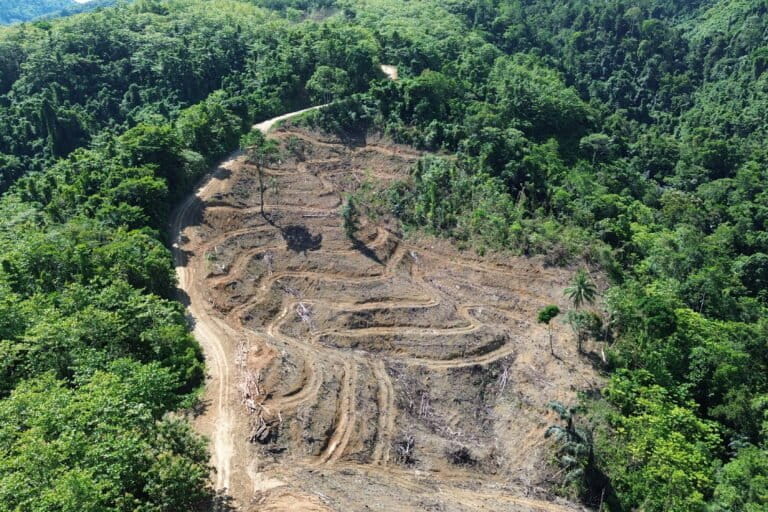
Gorontalo Farmers Anxious as North Gorontalo Forests Shrink
Environment
2026年7月17日
5
Mongabay Indonesia

Gorontalo Farmers Anxious as North Gorontalo Forests Shrink

AI サマリー

Farmers in North Gorontalo, Indonesia, are voicing concerns that deforestation by PT Gema Nusantara Jaya (GNJ) is diminishing natural water absorption, leading to reduced crop yields and flood damage. Once lush natural forests have been replaced by monoculture plantations for industrial timber, severely impacting residents' livelihoods.

In North Gorontalo, Indonesia, widespread deforestation by PT Gema Nusantara Jaya (GNJ) is causing growing anxiety among local residents. The changes are particularly pronounced in areas that were once lush natural forests and supported the livelihoods of villagers in Bubode Village, Tomilito District, Gorontalo Utara Regency. GNJ, which initially began as an industrial timber (HTI) company, has since transformed into a multi-business forestry (MUK) enterprise. This corporate activity is reportedly having ecological impacts, notably leading to reduced crop yields for farmers. Rifal Bobihu, a resident of Bubode Village, recalls that the area was once a dense forest, serving as a vital watershed, regulating seasons, and acting as a natural shield against extreme weather. However, since GNJ's presence, the landscape on the hillsides has dramatically changed, with natural forests replaced by monoculture plantations of jabon and sengon trees for industrial timber. This transformation has been felt by residents for over a decade. During the rainy season, water from the upstream areas now flows faster and is murkier. Sedimentation covers crop leaves and submerges stems. For Rifal, the rainy season is no longer a time of hope but of anxiety. "This change is not just about the scenery. There's a sense of unease that accompanies every planting season. Now we plant not with confidence, but with worry," he said amidst his corn planting activities. Indeed, in January 2025, continuous rainfall throughout the day caused the Bubode River to overflow. At night, the river breached its banks, inundating rice fields, corn farms, and residents' homes. Data from the Regional Disaster Management Agency (BPBD) indicates that 2,117 families were affected by this flood, with approximately 115 hectares of rice fields and dozens of hectares of corn farms damaged. This situation highlights the challenges in balancing sustainable development with the livelihoods of local communities and the management of forest resources. The diminishing natural forests are evidently increasing the vulnerability of the local society.

多角的分析

経済的影響

GNJが工業用木材から多角的な林業事業へと転換したことは、地域経済における収益源の多様化を示唆する。しかし、原生林を単一栽培のプランテーションに置き換えることで、生態系サービスの低下を招き、結果として農作物の収穫量減少という形で地域経済に悪影響を与えている。これは、短期的な収益追求が長期的な地域経済の持続可能性を損なう典型的な例である。過去の事例では、同様の森林転換が、土壌劣化や水質悪化を引き起こし、農業生産性を恒久的に低下させたケースが複数存在する。

投資家心理

GNJのような企業は、初期投資を抑えつつ、成長が見込める工業用木材やその他の林産物から収益を得ることを目指す。しかし、地域社会との軋轢や環境への影響が顕在化すると、企業の評判リスク(レピュテーションリスク)が高まり、ESG(環境・社会・ガバナンス)投資の観点から投資家からの評価が低下する可能性がある。特に、地域住民の生活基盤を脅かすような事業活動は、長期的な投資の安定性を損なう要因となりうる。過去には、環境規制違反や地域紛争を引き起こした企業が、市場からの信頼を失い、株価が低迷した事例がある。

社会的影響

ゴロンタロ北部の住民、特にBubode村の農民は、原生林の減少によって直接的な被害を受けている。かつて自然の恩恵を受けていた土地が、単一栽培のプランテーションに変わり、収穫量の減少や、雨季の洪水の頻発・激化という形で生活が脅かされている。これは、地域住民の生活の質、食料安全保障、そして精神的な安定にまで影響を及ぼす深刻な問題である。過去には、森林伐採による水源枯渇や土砂災害で移住を余儀なくされた地域もあり、同様の事態が懸念される。

市民の声

ゴロンタロ北部の住民、特にBubode村の農民は、かつての緑豊かな森が失われ、単一栽培のプランテーションに置き換わったことで、生活に大きな変化を強いられている。雨季には、水源涵養能力の低下により、濁った水が速く流れ込み、農作物が被害を受ける。これにより、収入の減少だけでなく、将来への不安も増大している。2025年1月の洪水では、多くの家屋が浸水し、地域住民の生活基盤が打撃を受けた。彼らは、自然環境の変化が直接自分たちの生活に影響を与える現実を目の当たりにしている。

背景・歴史的文脈

インドネシアにおける森林伐採と土地利用の変化は、長年にわたる経済発展政策と深く結びついている。1970年代以降、政府は農地拡大、プランテーション開発、鉱業などを推進し、多くの原生林が伐採されてきた。特に、パーム油や木材産業は経済成長に大きく貢献したが、その一方で、森林破壊、生物多様性の喪失、地域社会との紛争といった問題も深刻化してきた。2000年代以降、環境保護への意識の高まりとともに、持続可能な開発への転換が模索されているが、経済的インセンティブや地方政府の開発圧力との間で、依然として緊張関係が続いている。

原文ソース

Mongabay Indonesia

原文を読む