Vietnam Emphasizes Business Role in Achieving 2050 Net-Zero Goal
Vietnam's Deputy Prime Minister highlighted the crucial role of the business community in driving energy transition and emissions reduction to achieve the 2050 net-zero target. Key strategies include policy enhancement, green finance, and carbon market development.
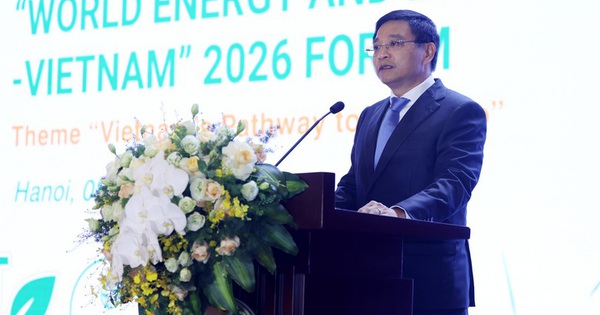
SOCIALIST REPUBLIC OF VIET NAM Government News Kim Loan Deputy Prime Minister Nguyen Van Thang at the World Energy and Environment – Viet Nam 2026 Forum in Ha Noi Speaking at the World Energy and Environment – Viet Nam 2026 Forum under the theme "Viet Nam Concretizes the Path to Net Zero," in Ha Noi on Wednesday, the Deputy Prime Minister said the country is entering a new era of development in which ensuring energy security, accelerating the green transition and strengthening national competitiveness have become more urgent than ever. He described the forum as an opportunity to translate commitments into concrete actions, turn strategies into practical projects and mobilise the participation of the entire society, particularly the pioneering role of the business community. "The theme of forum goes beyond energy and the environment. It is about the nation's development strategy—achieving faster but greener growth, deeper yet more sustainable international integration, attracting higher-quality investment and strengthening Viet Nam's global standing while fulfilling its international responsibilities," he said. The Deputy Prime Minister noted that climate change is one of the greatest global challenges, with profound impacts on socio-economic development. As a rapidly growing and highly open economy with rising energy demand, Viet Nam is among the countries most vulnerable to climate change. At the COP26 Climate Conference, Viet Nam committed to achieving net-zero emissions by 2050. That commitment has since been translated into concrete policies through Resolution No. 70 on ensuring national energy security through 2030 with a vision to 2045 and Resolution No. 253 on mechanisms and policies for national energy development during 2026–2030. The Government is also drafting a new resolution that will continue to place environmental protection, green transition and energy transition at the centre of the country's development strategy. To make the energy transition the cornerstone of Viet Nam's Net Zero roadmap, Deputy Prime Minister Nguyen Van Thang outlined four strategic priorities. The first is pursuing an effective and sustainable energy transition by improving policies, diversifying energy sources, promoting renewable energy, modernising transmission and storage infrastructure and developing a competitive electricity market with stronger private-sector participation. He stressed that Viet Nam would not abruptly phase out conventional energy sources but would instead improve their efficiency, apply advanced technologies to control emissions and gradually reduce their share under an appropriate roadmap. The transition, he said, must ensure adequate energy supplies for growth, meet emissions-reduction commitments and deliver a just transition for workers, businesses and local communities. The second priority is upholding the principle of not sacrificing the environment for economic growth by strengthening environmental protection, restoring ecosystems, promoting the circular economy and accelerating green production and consumption. Emissions reduction should go hand in hand with reforming the growth model and improving the ESG standards and competitiveness of Vietnamese products in global supply chains. The third priority focuses on developing green finance and the carbon market as key pillars of the transition. The Government will continue to improve the legal framework, expand green credit and green bonds, introduce tax incentives for green projects, attract concessional finance and advanced technologies, and further develop the domestic carbon market. The fourth priority is to maximise the role of businesses and local authorities. The Deputy Prime Minister said enterprises across all economic sectors are the decisive force behind Viet Nam's Net Zero journey and should lead emissions-reduction efforts, integrate ESG into long-term business strategies and invest in clean technologies. Localities, particularly those with strong renewable energy potential, should improve planning, streamline administrative procedures and create favourable conditions for green investment. The Deputy Prime Minister affirmed that the Government would continue to accompany local authorities and businesses, listen to their concerns and remove obstacles to facilitate the green transition. He assigned the Ministry of Industry and Trade to continue advising the Government on measures to ensure national energy security while accelerating clean energy development and modernising electricity transmission, distribution, storage and dispatch systems. The Ministry of Agriculture and Environment was tasked with completing the national greenhouse gas inventory system, strengthening emissions management, promoting the carbon market, protecting ecosystems and enhancing climate resilience. Meanwhile, the Ministry of Finance and the State Bank of Viet Nam were instructed to accelerate green finance instruments, including green credit and green bonds, and develop blended finance and risk-sharing mechanisms to mobilise greater resources for the green transition. Local authorities were urged to update development plans, prepare pipelines of green projects, improve the investment climate and remove administrative bottlenecks to facilitate clean energy, circular economy and emissions-reduction projects. The Deputy Prime Minister also called on the business community to view green transformation and ESG governance as a strategic imperative and an opportunity to strengthen competitiveness by upgrading technologies, conducting greenhouse gas inventories, improving environmental data transparency and actively participating in the carbon market. He urged the Viet Nam Chamber of Commerce and Industry (VCCI) to strengthen its role as a bridge between the Government and businesses by promptly reflecting enterprises' concerns and coordinating with ministries and localities to develop green transition support programmes, particularly for small and medium-sized enterprises. The Deputy Prime Minister also called on the International Renewable Energy Agency (IRENA), international environmental organizations and developed countries to provide more practical support for Viet Nam and its businesses in implementing the country's emissions-reduction roadmap. Expressing confidence in Viet Nam's prospects, he said the country's Net Zero target would be achieved through the strong political commitment of the Party and State, the concerted efforts of the entire political system, the active participation of the business community and people, and close cooperation with international partners. Held alongside the forum, the "Viet Nam Net Zero – Green Path Exhibition" featured more than 50 booths showcasing green technologies, products, services, business models and innovations while providing a platform for cooperation, technology transfer, financing and investment in green transition projects. The organising c
多角的分析
ベトナム経済は、輸出主導型の成長モデルから、より持続可能で付加価値の高い産業への転換を模索している。ネットゼロ目標達成は、再生可能エネルギーへの投資拡大、省エネルギー技術の導入、そして循環経済の推進を通じて、新たな産業創出と雇用機会の拡大につながる可能性がある。しかし、従来の化石燃料依存からの脱却は、エネルギー価格の変動リスクや、関連産業における構造調整の必要性を伴う。特に、エネルギー集約型産業の国際競争力維持と、グリーン技術への大規模な投資資金の調達が課題となる。政府はグリーン金融の拡充や炭素市場の整備を通じて、民間投資を呼び込む戦略だが、その実効性は市場メカニズムの成熟度と国際的な炭素価格動向に左右される。
ベトナムのネットゼロ目標は、再生可能エネルギー、EVインフラ、省エネ技術、循環経済関連分野への投資機会を創出する。特に、国際的なESG投資の流れと合致しており、質の高い外国直接投資(FDI)の誘致に繋がる可能性がある。政府によるグリーン金融の拡充や税制優遇措置は、投資家にとって魅力的なインセンティブとなるだろう。しかし、政策の実行力、規制の透明性、そして炭素市場の信頼性確立が、投資判断の鍵となる。特に、従来のエネルギーセクターからの移行に伴うリスク管理や、長期的な収益性を見極めることが重要である。日本企業にとっては、サプライチェーンのグリーン化や、ベトナムのエネルギー転換を支援する技術・サービス提供の機会が拡大すると考えられる。
ネットゼロ目標達成に向けたエネルギー転換は、社会全体に影響を与える。再生可能エネルギーへの移行は、新たな雇用を生み出す一方で、化石燃料関連産業で働く人々の職を失う可能性も示唆している。副首相が言及した「公正な移行(just transition)」は、これらの労働者や地域社会への配慮を意味する。また、グリーン生産・消費の促進は、消費者のライフスタイルの変化を促し、環境意識の高い製品やサービスへの需要を高めるだろう。しかし、地方部におけるインフラ整備の遅れや、中小企業がグリーン技術導入のコスト負担に直面する可能性も懸念される。市民生活においては、エネルギー価格の変動や、環境保全活動への参加意識の醸成が重要となる。
ベトナム政府が掲げる2050年ネットゼロ目標は、国民生活に直接的な影響を与えうる。特に、エネルギー転換は、電気料金の変動や、将来的な化石燃料の使用制限といった形で、市民の生活コストや利便性に影響する可能性がある。副首相が強調した「公正な移行」は、石炭産業などで働く人々が職を失わないよう、再教育や新たな雇用機会の提供を求める声につながるだろう。また、循環経済やグリーン消費の推進は、リサイクル意識の向上や、環境に配慮した製品選択を促す契機となる。しかし、地方部では、再生可能エネルギーインフラの整備が遅れる可能性があり、都市部との格差が拡大しないかという懸念も生じている。市民は、政府の政策が、経済成長と環境保護のバランスをどのように取るのか、そしてその恩恵が国民全体に行き渡るのかを注視している。
背景・歴史的文脈
ベトナムは、経済成長と環境保護のバランスを取るという二重の課題に直面している。1986年のドイモイ政策以降、市場経済化を進め、急速な経済成長を遂げたが、その過程でエネルギー消費量の増大と環境負荷の増加を招いた。特に、石炭火力発電への依存度は高く、気候変動の影響を受けやすい地理的条件も相まって、国際社会からの排出削減圧力が高まっている。2021年のCOP26でのネットゼロ公約は、この圧力と、持続可能な開発への国内的な要請に応えるための戦略的な一歩である。政府は、一党体制の強みを活かし、国家戦略としてこの目標達成を目指しているが、経済成長を維持しながらの環境対策は、常に政策立案者にとっての難題となっている。
原文ソース
Bao Chinh Phu