General articles are free for 24 hours after publish.
India Transitions from Semiconductor Designer to Producer
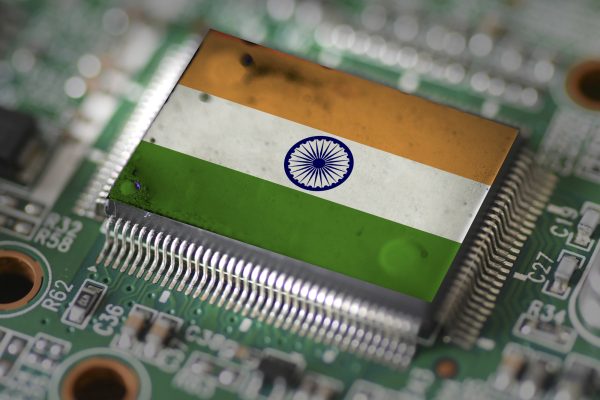
Leveraging its long-standing strength in chip design, India is accelerating its push into semiconductor manufacturing. The government's 'India Semiconductor Mission 2.0' aims to foster domestic intellectual property (IP) creation and strengthen the supply chain, bolstered by global geopolitical de-risking trends.
India, long a powerhouse in semiconductor design, is now aiming to transition into a significant "producer" within the global supply chain. The "India Semiconductor Mission 2.0" (ISM 2.0), approved in July 2026, is set to invest approximately $13 billion to bolster domestic intellectual property (IP) creation and build a robust supplier base essential for semiconductor manufacturing. The ISM 2.0 aims to position India as a trusted and reliable partner in the global semiconductor value chain. Union Electronics and IT Minister Ashwini Vaishnaw described the new phase as a move "from demonstrating intent to executing projects at scale." With increasing participation from international stakeholders, India is steadily turning its semiconductor ambitions into a tangible reality. India's semiconductor journey has deep roots. In the 1980s, the country was on the cusp of advanced semiconductor manufacturing technology. However, a devastating fire at the state-run Semiconductor Complex Limited (SCL) in Mohali in 1989, followed by economic liberalization in 1991, led to a decline in domestic manufacturing zeal. Importing chips became cheaper, while Indian fabs struggled with insufficient subsidies, bureaucratic hurdles, and inadequate infrastructure. While manufacturing faltered, India excelled remarkably in chip design. The country hosts about 20 percent of the world's chip design talent, with major tech hubs like Bengaluru, Hyderabad, Noida, and Pune supporting R&D for multinational giants such as Intel, Qualcomm, Texas Instruments, and NXP. This design capability existed and thrived even before the ISM policy and rebranding. ISM 2.0 targets the domestic IP ownership gap by funding full-stack Indian semiconductor IP, startups, and offering deployment-linked design incentives. For strategically important chip designs, the policy mandates co-ownership with a state agency, ensuring designs remain within the country. However, this co-ownership model might complicate licensing, acquisitions, and the venture funding crucial for fabless startups to scale. Geopolitically, India's semiconductor sector is gaining traction. As the United States, the European Union, Japan, and South Korea seek to de-risk by diversifying supply chains away from Taiwan's concentration and China's influence, global players like Micron and Applied Materials are increasing their investments in India. India is viewed as a politically stable node in the supply chain network. The challenges India faces extend beyond capital allocation. Building a domestic base of semiconductor-grade equipment and specialty chemical suppliers requires tacit knowledge, long-term supplier relationships, and sustained state support, mirroring the development paths of Taiwan, South Korea, and Japan. India possesses abundant design talent. The critical next steps involve translating this talent into Indian-owned enterprises and developing the much-needed supplier ecosystem for its fabs. Amidst global de-risking and domestic aspirations, the true test of ISM 2.0 will be India's success in increasing Indian IP ownership and the share of domestically sourced inputs for its fabs. If both metrics rise, India's chip story will be a testament to its own ownership endeavors, rather than merely a byproduct of other nations' risk diversification. Source: The Diplomat Indonesia
Original source
The Diplomat Indonesia