Vietnam Learns From Singaporean F&B Struggles in China Amid Complex Ties
Economy
2026年7月18日
5
VnExpress International
Relations
🇻🇳Vietnam🇨🇳China🇸🇬Singapore

General articles are free for 24 hours after publish.

Vietnam Learns From Singaporean F&B Struggles in China Amid Complex Ties

Share
AI Summary

Singaporean F&B brands, once successful in China, are facing market challenges due to intensified local competition and evolving consumer preferences. This serves as a crucial lesson for Vietnamese businesses navigating their own China strategy and domestic market.

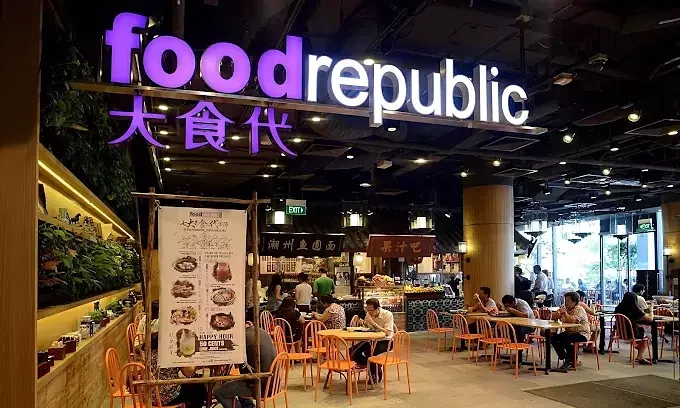
Established Singaporean brands such as Food Republic, Toast Box, Jumbo and Song Fa Bak Kut Teh began expanding into China around the 2000s, when they were seen as symbols of consumption upgrade among the country's growing middle class. As incomes climbed and consumer spending evolved over the following decade, these brands rode the wave to rapidly expand beyond major cities like Beijing, Shanghai and Shenzhen into second-tier markets such as Chengdu, Hangzhou and Nanjing. But after the Covid-19 pandemic, the momentum behind that golden era gradually reversed, with many Singapore-linked F&B players scaling back their China footprint or withdrawing from some city markets altogether. Last month, Food Republic, a food court chain known for bringing together hawker-style and regional street food under one roof, closed its outlet at Beijing’s Oriental Plaza after its lease expired. The outlet, which opened more than 25 years ago, was both the chain's first and last in Beijing. The closure left the chain with just four outlets in China, all in Shanghai, a far cry from its peak of more than 40 in the mid-2010s. Its parent, BreadTalk, last year shuttered all 11 of its bakeries by the same name in Chengdu. It now has some 200 BreadTalk stores across China, down from a peak of 460 a decade ago. The logo of Food Republic is seen at one of its food courts. Photo from Google Maps Jumbo, whose brands include Jumbo Seafood and Ng Ah Sio Bak Kut Teh, has shuttered four outlets in recent years. The group had previously sought to establish a foothold across too many Chinese cities, which ultimately backfired, according to group CEO and executive chairman Ang Kiam Meng. "Spreading our resources so thinly is not advisable especially for China, which is so diverse in culture and taste across cities," Ang told The Business Times last month, adding that the group is now focusing on expanding Jumbo Seafood in Shanghai. Singaporean branding, analysts say, gave F&B players an edge during the golden era thanks to the city state’s reputation for quality, hygiene and reliability. But these traits have since become baseline expectations for Chinese customers, who now have plenty of local alternatives, according to Guan Chong, associate professor at the Singapore University of Social Sciences. "The ‘Singapore brand’ alone is no longer a value proposition," he remarked, as quoted by the South China Morning Post. The brands winning over Chinese consumers today are faster, cheaper, more local and more differentiated, Singapore-based venture outfit Momentum Works wrote on its The Low Down platform. They operate at a pace many foreign brands struggle to match, rolling out new products, limited-time collaborations, format changes, pricing experiments and platform campaigns almost every month. Chen, who has run a Singaporean restaurant in Beijing for 14 years, told ThinkChina magazine that he felt some large F&B companies entered China without sufficient preparation or adequate resources to build frontline teams capable of competing with local rivals. He added that Singaporean businesses are too cautious and not aggressive enough in pursuing market share, and reluctant to make bigger changes to remain in China. According to Momentum Works, foreign brands stand a better chance if they localize decision rights instead of viewing China as a distant execution market to be managed from afar. Beyond speed, fierce competition has also squeezed prices and margins across many mass-market categories, the firm said, adding that the high-margin, low-competition environment foreign brands enjoyed a decade ago is unlikely to return. Charles Wang, managing partner and regional CEO for Greater China at consulting firm YCP, said Singaporean brands need to carve out a niche and offer a mix of functional and emotional value. They could also partner with Chinese businesses expanding in Singapore for better resource sharing, he said. "Leveraging this structural advantage would give Singaporean F&B brands a unique and unprecedented recipe to reconquer the Chinese market," he told SCMP. Still, Chinese consumer perception evolve quickly, so even a differentiated brand with a strong story need constant renewal and disciplined execution. Jianggan Li, CEO of consultancy Momentum Works, said brands that exited China are not necessarily weak, but rather unable to keep pace with the market's rapid evolution. China's market has never lacked opportunities; it is simply changing too quickly, he told ThinkChina. Subsidiary of VnExpress License number: 71/GP-CBC, Ministry of Information andCommunications, September 22, 2021 Editor-in-Chief: Pham Van Hieu Email: [email protected]: 028 7300 9999 - Ext 8556 10th floor, Block A FPT Tower, 10 Pham Van Bach, Cau Giay Ward, Hanoi

0

Original source

VnExpress International

原文を読む