General articles are free for 24 hours after publish.
Man Faces Charges Over Japanese Boy's Drowning at Vietnamese Resort
Authorities in Vietnam have reopened charges against a man for violating construction regulations in connection with the 2022 drowning of a Japanese boy at a resort. The investigation, previously suspended, is now proceeding to determine accountability for the tragic incident.
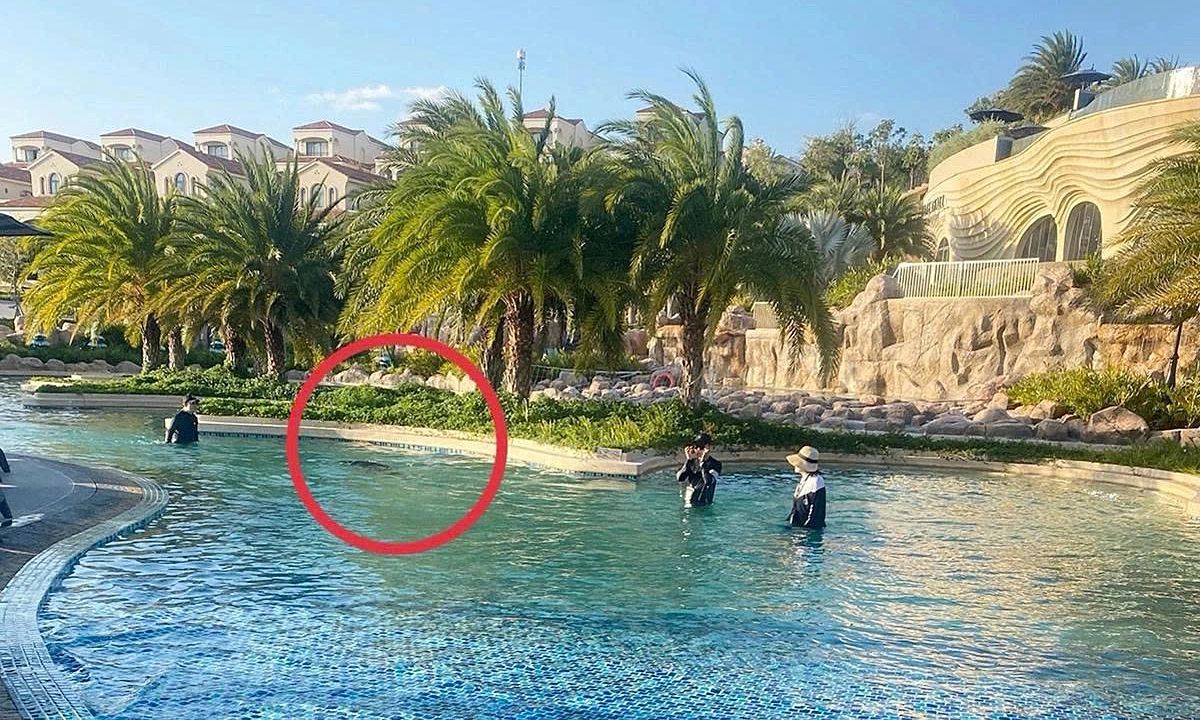
Nguyen Quoc Quan faces charges of "violating construction regulations," the Lam Dong Province Police's Investigation Police Agency announced. The case was reopened in late June after multiple suspensions and changes in charges over the years. Authorities have not yet disclosed Quan's specific role or the exact violations committed. The spot (circled) at a swimming pool in Mui Ne where Japanese boy Hanawa Yukiji was drowned in 2022. Photo provided by the victim's family According to the case file, the boy, Hanawa Yukiji, and two other children were playing in the "Lazy River" pool at the Centara Mirage Mui Ne resort at around 10:35 a.m. on April 5, 2022. He was later found trapped against the mesh covering part of the pool's suction system. Bystanders pulled him out and performed first aid, but he could not be revived. A forensic examination concluded that the boy died from drowning, noting square-shaped marks arranged in rows on his back and waist. A subsequent assessment revealed that the active suction system could tightly draw in a person with Yukiji's physique, making it impossible to break free if their back covered the opening. A metal mesh in a swimming pool at Centara Mirage Resort Mui Ne in Phan Thiet in central Vietnam where Japanese boy Hanawa Yukiji was drowned in 2022. Photo courtesy of his family In May 2022, the police initially launched a prosecution for causing death through negligence by violating professional rules. The investigation was repeatedly suspended due to conflicting expert assessments regarding the danger posed by the suction system. In early 2025, local police reopened the investigation after the Ministry of Construction provided a forensic assessment of the pool. That assessment identified violations in the design, construction, and operation of the pumping, suction, and massage-water discharge systems. It found the developer had not fully approved the design, construction, and acceptance standards for the infrastructure. Additionally, the design unit failed to adequately calculate parameters related to the risk of swimmers becoming trapped at the suction opening. Investigators subsequently changed the charge to violating construction regulations causing serious consequences under Article 298 of the Penal Code. In Vietnam's one-party system, accountability for accidents and infrastructure deficiencies impacting public safety can often involve complex procedures. Prosecutions for violating construction regulations, as in this case, have occurred previously but frequently require significant time for resolution due to differing expert opinions and coordination among relevant authorities. As Vietnam continues its economic growth with active infrastructure investments, including resort development, ensuring compliance with safety standards and establishing robust oversight mechanisms remain critical challenges. Furthermore, in cases involving foreign tourists, transparency in information disclosure and communication with victims' families can also influence the speed and fairness of the resolution process.
Original source
VnExpress International