General articles are free for 24 hours after publish.
Cambodia Urges Youth Union to Promote TVET Programs for Workforce Development
Cambodia's Heng Sour, Permanent Member of the Union of Youth Federations of Cambodia (UYFC), encouraged youth organizations to promote Technical and Vocational Education and Training (TVET) programs. This initiative aims to enhance the workforce quality and achieve the nation's 2030 and 2050 vision under the government's "Pentagonal Strategy." Specifically, it targets 1.5 million disadvantaged youth with vocational training to boost employment and living standards.
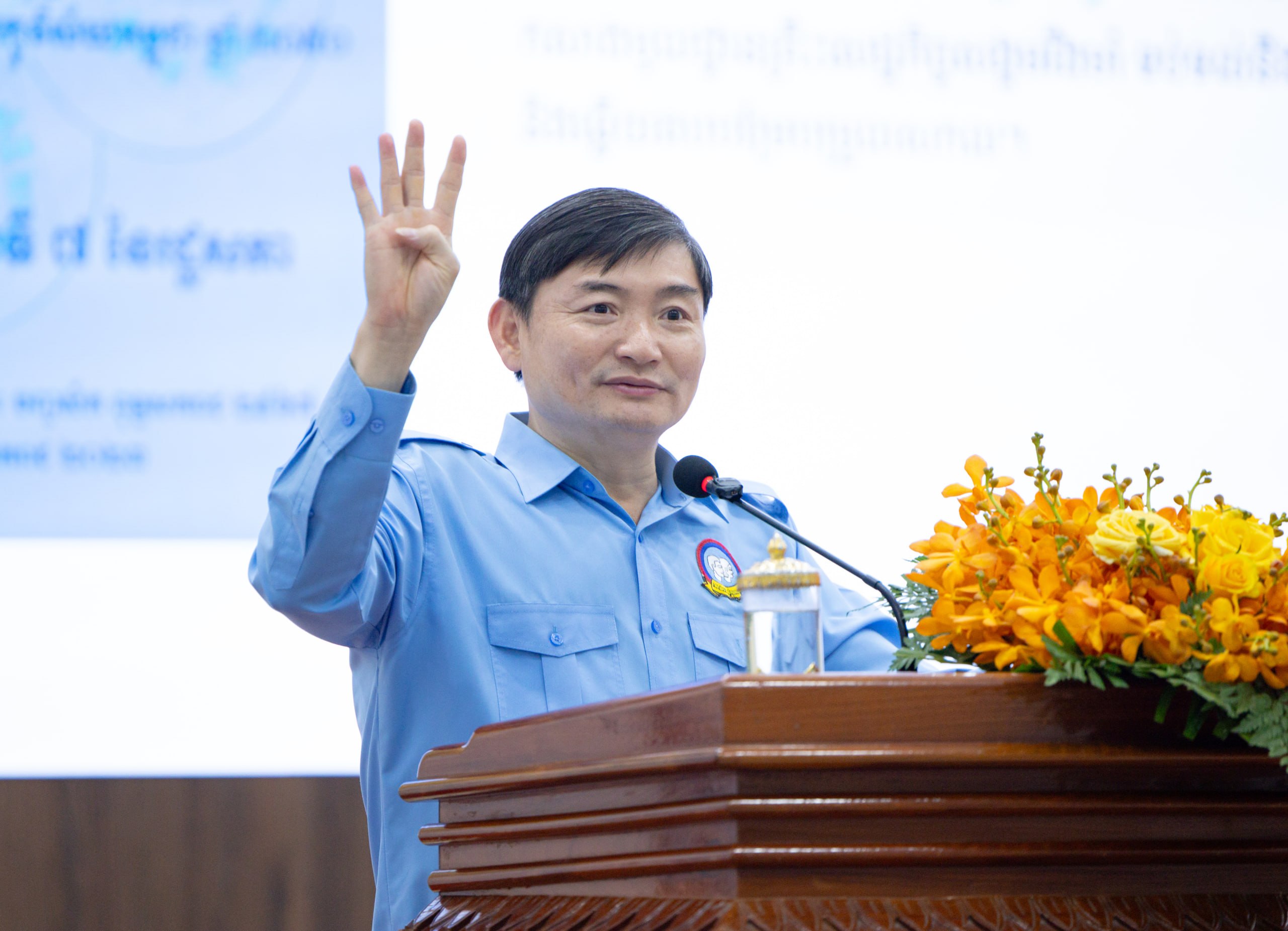
Heng Sour, Permanent Member of the Union of Youth Federations of Cambodia (UYFC), strongly encouraged youth organizations to actively promote Technical and Vocational Education and Training (TVET) programs. This call was made during a workshop titled "Transforming Cambodia's Workforce to Achieve the 2030 and 2050 Visions," held on July 27, 2026, at the National Technical Training Institute (NTTI), which drew over 1,000 participants. During the event, Heng Sour highlighted the "Pentagonal Strategy - Phase I" of the seventh mandate government, built upon Cambodia's robust economic and political stability. This strategy aims for growth, employment, equity, efficiency, and sustainability, laying the foundation for Cambodia's 2050 vision to transform into a high-income country. The strategy emphasizes enhancing both hard and soft skills through education and training, alongside creating more job opportunities in terms of both quantity and quality for Cambodian citizens, especially the youth. The government is implementing a TVET program targeting 1.5 million young people from poor and vulnerable families. This initiative not only provides practical vocational skills but also offers employment opportunities and income to improve family livelihoods. Heng Sour stressed that TVET programs serve as a "bridge" for young people to quickly enter the labor market and are a key driver in realizing the principle of "at least one lifelong skill per citizen." This aims to shift Cambodia's labor force structure from being labor-intensive to skill- and technology-based, enabling competitiveness regionally and globally. The Ministry of Labour and Vocational Training and its partners are reforming and transforming the new generation TVET system, focusing on advanced technical diplomas and bachelor's degrees that support sectors like manufacturing, construction, agriculture-industry, and services. Furthermore, foundational skills, digital literacy, Artificial Intelligence (AI), automation and robotics, as well as soft skills such as critical thinking, communication, teamwork, discipline, and adaptability to the work environment, are being made mandatory in all study programs. In collaboration with the Ministry of Education, Youth and Sport, a "new educational pathway" is being piloted, introducing vocational tracks in high schools located near special economic zones or industrial areas. To contribute to the transformation of Cambodia's workforce, the ministry is also studying and publishing career outlooks and survey reports, while continuously strengthening mechanisms for providing career services. This is particularly being advanced through the National Employment Agency (NEA) to better meet labor market demands. Responding to questions from the youth regarding the Pentagonal Strategy, TVET programs, and the job market, Heng Sour stated that these achievements are due to the participation of all stakeholders, especially the UYFC, which plays a crucial role in disseminating government policies and promoting youth involvement in national development. He urged UYFC youth to become influential and effective promoters of TVET programs, reaching out to their peers, siblings, and other young Cambodians to help more of them acquire skills, secure jobs, and earn income, thereby contributing to the realization of this important national vision. He also advised young people to make informed decisions about their studies and skill choices based on their family's actual situation, their surroundings, and their educational background, rather than simply following others.
Original source
AKP Khmer