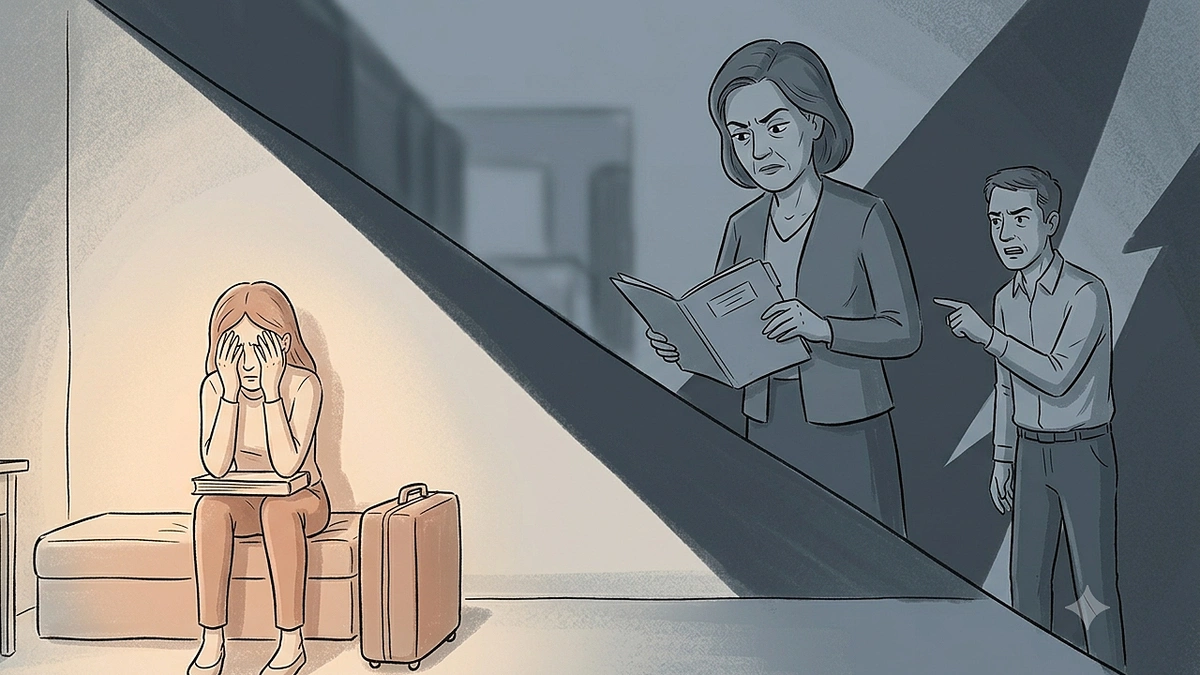
Mother-in-Law's Interference Creates Rift in Marriage, Vietnamese Woman Seeks Advice
A 30-year-old Vietnamese woman is facing a marital crisis due to her mother-in-law's excessive interference and disdain for her family. Childless and experiencing her husband's lack of understanding, she is contemplating divorce.
A 30-year-old Vietnamese woman has voiced her distress over her mother-in-law's excessive interference and disdain for her family, which has led to a severe marital crisis. The woman, who works in media and is pursuing a master's degree, described her current situation as the most challenging she has faced in her four years of marriage. The primary source of conflict is the mother-in-law's persistent attempts to control and deeply involve herself in the couple's private life. From their first meeting, the mother-in-law inquired extensively about the woman's family's financial status and dowry, asserting that families of educators, like her own, were more 'worthy.' After the wedding, she continuously pressured the couple about their marital relations and urged them to have children quickly. During her husband's studies abroad, the mother-in-law or father-in-law would call almost every two days to check on her whereabouts. Furthermore, the mother-in-law exerts control over all family decisions, including dining, home decor, attire, and even her husband's father's speech. During the purchase of their wedding bed, the mother-in-law accompanied her son, leaving the woman to travel separately. During Tet (Lunar New Year), she prepared red envelopes for the entire family, preventing the children from giving monetary gifts as they wished. What the woman finds most unbearable is the intrusion into their most private matters. The mother-in-law would enter their bedroom under the guise of cleaning, inspecting personal belongings, clothes, and medications. On one occasion, after reviewing her medical records, she contacted the woman's mother to inquire about her gynecological health. The woman expressed how deeply violating such an invasion of privacy feels. Additionally, the mother-in-law has repeatedly shown contempt for her family. She alluded to the woman's family being 'incomplete' because her parents lived separately due to work, despite remaining married and jointly caring for their children. Gifts from the woman's family were often downplayed, while gifts from the son-in-law's family were treated with great respect. The most hurtful aspect for the woman is her husband's increasing susceptibility to his mother's views. Having been doted on since childhood, he remains highly dependent on his parents even at over 30, rarely daring to assert his own opinions. Most of their arguments stem from issues related to his mother. The breaking point came recently when the couple discussed purchasing land for investment. The parents immediately objected, doubting their son's ability to make independent decisions. When the woman suggested her husband, now over 30, needed to be more self-reliant, he became enraged, calling her 'uneducated' and implying her parents hadn't taught her properly, thus making her find his parents' concern unusual. Devastated, the woman stated she could accept marital arguments but not insults directed at her parents. The man she believed to be educated and capable of discerning right from wrong ultimately viewed her family in such a light. She has been staying elsewhere for three days and is seriously considering separation or even divorce if no changes occur. Although married for four years, they have lived together for only about two years due to the husband's studies abroad. They have no children due to the husband's reproductive health issues, which the mother-in-law implicitly blames on the woman. At 30, childless, with her marriage strained by her mother-in-law's interference, her family's disrespect, and her husband's lack of empathy, she feels trapped and is seeking advice on whether separation or divorce is the right path to liberation.
多角的分析
ベトナムでは、経済成長に伴い都市部を中心に核家族化が進む一方、伝統的な大家族制度や親族間の結びつきも依然として強く残っている。本件は、このような現代ベトナムにおける家族観の変遷と、世代間の価値観の衝突を示唆している。特に、経済的自立を目指す若い世代と、伝統的な価値観を重視する高齢世代との間で、結婚や子育て、財産に関する考え方の違いが顕著になっている。義母が「教師一家」という自身の出自に優位性を見出し、相手の家族の経済力や出自を軽視する態度は、ベトナム社会における学歴や職業に対する根強い評価意識を反映しているとも考えられる。
本件は直接的な経済活動や投資に関わるものではないが、ベトナム社会における家族関係や世代間の価値観の衝突は、間接的にビジネス環境に影響を与える可能性がある。例えば、家族の意向が個人のキャリア選択や消費行動に影響を与えるケースは少なくない。また、結婚や家庭に関する問題が個人の精神的負担となり、生産性やキャリア形成に影響を及ぼすことも考えられる。特に、ベトナムに進出する日系企業などは、こうした社会的な背景を理解し、従業員の多様な価値観や家族関係に配慮した雇用管理を行うことが、長期的な人材定着や企業文化の構築に繋がるだろう。
ベトナム社会において、嫁姑問題は依然として深刻な社会問題の一つである。特に、都市部では核家族化が進む一方で、親世代の干渉が強く残る家庭も多い。本件の女性は、夫の母親からの過度な干渉、プライベートへの踏み込み、そして自身の家族への軽視に苦しんでいる。さらに、夫が母親の意見に流され、妻や妻の家族を侮辱する言動をとることは、夫婦間の信頼関係を根底から揺るがす。このケースは、現代ベトナムの若い女性が直面する、伝統的な家族制度と個人の自立、そして夫婦間の平等な関係構築の難しさを示している。彼女が「別居や離婚」を視野に入れていることは、こうした状況からの解放を求める切実な願いの表れと言える。
この女性の訴えは、多くのベトナム人、特に結婚したばかりの若い女性が抱える普遍的な悩みを代弁していると言える。ベトナムでは、結婚は個人の問題であると同時に、二つの家族の結びつきでもあり、親、特に母親の意向が夫婦生活に大きく影響することが少なくない。義母からの過度な干渉や、自分の家族を軽視されることは、当事者にとって非常に辛い経験である。夫が母親の言いなりになり、妻や妻の家族を傷つける言葉を発することは、夫婦の絆を断ち切る行為に等しい。彼女が「絶望的」と感じ、離婚さえ考えてしまう状況は、現代ベトナム社会における家族関係の複雑さと、個人の幸福追求の難しさを示唆している。
背景・歴史的文脈
ベトナムでは、伝統的に大家族制度が根強く、親、特に母親の家族への影響力は大きい。結婚は個人の結合だけでなく、二つの家族の結びつきと見なされ、親の意向が重視される傾向がある。しかし、近年の急速な経済成長と都市化に伴い、核家族化が進み、個人の自立や自己決定権を重視する価値観が広がりつつある。本件のような嫁姑問題は、こうした伝統的な家族観と現代的な個人主義との間で生じる価値観の衝突が背景にある。特に、経済的・学術的に自立した若い女性が増える中で、親世代の過度な干渉や古い価値観との軋轢が表面化しやすくなっている。
原文ソース
VnExpress