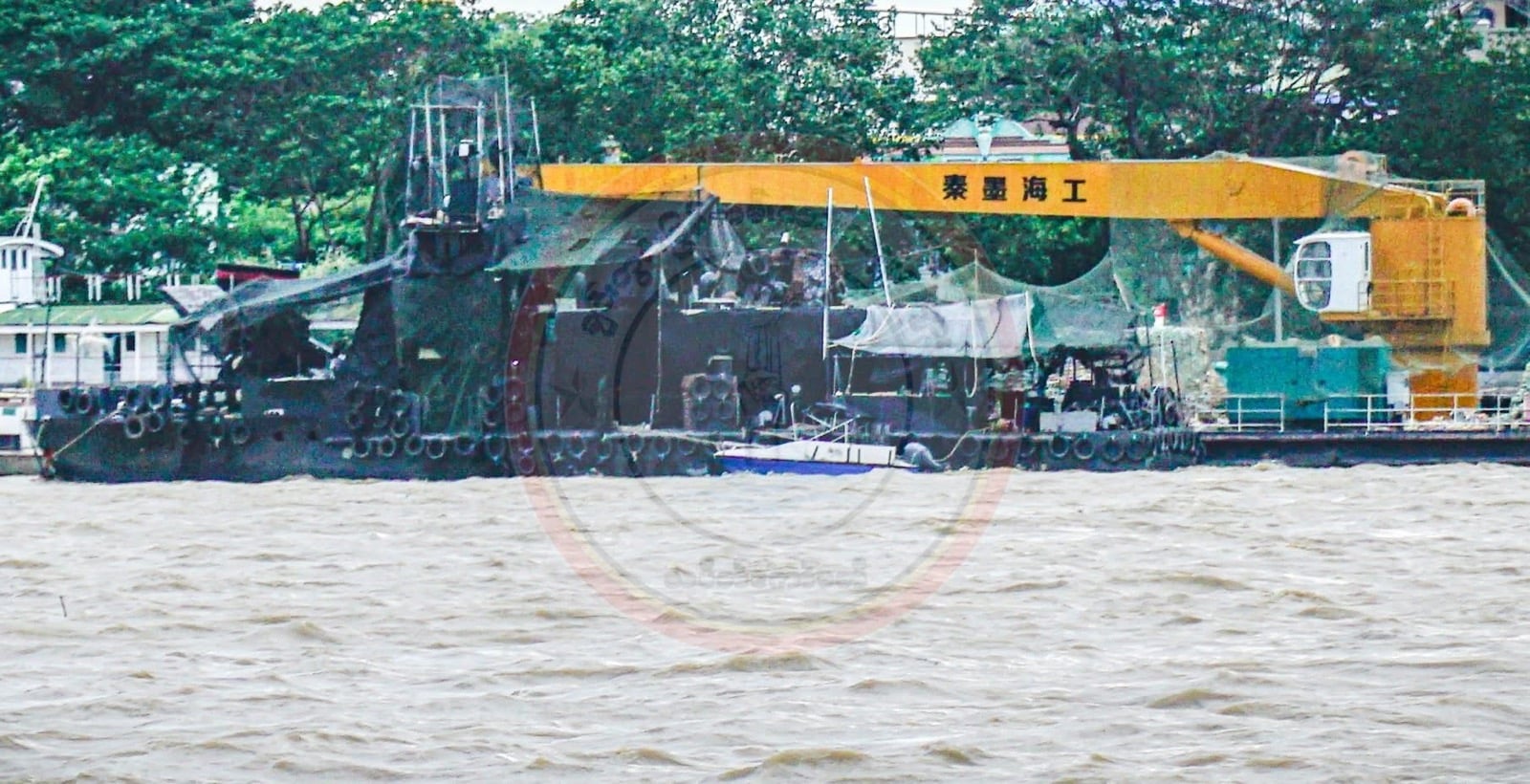
Around 10,000 residents flee as Myanmar junta flotilla advances up Chindwin River
Around 10,000 residents in Sagaing Region's Kani Township have been forced to abandon their homes after a heavily armed Myanmar military flotilla advanced upstream along the Chindwin River, firing artillery indiscriminat
Around 10,000 residents in Sagaing Region's Kani Township have been forced to abandon their homes after a heavily armed Myanmar military flotilla advanced upstream along the Chindwin River, firing artillery indiscriminately at riverbank communities. The mass displacement, affecting residents from at least 10 villages, began at approximately 8:30 a.m. on July 6 as the fleet moved north. According to local sources, the military convoy departed from the Mindaunt jetty in Monywa Township's Ahlone area. The advancing flotilla consists of 26 flat-deck iron-hull cargo vessels escorted by two naval combat boats. “Everyone had to flee for their lives because the troops are continuously shelling both banks of the river,” a local villager said. “At the same time, junta ground troops are also advancing along the riverbanks, forcing the entire population to run to safety.” During the monsoon season, high water levels make the Chindwin River highly navigable, prompting the military regime to heavily utilize waterways to transport heavy weaponry, ammunition, and rations to frontline troops. As of the evening of July 6, the flotilla had anchored near Min-O and Ein Taung Villages in Kani Township. The sudden military push has compounded an existing humanitarian crisis in the region, where the ongoing ground clashes have already displaced many locals. “We have been displaced for nearly two months now. People have no work, and commodity prices are skyrocketing. We are in desperate need of food supplies,” another displaced villager said. “Right now, we are taking refuge in schools in neighboring villages, but we will lose these temporary shelters once the school terms resume.” According to a statement from the local monitoring group Anyar Myay Pyit Taing Htaung, a larger fleet originally consisting of 46 vessels—including 40 cargo ships and six naval escorts—had arrived at the Ahlone Mindaunt jetty on the morning of July 4. From that group, a detachment of 26 vessels split off to head further upstream into Kani. The Myanmar junta has maintained a heavy military presence at Chaung Ma village, situated at the strategic junction of the Monywa-Kani-Yargyi highway, for nearly two months. The addition of the riverine offensive has trapped civilians, forcing thousands from southern Kani Township to flee deeper into the countryside.
多角的分析
サガイン州カニ郡区の約1万人の住民が、武装したミャンマー軍艦隊がチョンドウィン川を遡上し、河岸の集落に無差別砲撃を行った後、自宅を放棄することを余儀なくされた。 少なくとも10の村の住民に影響が出ているこの大規模な避難は、艦隊が北上した7月6日午前8時半頃に始まった。この動きは直接の経済指標ではなくても、行政運営、地域の信頼、公共サービスの質を通じて企業活動や生活コストに波及する可能性があります。
投資家にとっては、個別ニュースの背後にある制度の安定性、情報公開、地域社会の反応が判断材料になります。短期の見出しだけでなく、継続的な変化を見る必要があります。
サガイン州カニ郡区の約1万人の住民が、武装したミャンマー軍艦隊がチョンドウィン川を遡上し、河岸の集落に無差別砲撃を行った後、自宅を放棄すること…という事実は、サガイン州カニ郡区の住民にとって制度の発表ではなく、日々の判断材料になります。軍がどこまで説明し、避難を抱える人に情報が届くかが社会的な焦点です。
市民にとっては、このニュースが安全、雇用、教育、行政サービスなど身近な領域にどうつながるかが焦点です。生活者目線で具体的な影響を追う価値があります。
背景・歴史的文脈
BNI (Burma News International)が伝えたこのニュースは、ミャンマーの行政運営や地域社会の変化を読むための小さなシグナルです。個別の発表や事件でも、制度、生活、対外関係のどこに影響するかを分けて見ることで、ニュースの意味が見えやすくなります。
原文ソース
BNI (Burma News International)