General articles are free for 24 hours after publish.
PSEi Falls Below 6,100 on Inflation Fears Fueled by Oil Prices and Weak Peso
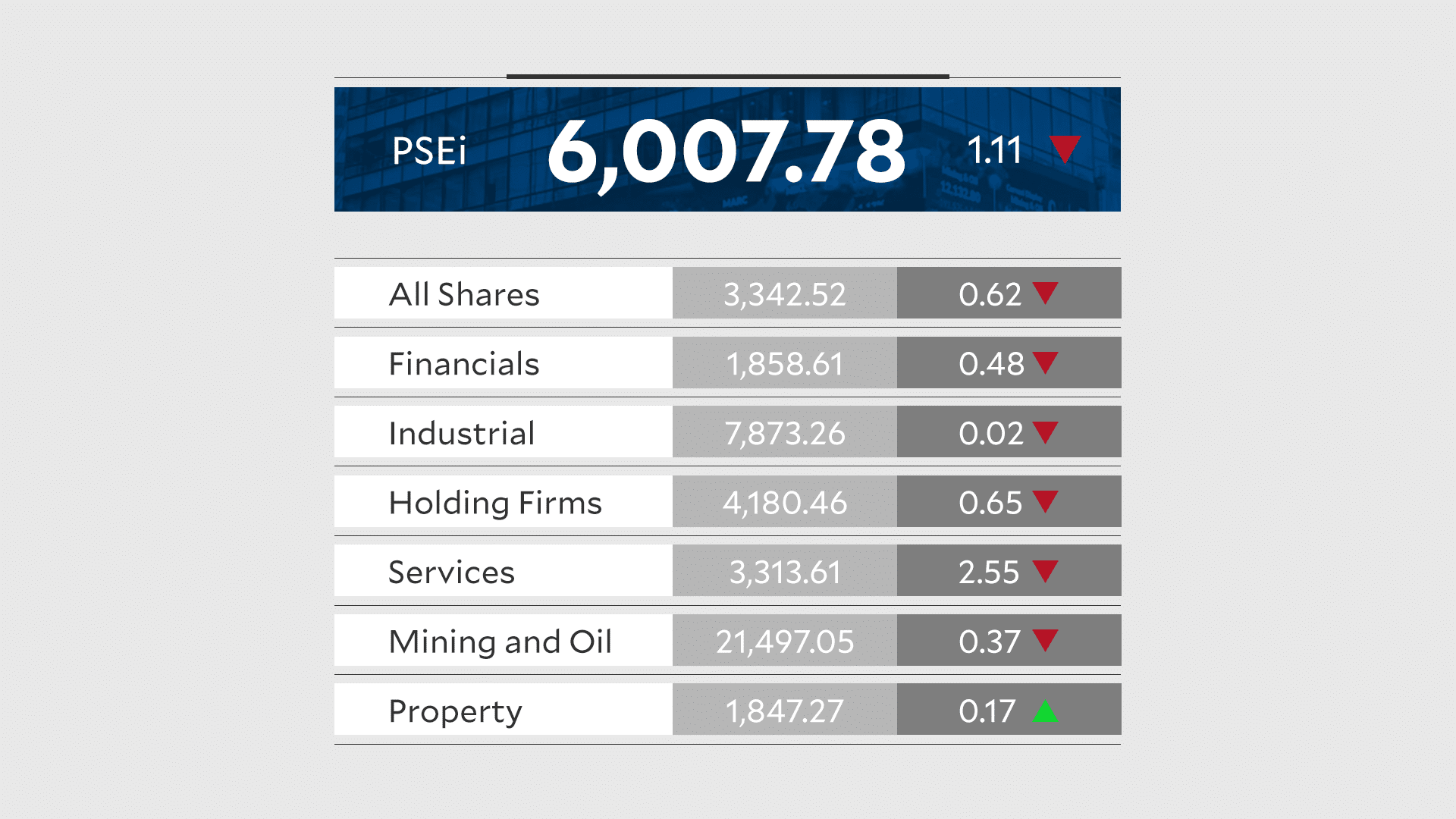
Philippine stocks retreated below the 6,100 level, closing at 6,007.78 points, as rising global oil prices and a weakening peso intensified inflation concerns, dampening investor sentiment. Higher bond yields also contributed to the market's decline.
MANILA, Philippines — Philippine stocks fell back near the 6,000 level on Tuesday as rising global oil prices and a weakening peso fueled inflation concerns, while higher bond yields further weighed on investor sentiment. The benchmark Philippine Stock Exchange Index (PSEi) fell 1.11 percent, or 67.29 points, to close at 6,007.78. READ: Inflation eases to 6.1% The decline was driven by a dual impact of rising oil prices, which increase import costs and consequently domestic prices, and a depreciating peso, which reduces purchasing power. The Philippine economy's high dependence on energy imports means that fluctuations in oil prices have a direct effect on inflation rates. While recent inflation eased to 6.1 percent, these external factors pose a risk of reigniting price pressures. Furthermore, higher bond yields also contributed to the market's downturn. This suggests a potential shift of funds from equities to fixed-income assets in pursuit of higher returns, thereby dampening investor appetite for stocks. The Bangko Sentral ng Pilipinas (BSP) may continue with its monetary tightening measures to curb inflation, which, coupled with concerns about economic growth, adds to market volatility. While the Philippine economy is bolstered by remittances from overseas workers and its robust BPO sector, global economic uncertainties and domestic inflationary pressures cast a shadow over its future economic outlook.
Original source
Inquirer Business