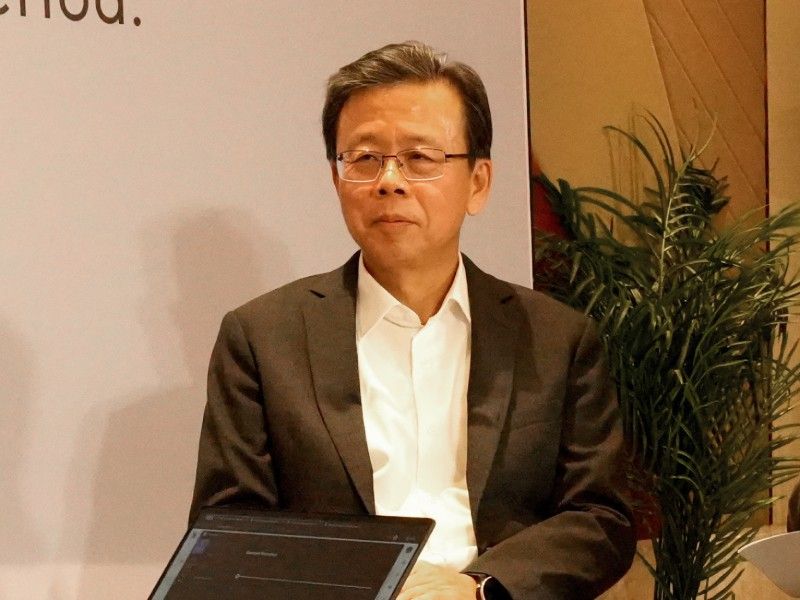
Filipino Workers Ready for AI, But Businesses Lag: ASUS Co-CEO
Technology
2026年7月13日
5
Philstar Business

Filipino Workers Ready for AI, But Businesses Lag: ASUS Co-CEO

AI サマリー

While individual Filipino workers readily embrace AI, enterprise-wide adoption lags significantly. ASUS Co-CEO Samson Hu identifies organizational readiness, not talent, as the main barrier, emphasizing the integration of right tools, devices, and workflows for true transformation.

Walk into any coworking space in Bonifacio Global City or Makati City, and chances are you'll find a workforce increasingly embracing artificial intelligence (AI)—from marketers generating copy with ChatGPT and professionals transcribing meetings using AI-powered tools to executives drafting emails with Gemini. There is little doubt that individual Filipino workers have embraced AI at a remarkable pace. But look beyond individual browsers and into the country's largest enterprises, and a paradox is noticeable. According to industry data by Cisco, despite immense local enthusiasm, only 22% of enterprises in the Philippines are deemed "AI-ready." It's a gap that ASUS Co-CEO Samson Hu discussed in an exclusive interview with Philstar.com during the Philippine launch of the flagship ASUS ExpertBook Ultra, where he shared his perspective on what's holding enterprises back from scaling AI. Hu pointed to a growing gap between employee enthusiasm for AI and an organization's ability to support its widespread adoption. “The challenge is not lack of workforce talent or interest. The challenge is quite about the organizational readiness, how to move AI from the experimentation stage to really enterprise-wide discussion,” Hu told Philstar.com Hu, with a deep engineering background, views the enterprise AI gap as an organizational and structural bottleneck rather than a technological one. According to him, while an individual can integrate an AI tool into their personal routine in five minutes, an enterprise faces a radically different challenge. For a company to safely deploy AI at scale, it must navigate the friction of data governance, security policies, systemic risk and architectural integration. The disconnect, he argues, stems from a common misconception. Many executives still treat AI as a simple software acquisition, with conversations often revolving around AI models, subscriptions, and cloud platforms. As Hu expressed, many companies mistakenly assume AI adoption simply means purchasing new software licenses or giving employees access to AI tools. Instead, he believes the companies seeing the greatest returns are those that embed AI into the way work gets done. “The organizations that create the most value from AI are not those with the most tools. They are the organizations that integrate AI into how people actually work." This philosophy underpins ASUS' broader vision for enterprise AI. Rather than viewing AI as a technology initiative, the company believes businesses should treat it as a broader transformation initiative. For ASUS, successful enterprise AI adoption hinges on three essentials that move AI from an isolated IT experiment into a core driver of business transformation: the right tools, the right devices, and the right workflows. The first pillar, the right tools, refers to the AI applications and software that have fueled today's AI boom. These are the large language models, copilots and productivity platforms that excite business leaders for their ability to automate routine tasks, generate content, analyze data, and accelerate decision-making. But software alone isn't enough. Beyond software, Hu said businesses must also redesign workflows so AI becomes embedded into everyday operations rather than treated as a standalone productivity tool. For ASUS, that means integrating AI directly into the business laptop through features in its ASUS MyExpert Suite. AI ExpertMeet, for example, automatically transcribes and summarizes meetings; while Knowledge Hub, which enables AI-powered semantic search across enterprise files. AI ExpertPanel provides on-device AI capabilities—all designed to make AI a natural part of employees' daily workflows. The third pillar, the right devices, is perhaps the most overlooked. While discussions around enterprise AI often focus on cloud platforms and software subscriptions, Hu argues that the physical hardware powering AI experiences is just as critical. AI-ready devices equipped with dedicated processing capabilities enable organizations to run increasingly complex AI workloads more efficiently while supporting security, responsiveness, and on-device AI experiences. The need for devices built for the AI era is often overlooked in the enterprise AI conversation—one that tends to focus almost exclusively on software models and cloud platforms. Unlike traditional office applications, AI workloads require significantly greater computing power, performing billions of mathematical operations simultaneously. It is this gap that ASUS hopes to address with the launch of the new ASUS ExpertBook Ultra in the Philippines. The challenge is particularly evident in the local market. Cisco's 2024 AI Readiness Index found that only 22% of Philippine organizations have the graphics processing unit (GPU) capacity needed to support current and future AI workloads. At the same time, just 45% of enterprises have implemented key safeguards—including end-to-end encryption, security audits, continuous monitoring and rapid threat response—to adequately protect data used in AI systems. "AI is a full-stack transformation," Hu explained. In other words, investing in AI software while equipping employees with legacy hardware creates a bottleneck. Without devices capable of handling modern AI workloads, organizations are unable to fully unlock the performance, responsiveness and security that enterprise AI promises. This is where ASUS positions the new ASUS ExpertBook Ultra. Equipped with a dedicated Neural Processing Unit (NPU) of up to 50 TOPS, the device is built for what Hu describes as Hybrid AI—an approach that distributes AI workloads between the cloud and the device itself. Processing AI tasks locally not only improves responsiveness and reduces reliance on cloud computing but also enables sensitive business information to remain on the device whenever possible. For enterprises handling confidential financial records, customer information, proprietary documents and internal communications, that distinction is increasingly important. Rather than transmitting sensitive data to public cloud AI services, businesses can process more workloads locally, strengthening privacy while reducing the risk of potentially catastrophic data leaks. Hu also said durability remains a key pillar of enterprise computing. Despite its ultra-slim design, the ASUS ExpertBook Ultra is engineered to withstand the demands of daily business use, helping organizations maintain productivity and business continuity through reliable, long-lasting devices For ASUS, enterprise devices equipped with dedicated AI processing capabilities, durability, and enterprise-grade security are no longer optional upgrades but necessities that enable organizations to balance productivity with stronger data protection. "What professionals need is a device that truly deserves to be their work machine—secure, durable, and ready for more advanced AI capabilities," he concluded.

多角的分析

経済的影響

フィリピン経済において、AI導入の遅れは生産性向上と国際競争力強化の機会損失につながる。特に、BPO(ビジネス・プロセス・アウトソーシング)産業はAIによる自動化の影響を受けやすく、先端技術への適応が急務である。企業がAIを「ソフトウェア購入」と捉えるのではなく、業務プロセス全体を変革する「戦略的投資」として位置づけることが、経済全体のデジタル化と成長を加速させる鍵となる。適切なハードウェア(AI対応デバイス)への投資も、ソフトウェアの能力を最大限に引き出すために不可欠であり、これが遅れるとAI活用の恩恵を十分に享受できない。

投資家心理

AI技術への投資は、フィリピンの企業にとって将来的な収益性向上とリスク軽減に直結する。しかし、現状のAI導入率の低さは、投資家にとって潜在的な成長機会の見逃し、あるいは競争優位性の低下リスクを示唆する。特に、AIを組織全体に統合する能力が低い企業は、将来的にAIを活用する競合他社に対して遅れをとる可能性がある。ASUSのようなAI対応デバイスを提供する企業にとっては、フィリピン市場におけるAIインフラ整備の遅れは、新たなビジネスチャンスとなりうる。投資家は、AI導入を推進できる経営陣を持つ企業や、AI関連のインフラ・サービスを提供する企業に注目すべきである。

社会的影響

AIの普及は、フィリピンの労働市場に大きな影響を与える。個々の労働者はAIツールへの適応意欲が高い一方で、企業側の組織的な対応の遅れは、労働者が新しいスキルを習得し、AIと協働する機会を制限する可能性がある。特に、AIによる自動化が進むことで、一部の職種では雇用の変化が生じうる。また、機密情報の取り扱いに関するセキュリティ懸念は、データプライバシーへの不安を増大させる。ASUSが提案するような、デバイス上でAI処理を行うことでプライバシーを保護するアプローチは、こうした社会的な懸念に対処する上で重要となる。企業がAIを導入する際には、単なる技術導入に留まらず、従業員のリスキリングや、データガバナンス、セキュリティポリシーの強化といった、社会的な側面への配慮が不可欠である。

市民の声

フィリピン国民、特にIT関連分野で働く人々は、AI技術の進展に強い関心と適応意欲を示しています。しかし、職場でのAI活用が進まない現状は、彼らのスキルアップやキャリア形成の機会を限定してしまう可能性があります。例えば、マニラ首都圏のコワーキングスペースで働くマーケターやプロフェッショナルは、自らの業務効率化のためにAIツールを積極的に利用していますが、所属する企業がAI導入に消極的だと、その恩恵は限定的になります。また、企業がAI導入の際に、データガバナンスやセキュリティ対策を怠れば、個人情報漏洩のリスクが高まり、一般市民のデータプライバシーへの不安が増大します。ASUSのような企業が、AI対応デバイスと統合されたワークフローを提供することは、こうした市民のAI活用への期待と、企業側の導入障壁との間のギャップを埋める一助となる可能性があります。

背景・歴史的文脈

フィリピンでは、近年のデジタル化推進策の一環として、AI技術の導入が奨励されてきました。特に、BPO(ビジネス・プロセス・アウトソーシング)産業は、AIによる自動化の恩恵を受けやすい分野であり、多くの個人労働者がChatGPTなどの生成AIツールを業務効率化のために個人的に活用する動きが広がっています。しかし、企業レベルでのAI導入は、データガバナンス、セキュリティポリシー、既存システムとの統合といった組織的・構造的な課題に直面しています。2024年のCisco AI Readiness Indexが示すように、フィリピン企業のAI準備度は依然として低く、これは技術的な遅れというよりは、経営層のAIに対する理解不足や、変革への抵抗が背景にあると考えられます。ASUSのようなテクノロジー企業は、こうした課題に対し、AI対応ハードウェアと統合されたワークフローソリューションを提供することで、企業がAIの恩恵を享受できるよう支援しようとしています。

原文ソース

Philstar Business

原文を読む