General articles are free for 24 hours after publish.
Taiwan eyes PH cooperation on AI infrastructure, semiconductors via Pax Silica
Taiwan sees opportunities to cooperate with the Philippines on artificial intelligence (AI) infrastructure and semiconductors, particularly through the US-led Pax Silica initiative. TAITRA Chairman James Huang expressed Taiwan's willingness to leverage its advanced AI supply chain ecosystem to support the development of an AI hub in the Philippines.
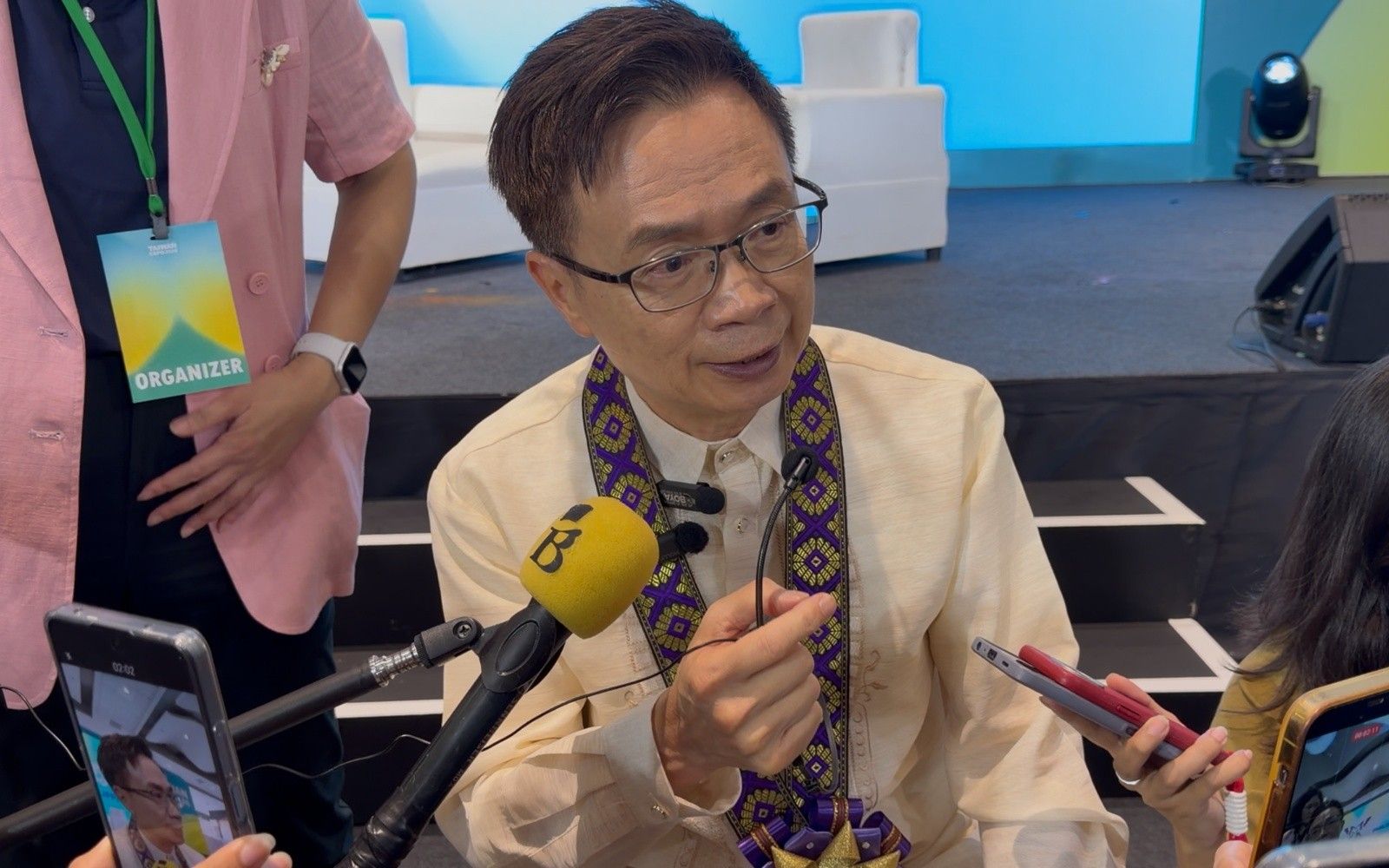
MANILA, Philippines — Taiwan sees opportunities to work with the Philippines on artificial intelligence infrastructure and semiconductors through Pax Silica. James Huang, chairman of the Taiwan External Trade Development Council (TAITRA), said Taiwanese companies could become partners in efforts to develop an artificial intelligence hub in the Philippines. Huang said this during the sidelines of the opening of Taiwan Expo 2026 in Manila on Thursday, September 17, where 125 Taiwanese companies are showcasing products and technologies in areas including smart technology, healthcare, agriculture, energy and lifestyle. The Philippines joined Pax Silica in April as its 13th signatory. The US-led initiative aims to build a secure and resilient supply chain for silicon, semiconductors and artificial intelligence infrastructure. Asked to comment about the Philippines' participation in Pax Silica, Huang said Taiwan and the Philippines could support each other through the initiative. “Pax Silica is a very, very important alliance for like-minded, democratic countries in the world in building up a strong alliance of silicon and semiconductor cooperation," he said. Taiwan and the Philippines, he added, both work closely with the United States. “And, we can be very...partners supporting each other in Pax Silica,” the TAITRA chief added. Asked specifically about the planned AI hub within the Luzon Economic Corridor, Huang said Taiwan could help countries develop their own AI infrastructure. “Every country is trying to build up its own sovereign AI and AI infrastructure. And when it comes to sovereign AI and AI infrastructure, Taiwan would be a very, very important partner because we are..we have the most complete and most advanced artificial intelligence supply chain ecosystem." “We support almost every country in the world. And we will be happy to work with the Philippines," he added. The proposed Pax Silica project in Capas has faced questions in the Philippines over concerns that the hub could exploit natural resources and displace Indigenous peoples. Last month, Sen. Raffy Tulfo filed Senate Resolution No. 571 seeking to assess the potential impacts of Pax Silica on the country amid the growing concerns about its consequences. Tulfo urged the Senate to determine whether the existing laws and policies in the country are enough to regulate Pax Silica. President Ferdinand Marcos Jr. has defended the project, saying Filipinos could benefit from jobs, investment, technology and training. “What we are interested in is to benefit our people in terms of jobs, in terms of investment into the country, in terms of the advancement of our capabilities, in terms of technology, in terms of training, reskilling and upskilling, all of those things,” Marcos was quoted as saying at a forum organized by the Foreign Correspondents Association of the Philippines. Science and Technology Secretary Renato Solidum Jr. said the project is expected to involve semiconductor production supporting AI rather than AI data centers, which he said would mean lower water requirements. “Essentially, it is AI-focused by developing chips that will support (the technology), but not an AI hub,” Solidum said. “Since there will be no AI hub, the water requirement will not be very much," he said. Huang said Taiwan's interest in the Philippines extends beyond Pax Silica and AI. He said Taiwanese companies are already operating in the country in areas including electronic manufacturing and that the Philippines could potentially develop into a semiconductor packaging center in Southeast Asia. “In the future, I think Philippines has the potential to be developed into one of the semiconductor packaging centers in the ASEAN,” he said. He also cited the Philippines' English-speaking workforce as an advantage for Taiwanese companies working with US customers. “So, I would anticipate more and more Taiwanese companies will come over, particularly in the area where they can enjoy the language advantage,” Huang said. Huang said the restructuring of global supply chains is also encouraging Taiwanese companies to consider the Philippines for investment and manufacturing. Meanwhile, Huang said participating companies at the Taiwan expo were selected based on areas where Taiwan sees potential for cooperation with the Philippines and in support of Philippine national development priorities. The three-day Taiwan Expo 2026 runs until September 19 at the SMX Convention Center Manila in Pasay City. — With reports from Philstar.com/Renalyn Ramirez, The STAR
Original source
Philstar Business