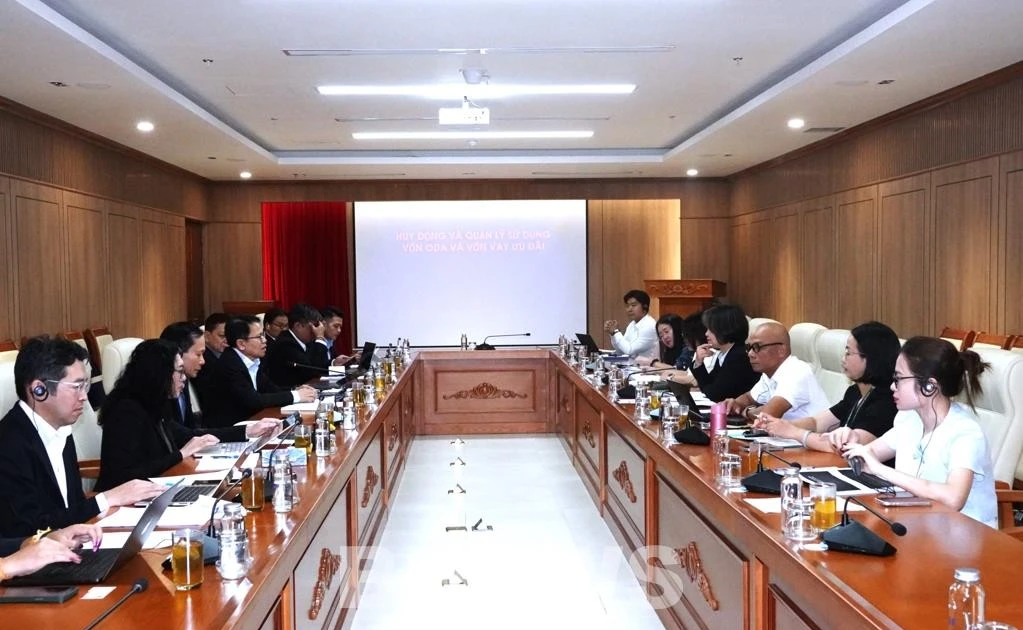
Vietnam, Laos Share Experiences in ODA Mobilization and Management
Vietnam and Laos have shared experiences in mobilizing and managing Official Development Assistance (ODA). The two countries are strengthening cooperation, particularly in border regions, and advancing collaboration in various sectors including improving agricultural transparency, modernizing the financial sector, and expanding air connectivity. This initiative is part of deepening their strategic partnership.
Vietnam and Laos have shared experiences in mobilizing and managing Official Development Assistance (ODA), a collaboration that underscores the broad strategic partnership between the two nations. All pairs of border provinces have signed cooperation agreements or memoranda of understanding, with many being effectively implemented. Exchanges and meetings between local justice departments and civil judgment enforcement agencies have also been increasingly promoted. Defense cooperation continues to serve as a key pillar of the great friendship, special solidarity, comprehensive cooperation, and strategic cohesion between Vietnam and Laos. Economically, Vietnam is advancing the implementation of systems to enhance transparency and ensure the authenticity of agricultural products, which will help safeguard the quality and reputation of Vietnamese agricultural products in international markets. Deputy Prime Minister Ho Quoc Dung praised the Ministry of Agriculture and Environment for developing and putting the system into operation. Furthermore, Vietnam is set to host a high-level forum to discuss key issues shaping its financial sector, including modernization of the capital market, digital finance, financial infrastructure, sustainable investment, and venture capital. Ho Chi Minh City has indicated a shift towards prioritizing the building of an investment ecosystem and leveraging the International Financial Centre (IFC) as a strategic instrument to attract new-generation, high-quality capital flows, moving away from a project-attraction approach. Vietnam is also expanding its international connectivity, with the carrier's first route to Sri Lanka set to launch, and increased trade with Israel. Vietnam-Israel trade neared US$1.6 billion in January-May, with Vietnam's exports to Israel jumping 30.6% year-on-year. If the current growth momentum holds, full-year trade is on track to reach around US$3.9 billion, with Vietnam's exports set to surpass US$1 billion for the first time. Hanoi is adopting a strategy focused on improving investment quality, targeting high-value projects in semiconductors, integrated circuit design, artificial intelligence (AI), big data, biotechnology, new materials, research and development (R&D), innovation centres, modern logistics, green finance, financial technology (fintech), education and training, and specialised healthcare. E-commerce is becoming an essential pillar of the digital economy, with Vietnamese businesses shifting from online sales to building digital commerce ecosystems, connecting production, logistics, and distribution to expand their markets and participate more deeply in the global value chain. Vietnam's tilapia export revenue in the first five months of 2026 hit US$62 million, more than doubling that in the same period last year, indicating a strong recovery in international demand. Initiatives are also underway for sustainable development and environmental protection. Ministries are required to develop action plans by September 2026 to mitigate money laundering risks. The carbon exchange is being created to enable businesses to optimize emission-reduction costs through trading emission quotas and carbon credits, encouraging technological innovation and supporting sustainable development while maintaining the principle of not sacrificing the environment for economic growth. The market is expected to spur investment in emissions reduction projects, expand access to green finance, and help businesses improve competitiveness and comply with increasingly stringent environmental, social, and governance (ESG) standards. The Ministry of Industry and Trade (MoIT) plans to establish a tiered logistics network comprising national, regional, and local logistics centres, specialised hubs, and cargo consolidation points.
多角的分析
ベトナムとラオスのODA経験共有は、両国の経済開発における国際協力の重要性を示唆している。特にベトナムは、農業分野での透明性向上や金融セクターの近代化、そしてAIや半導体などの先端技術分野への投資誘致に注力しており、これは単なる経済成長を超え、産業構造の高度化とグローバルバリューチェーンへの統合深化を目指す戦略的意図の表れである。ティラピア輸出の急増や、イスラエルとの貿易拡大は、ベトナムが特定の産業分野で国際競争力を高めている証拠であり、持続可能な開発目標達成に向けた取り組み(排出権取引市場など)は、環境規制が厳格化する国際市場への適応と、企業のESG基準への対応を促すものである。これらの動きは、ベトナム経済が輸出主導型から、より付加価値の高い、技術集約型の経済へと転換しようとしていることを示している。
ベトナムの投資環境は、AI、半導体、バイオテクノロジーといった高付加価値分野への重点投資や、金融セクターの近代化、グリーンファイナンスへの注力といった動きから、長期的な成長ポテンシャルを秘めていると見られる。特に、ホーチミン市が「投資エコシステムの構築」を掲げ、単なる資本誘致から質を重視する姿勢に転換した点は、より質の高い、持続的な成長を目指す投資家にとって魅力的だろう。また、eコマースの成長や、ベトナム産農産物の国際市場での評価向上は、消費財や食品関連分野への投資機会を示唆する。一方で、国際的なマネーロンダリング対策強化や、排出権取引市場の創設といった規制・制度変更は、投資家にとってコンプライアンスとリスク管理の重要性を高める要因となる。ベトナムへの投資は、成長性だけでなく、規制環境の変化やESGへの配慮も考慮する必要がある。
ベトナムとラオス間のODA経験共有は、両国の開発協力における継続的な関係性を示す。ベトナム国内では、農業分野における透明性向上システム導入は、消費者にとって食品の安全性と信頼性を高める一方で、生産者にとっては品質管理の厳格化を意味する。ハノイ市が投資誘致の質を重視する方針は、地域経済の発展に寄与する可能性が高いが、同時に、高付加価値産業へのシフトは、労働者のスキルアップや教育への投資を社会全体に求めることになる。また、排出権取引市場の創設は、企業活動における環境負荷低減への意識を高め、持続可能な社会への転換を促す一方で、中小企業にとっては新たなコスト負担となる可能性もある。これらの政策は、社会全体の持続可能性と経済発展のバランスをいかに取るかという課題を提示している。
ベトナム市民にとって、ODAの効率的な活用は、インフラ整備や公共サービスの向上に繋がる可能性がある。特に、農業分野での透明性向上は、食の安全への安心感をもたらすだろう。しかし、ハノイ市が投資の質を重視する方針は、将来的に高賃金の雇用機会を創出する可能性がある一方で、先端技術分野への進出には、市民のスキルアップや教育機会の拡充が不可欠となる。また、排出権取引市場のような環境対策は、長期的な視点では生活環境の改善に繋がるが、短期的なコスト増が製品価格に転嫁される可能性も懸念される。ベトナムのZ世代は、SNSなどを通じてこれらの変化を敏感に捉え、自身のキャリアやライフスタイルへの影響を注視していると考えられる。
背景・歴史的文脈
ベトナムとラオスの関係は、歴史的に深く、特にベトナム戦争以降、ラオスにおけるベトナムの役割は大きかった。両国は社会主義国として、経済発展と国家安全保障の維持を共通の課題としてきた。ODA(政府開発援助)は、ベトナムが経済改革(ドイモイ)以降、国際社会からの支援を積極的に受け入れてきた歴史の中で、重要な開発ツールとなっている。特に、ラオスのような近隣国とのODA協力は、地域安定と経済連携強化という戦略的目標と結びついている。近年、ベトナムは中国への経済的依存を軽減し、多様なパートナーシップを模索する中で、ラオスとの関係強化もその一環と見られる。また、ベトナムの経済成長は、産業構造の高度化、デジタル経済への移行、そして環境問題への対応といった、より複雑な政策課題に直面しており、これらは国際社会との連携を不可欠としている。
原文ソース
VietnamPlus English