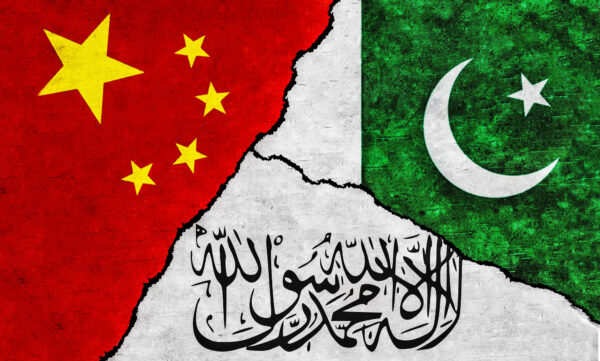
Taliban-Pakistan Conflict Escalates Amidst Failed Chinese Mediation
Security
2026年7月3日
7
The Diplomat Indonesia

Taliban-Pakistan Conflict Escalates Amidst Failed Chinese Mediation

AI サマリー

Tensions between Afghanistan's Taliban and Pakistan are escalating with reciprocal cross-border strikes. Despite mediation efforts by China and others, the fundamental conflict over the presence of the TTP remains unresolved, leading to rising civilian casualties.

Read The Diplomat, Know The Asia-Pacific The rupture between Afghanistan’s Taliban and their erstwhile allies in Pakistan continues to cause suffering on both sides of the border. Since the Taliban’s 2021 return to power, Pakistan has conducted several strikes inside Afghanistan, claiming to have targeted Tehreek-e-Taliban Pakistan (TTP) terror bases. Growing mistrust and tensions over the TTP boiled over into outright conflict in October 2025, which earlier this year was termed an “open war” by Pakistani officials. Despite several mediation attempts by Qatar, Saudi Arabia, Turkiye, and China, the tensions have not faded away. Last Sunday, Pakistan conducted its latest strikes inside Afghanistan. According to the U.N. Assistance Mission in Afghanistan (UNAMA), at least 28 civilians were killed and 49 others, including women and children, were injured during these strikes. The Taliban said that at least 36 civilians were killed and over 160 were injured in the strikes, which hit civilian homes. The Taliban described the attack as “cowardly” and an “atrocity.” Pakistan, on the other hand, said that it had carried out a ground operation along the border and air strikes targeting militant hideouts in Afghanistan’s Paktia, Paktika, and Kunar provinces. Islamabad claimed that 29 militants had been killed. Attaullah Tarar, Pakistan’s information minister said that it was an operation in response to “recent terrorist attacks against innocent people.” The Taliban launched retaliatory strikes inside Pakistan, claiming to have carried out strikes along the Pakistani border, injuring several people inside Balochistan Province. After the Taliban strikes, Pakistan’s military said that it had shot down four rudimentary drones and issued a warning that any provocation “would receive a befitting response.” Pakistan’s latest strike came a day after a bomb and gun attack on a Rangers facility in Sindh province’s capital city, Karachi. Pakistan’s military said in a statement that militants from the Jamaat-ul-Ahrar, a splinter group of the TTP, detonated an explosive at the entrance of the Rangers camp in the Gulistan-i-Jauhar neighborhood of Karachi before opening fire on the paramilitary troops. According to the Pakistani military, three paramilitary troops were killed and four were injured, while three militants were killed in the exchange of fire, and a fourth, an Afghan national, was captured. The Pakistani military’s statement further added that “Pakistan shall undertake retribution operations against the perpetrators of this attack.” The attack was one of the most significant in Karachi since a 2024 explosion targeting a Chinese convoy, in which two Chinese nationals were killed. After the Urumqi talks, mediated by China during the first week of April, in which the two sides agreed not to escalate the situation further but did not necessarily make peace, there were hopes that the conflict would cool down. However, the lull lasted just a few days, and on April 17, the Taliban-run Radio Television Afghanistan reported that Pakistani artillery strikes with at least 10 rockets had destroyed a health center in Barikot village of Nari district in Afghanistan’s province Kunar. There were no casualties reported. A major blow to the tentative peace came 10 days later when the Taliban alleged that seven people were killed and 85 were wounded on April 27 in Pakistan strikes on a university in Kunar province. Pakistani officials dismissed reports in the Afghan media about the incident and said that the official Taliban statements about the strike were a “blatant lie.” These strikes were considered the first major incident after the peace talks ended without an agreement, just 20 days before. A few days later, on April 30, Pakistani military sources claimed that at least five people were injured after the Afghan Taliban shelled and targeted Pakistani civilian populations in border areas in Khyber Pakhtunkhwa’s district of South Waziristan. On May 4, the Taliban government accused Pakistan of conducting strikes inside Afghanistan in which at least three people were killed, and 14 others wounded. Hamdullah Fitrat, a Taliban government spokesman, said that during the attacks, two schools, two mosques, and a health center in Kunar were destroyed. Pakistan’s information ministry rejected those allegations. On June 10, according to Zabihullah Mujahid, the Taliban’s chief spokesman, Pakistan launched new airstrikes on three Afghan provinces, including Kunar, Khost, and Paktika in which at least 13 people, including 11 children, were killed and 14 people, all of whom were children and women, were injured. He claimed that these strikes “violated Afghanistan’s airspace and bombed civilian homes.” Confirming the attack, Pakistan’s information ministry said that 26 militants were targeted in the strikes. Pakistan’s information minister further said that “In the aftermath of recent terrorist incidents in Pakistan …. precise and calibrated strikes were carried out along Pakistan-Afghanistan border areas on hideouts and safe havens,” without mentioning civilian casualties. Despite Pakistani claims of targeting terrorists, the conflict has caused hundreds of civilian deaths, along with displacing thousands of families inside Afghanistan. According to UNAMA, between January 1 and March 31 of this year, over 750 civilian deaths and injuries were documented in Afghanistan due to cross-border violence between Pakistani forces and the Taliban. Taliban authorities put these numbers higher. Besides casualties and injuries, thousands of families have been internally displaced due to the ongoing conflict between the two countries. As per data collected through mid-March 2026 by the U.N. Office for the Coordination of Humanitarian Affairs (UNOCHA), “Initial reports indicated that approximately 115,000 people (around 16,400 families) had been displaced by the conflict.” While Pakistan and the Taliban are busy fighting, China is still trying to bring their conflict to an end. Beijing has started working toward a second round of talks to mediate the conflict. Chinese Special Envoy for Afghanistan Ambassador Yue Xiaoyong met with Pakistani officials and the Taliban in May separately to review the progress after the Urumqi talks. China’s efforts appear to put its regional interests first, but the situation demands a more rigid, pragmatic solution addressing the concerns of both sides. Otherwise, the next round of talks are all but guaranteed to fail at delivering concrete results. The core of the current conflict is the presence of the TTP in Afghanistan. For Pakistan, cessation of the Taliban’s support for the TTP within Afghanistan’s border is the only acceptable solution. The Taliban, on the other hand, deny the presence of the TTP and any involvement with the group inside Afghanistan. Without both sides being willing to address their common security through negotiations, no among of talking will lead to a

多角的分析

経済的影響

パキスタンはTTP掃討作戦の費用負担に加え、アフガニスタンとの国境貿易の混乱による経済的損失を被っている。一方、アフガニスタンは内戦と国際支援への依存が続く中、インフラ破壊による復興への遅延が経済回復の足かせとなっている。両国の紛争激化は、地域全体のサプライチェーンの不安定化を招き、投資リスクを高めている。

投資家心理

パキスタンのTTP対策強化とアフガニスタンとの緊張高まりは、同国の政治リスクを増大させ、外国投資家にとって不確実性を高める要因となる。アフガニスタンにおいては、タリバン政権下での経済的停滞と治安不安が、投資を抑制する大きな要因であり続けている。中国の仲介努力も、実質的な進展が見られない限り、投資家心理の改善には繋がりにくい。

社会的影響

越境攻撃による民間人の死傷者増加は、両国国境付近の住民の生活に直接的な脅威を与えている。避難民の増加は、食料、医療、住居といった基本的な人道支援への圧力を高める。特に、子供たちの犠牲者が多いことは、将来世代への深刻な影響を示唆しており、教育機会の喪失や心理的トラウマといった問題を引き起こしている。

市民の声

国境付近の住民は、いつ攻撃されるか分からない恐怖の中で生活を強いられている。インフラの破壊は、医療や教育へのアクセスを困難にし、日々の生活基盤を揺るがしている。避難を余儀なくされた人々は、新たな土地での生活再建に苦慮しており、経済的、精神的な負担は計り知れない。

背景・歴史的文脈

アフガニスタンとパキスタンの関係は、 historically 複雑であり、国境問題、民族問題、そしてテロ組織の活動を巡る対立が根深い。特に、パキスタン国内で活動するTTPがアフガニスタン国内に拠点を置いているとパキスタンが主張し、タリバンがこれを否定または容認する姿勢をとることが、両国間の緊張の主な火種となっている。2021年のタリバン政権崩壊後、TTPは勢力を拡大し、パキスタン政府はアフガニスタンに対してTTPの掃討を強く要求してきたが、タリバンはこれを拒否、あるいは限定的な対応にとどめている。中国は、アフガニスタンにおける自国の経済的・戦略的利益を守るため、両国間の紛争解決に仲介役として介入しているが、その努力は根本的な対立構造を解消するには至っていない。

原文ソース

The Diplomat Indonesia

原文を読む